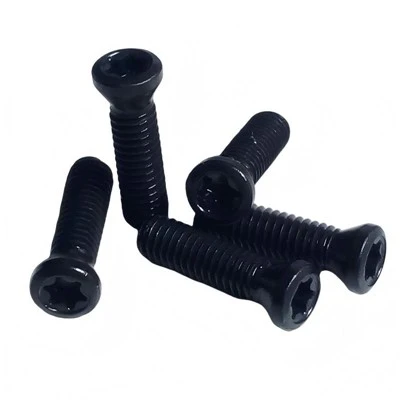
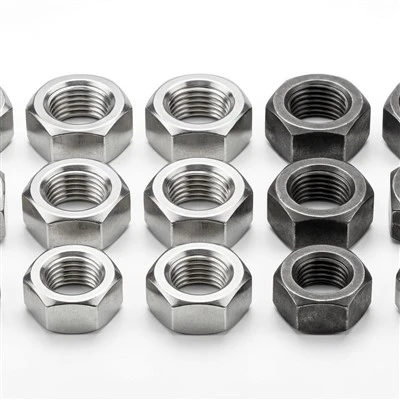
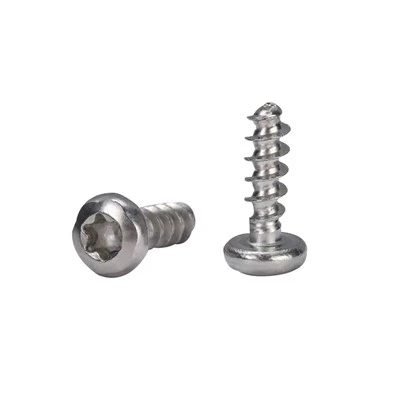
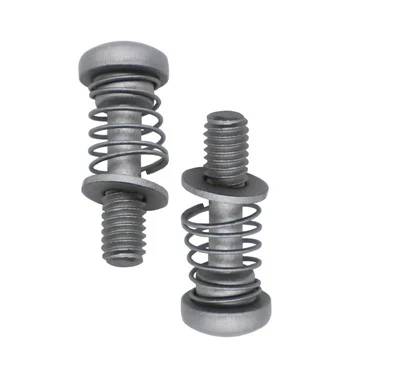
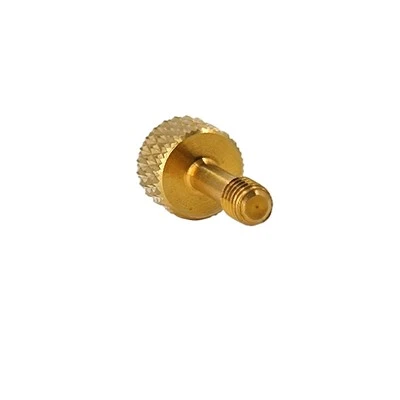
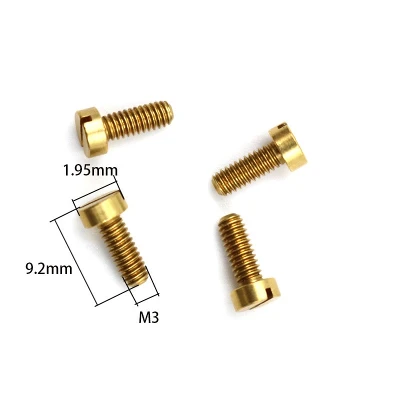
M1 M1.2 M1.4 M2 M3 Brass cylindrical head slotted screws are small mechanical fasteners and belong to the category of precision screws. The following is a detailed description of the common surface treatment methods of brass cylindrical head slotted screws, classified by process characteristics and application scenarios.
1. Natural color treatment
Process: Only mechanical polishing or cleaning is performed to retain the natural color of brass.
Features: Lowest cost, showing the beauty of the original color of the metal, easy to oxidize and discolor, and easy to darken when exposed to air.
Applicable scenarios: Non-corrosive environment, retro lamps, furniture, and other decorative places.
2. Electroplating treatment
Nickel plating
Process: Electrolytic deposition of a nickel layer, usually 5-15μm thick.
Features: Silvery white luster, excellent wear resistance; medium rust resistance, suitable for an indoor humid environment; moderate cost, wide industrial application.

Variant: Chrome plating can be superimposed to enhance reflectivity and corrosion resistance.
(2) Tin plating
Process: Hot dip or electroplating a tin layer.
Features: Excellent conductivity, good welding performance; resistant to weak acids and alkalis (suitable for grounding of electronic equipment).
Disadvantages: Low hardness, easy to scratch.
(3) Gold/Silver Plating
Process: Extremely thin precious metal plating.
Features: High conductivity, anti-oxidation, high cost, limited to special fields such as aerospace and precision instruments.
3. Chemical passivation
Process: Soak in chromate solution to form a conversion film.
Features: Rainbow or colorless passivation film, improved oxidation resistance; almost no change in size, suitable for precision threads. Poor environmental protection.
4. Coating protective layer
(1) Varnish/Organic coating
Process: Spray or dip transparent protective paint.
Features: Retain brass appearance, anti-fingerprint and slight corrosion, low mechanical strength, easy to wear (only for decorative purposes).
Anti-oxidation wax
Process: High-temperature wax dipping to form a protective film.
Features: Temporary rust prevention (protection during storage and transportation) must be removed before installation to avoid affecting torque.

5. Special treatment
Passivation + sealing (environmentally friendly alternative)
Process: chromium-free passivator + silane sealing.
Features: close to chromate performance, RoHS compliant, 20%-30% higher cost than traditional passivation.
Selection suggestions
Nickel plating is recommended for conventional rust prevention, which is the most cost-effective.
For high conductivity or welding, tin plating is recommended, but it should be avoided for high-load parts.
The recommended treatment for decoration is natural polishing plus varnish, which requires regular maintenance.
Nickel plating plus a sealing agent is recommended for harsh corrosive environments, but it should be used with caution in marine environments. It is recommended to choose stainless steel.
Precautions
Brass screws (such as H62, H65) have low hardness, and the surface treatment should not be too thick to avoid affecting the thread fit.
After electroplating, hydrogen embrittlement annealing (200℃×2h) is recommended to eliminate stress, especially for specifications above M3.
You can make a comprehensive choice based on the actual application environment, budget, and aesthetic requirements.
This solution takes into account both technical details and procurement decision-making efficiency, and can further simplify or expand specific modules according to actual needs.