Your Professional Spring Plunger Supplier
Huizhou Zeyao Hardware Products Co., Ltd. specializes in the production of custom fasteners, including screws, bolts, nuts, washers, pins, spacers, standoffs, rivets, CNC-milled parts, and CNC-turned parts. Our products find extensive application across various industries, such as automotive manufacturing, electronics, construction, aerospace, industrial machinery, medical devices, furniture, household goods, railway transportation, and more.
Rich Experience
Established in 2006, Huizhou Zeyao Hardware Products Co., Ltd. has accumulated over 18 years of expertise in manufacturing high-quality fasteners.
Quality Control
All our products comply with ROHS standards, and we maintain a stringent quality control system throughout the entire production process to ensure superior product quality.
Customized Services
We offer tailored solutions based on customer requirements, providing customized production according to specific drawings or samples.
Advanced Production Technology
Our production capabilities encompass cold forming, automatic lathing, automatic milling, and CNC machining, enabling us to meet diverse customer needs efficiently.
-
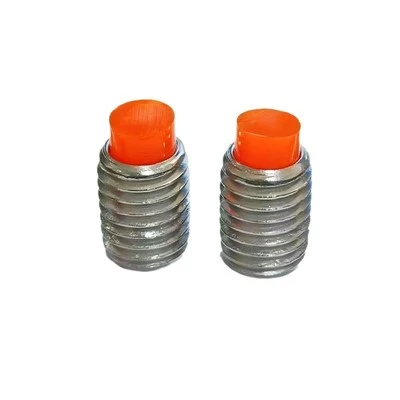
![Micro Spring Plunger]() Micro Spring Plunger-Nose material:304 stainless steel,303 stainless steel, 410 stainless steelview more
Micro Spring Plunger-Nose material:304 stainless steel,303 stainless steel, 410 stainless steelview more
-Body Material: 303 stainless steel
-Spring material:303 stainless steel
-Spring force:... -
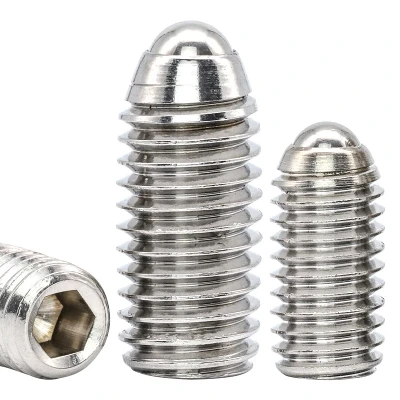
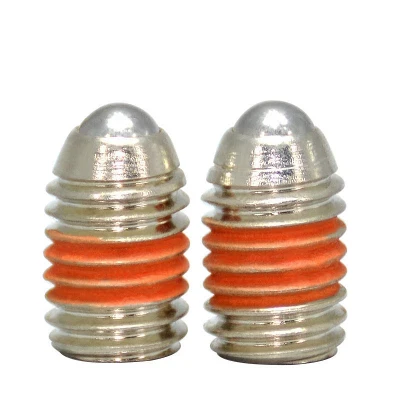
![Ball Nose Threaded Spring Plunger]() Ball Nose Threaded Spring PlungerThe ball nose threaded spring plunger consists of three main parts: a spring, a ball (also called a steel ball), and the plunger body. The spring provides the necessary force, while the ball...view more
Ball Nose Threaded Spring PlungerThe ball nose threaded spring plunger consists of three main parts: a spring, a ball (also called a steel ball), and the plunger body. The spring provides the necessary force, while the ball...view more -
![Long Nose Spring Plunger]() Long Nose Spring PlungerMaterial:Stainless Steelview more
Long Nose Spring PlungerMaterial:Stainless Steelview more
Nose Type:Extended Nose
Installation:Threaded / Press Fit
Tolerance:Precision Machined
MOQ:Negotiable -
![Locking Threaded Spring Plunger]() Locking Threaded Spring PlungerThe locking threaded spring plunger is a special fastener comprising a thread body, a spring, and a steel ball. They are known for their high strength, strong vibration resistance, long service...view more
Locking Threaded Spring PlungerThe locking threaded spring plunger is a special fastener comprising a thread body, a spring, and a steel ball. They are known for their high strength, strong vibration resistance, long service...view more -
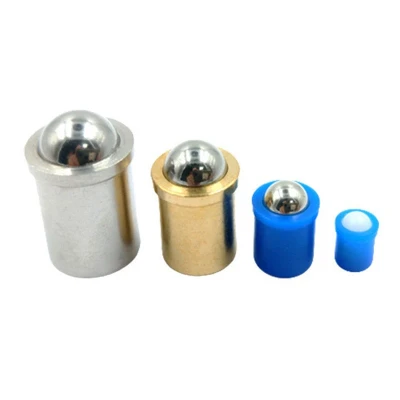
![Press Fit Spring Plunger]() Press Fit Spring PlungerThe press-fit spring plunger, also known as a ball head plunger, is a load-bearing component made up of a casing, spring, and a ball.view more
Press Fit Spring PlungerThe press-fit spring plunger, also known as a ball head plunger, is a load-bearing component made up of a casing, spring, and a ball.view more

Specification
|
M |
D |
L |
S |
D |
A |
Spring Load |
|||
|
102 - 1 |
102-2 |
||||||||
|
MIN |
MAX |
MIN |
MAX |
||||||
|
5 |
7 |
5 |
0.8 |
3 |
0.8 |
0.6 |
5.6 |
1.3 |
6.4 |
|
6 |
8 |
6 |
1 |
4 |
1 |
2.8 |
6.3 |
2.7 |
8 |
|
8 |
10 |
7 |
1.6 |
5 |
1.5 |
2.9 |
9.6 |
1.3 |
10.2 |
|
10 |
12 |
9 |
1.9 |
6.35 |
1.5 |
6.4 |
11.7 |
6.1 |
17.2 |
|
12 |
14 |
11.5 |
2.4 |
7.94 |
1.5 |
9 |
15 |
2.1 |
18.8 |
|
14 |
16 |
14 |
2.8 |
8.5 |
1.5 |
9.5 |
20 |
9.5 |
20 |
|
16 |
18 |
16 |
3.2 |
9.53 |
2 |
9.9 |
21.5 |
13 |
25.5 |
Types of Spring Plunger
The spring plungers produced by our company mainly include the following types:
Ball Nose Threaded Spring Plunger
The ball nose threaded spring plunger consists of three main parts: a spring, a ball (also called a steel ball), and the plunger body. The spring provides the necessary force, while the ball serves as the moving contact point, and the plunger body holds all the components together to ensure smooth operation.
Long Nose Spring Plunger
The long-nose spring plunger is a mechanical fastener that is designed for precise positioning and secure fastening. with its extended nose, allowing it to reach deep into components for a reliable fastening. The plunger consists of a spring and a plunger body, where the spring provides the force to hold parts together, and the long nose ensures a firm connection.
Flanged Threaded Spring Plunger
The flanged thread spring plunger is a mechanical component that combines flange mounting and ball head contact. It contained a flanged base, plunger body, spring, and a steel ball. This allows it to handle high loads while providing precise positioning and buffering.
Advantages of Spring Plunger
Consistent Force Application
Ensures reliable positioning or locking every time.
01
Compact Design
Fits into small or confined spaces.
02
Versatility
Compatible with a wide variety of surfaces and materials.
03
Ease of Installation
Especially threaded models, which can be replaced or adjusted quickly.
04
Reusability
Ideal for applications that undergo frequent repositioning.
05
Applications of Spring Plunger

Automotive Industry
Spring plungers are used in the automotive industry for tool positioning, workholding, and fixture locking. These plungers help ensure that parts remain securely in place during assembly, machining, or quality control processes.

Aerospace Industry
In the aerospace industry, precision is critical. Spring plungers are used in tooling and positioning systems, ensuring that parts remain in alignment during assembly, inspection, and testing.

Industrial Machinery
Spring plungers are used extensively in industrial machinery, particularly in workholding and positioning systems. They are commonly found in CNC machines, milling machines, and lathes, where they help securely hold workpieces in place during operations.

Consumer Electronics
In the consumer electronics industry, spring plungers are used in the assembly and testing of small electronic components. They help secure and position components while preventing any accidental movement during the assembly or testing phases.
Materials Used in Spring Plungers
Stainless Steel
Stainless steel is a popular material for spring plungers because of its corrosion resistance, durability, and strength. It is ideal for applications in harsh environments, including wet or chemical exposure.
Advantages: Stainless steel plungers resist rust and corrosion, making them perfect for use in marine environments, food processing, and aerospace.
Carbon Steel
Carbon steel is another common material used for spring plungers. Although it does not have the same corrosion resistance as stainless steel, it is more cost-effective and provides excellent strength.
Advantages: Strong, durable, and economical, making it suitable for applications where cost-efficiency is important.
Disadvantages: More prone to rust and corrosion when exposed to moisture or harsh chemicals.
Zinc Alloy Plating
Zinc alloy plating is often used to coat carbon steel or stainless steel spring plungers, providing additional corrosion protection.
Advantages: Provides a cost-effective corrosion-resistant coating, suitable for mildly corrosive environments.
Customizable Options for Spring Plungers
Packaging and Shipping
|
Packaging |
Plastic bag + outer carton + pallets |
|
Shipping |
We will help you to choose the best shipping way according to your detail requirements. By sea, by air, or by express, etc. |
Other Ordering Service Information
Payment Methods
T/T, L/c,Western Union, Alipay etc
Payment Terms
1)Full payment, 2)30% Advanced payment and 70%balance payment.
Package Methods
8Boxes/carton, 20-25kg/carton, 36-48 cartons/pallet.
Leading Time
5-7 Days for standard parts and 12-30 working days for customized items.
Our Certificate

FAQ
We're professional spring plunger manufacturers and suppliers in China, specialized in providing high quality products and service. We warmly welcome you to wholesale customized spring plunger made in China here from our factory.
spring plunger, Ball Nose Threaded Spring Plunger, Press Fit Spring Plunger