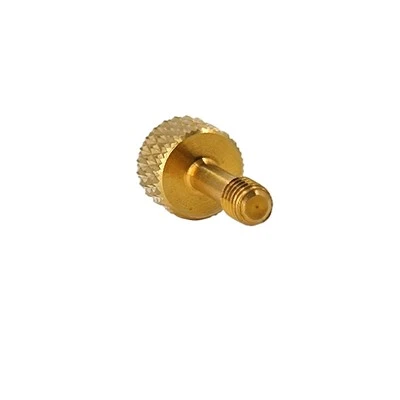
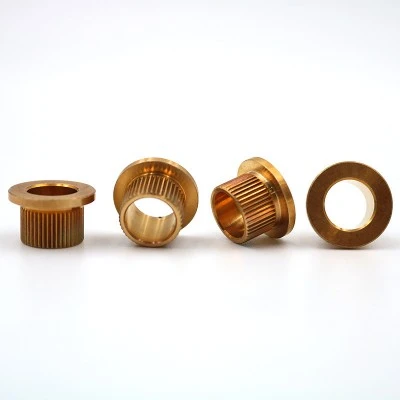
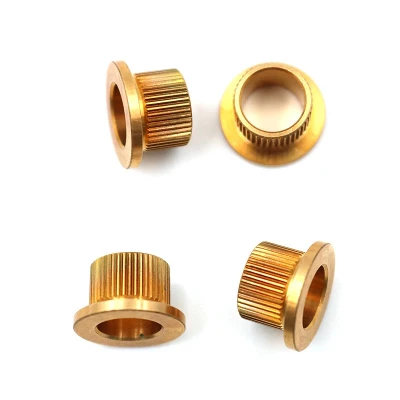
A brass knurled step flange rivet is a fastener that combines the characteristics of knurling, anti-slip, step positioning, and flange reinforcement. It is widely used in electronics, machinery, and other fields; therefore, its surface treatment must consider corrosion resistance, aesthetics, and functionality. The following are key processing processes and precautions.
1. Preferred electroplating treatment
Nickel plating: corrosion-resistant, wear-resistant, silver-white surface, suitable for neutral or weakly corrosive environments.
Thickness: usually 5-15μm, must pass salt spray test (such as 48-72 hours of neutral salt spray).
Applicable scenarios: electronic equipment, hardware accessories, and other occasions that do not require high conductivity.
Tin plating: excellent conductivity and weldability, environmental protection, and RoHS compliance; pay attention to avoid a high temperature environment
, suitable for electrical connection parts.
Silver plating: high conductivity/thermal conductivity, but easy to sulfurize and blacken, needs to prevent discoloration treatment.
Cost: high, mostly used in high-end electronics or military fields.
2. Chemical passivation
Process: chromate passivation or benzotriazole passivation.
Effect: Forming an oxide film to delay the discoloration of brass, low cost but weak protection.
Applicable: Indoor dry environment or short-term anti-rust needs.
3. Coating treatment
Electrophoretic paint/epoxy coating
Advantages: optional colors, strong adhesion, chemical corrosion resistance.
Disadvantages: Increased thickness may affect assembly accuracy, and the coating needs to be controlled at 10-20μm.
Dacromet characteristics: no risk of hydrogen embrittlement, high temperature resistance below 300℃, suitable for automotive or outdoor fasteners.
4. Mechanical treatment
Polishing/brushing
Purpose: Improve the appearance and texture, often used as a pre-treatment step for electroplating.
Note: Knurled parts require special tooling to avoid texture wear.
5. Special treatment
Anti-fingerprint coating
Application: Rivets that are frequently used in electronic products to reduce oil stains.
Advantages of Teflon coating: self-lubricating, acid and alkali resistant, but high cost, mostly used in medical devices.
Selection basis
Environmental factors: Nickel plating or Dacromet plating is preferred for marine environments; passivation or silver plating is selected for high-temperature environments.
Cost control: Tin plating or passivation can be selected for mass production, and silver plating can be considered for niche high-end products.
Assembly requirements: Coated rivets need to reserve tolerances to avoid interference fit failure.
By reasonably selecting the surface treatment process, the life of the rivet can be significantly extended, and the needs of different application scenarios can be met.