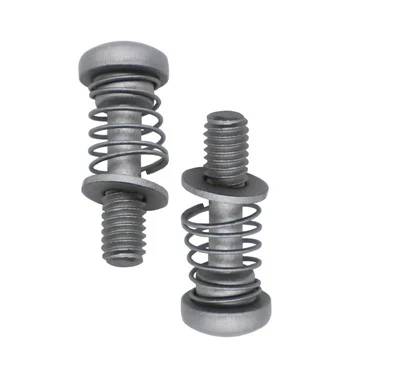
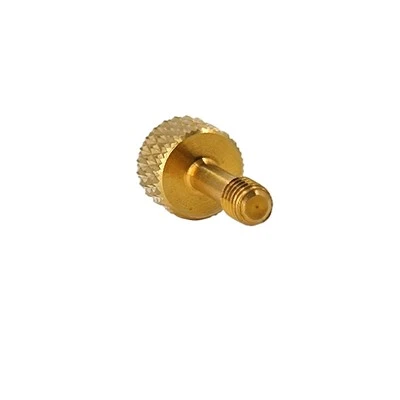
The surface treatment of 12.9 grade CNC tool turning tool bar accessories must take into account the requirements of corrosion resistance, wear resistance, and high strength. It must also adapt to the cutting fluid environment. The following are key surface treatment solutions.
1. Core requirements of surface treatment
Corrosion resistance: Resistant to corrosion from cutting fluids and humid environments.
Wear resistance: Reduce friction loss between the shim and the blade, and between the screw and the threaded hole.
Fatigue resistance: High-strength bolts with a 12.9 grade must be designed to avoid the risk of hydrogen embrittlement.
Dimensional accuracy: The deformation after treatment is ≤0.005mm to ensure tight assembly.

2. Recommended treatment process
(1) Shim surface treatment
Hard chrome plating
Thickness: 0.01-0.03mm
Advantages: Hardness up to HV900, excellent wear resistance, resistance to cutting fluid corrosion.
Note: Pre-nickel plating (2-3μm) is required to improve bonding strength.
Nitriding treatment (QPQ)
Depth of penetration: 0.1-0.3mm, surface hardness HV1000-1200.
Advantages: Excellent anti-seizure performance, suitable for high-load friction conditions.
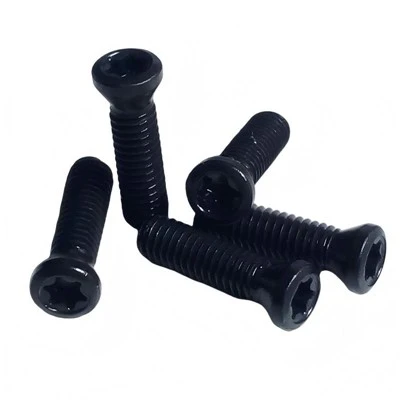
(2) Non-standard stud screw treatment
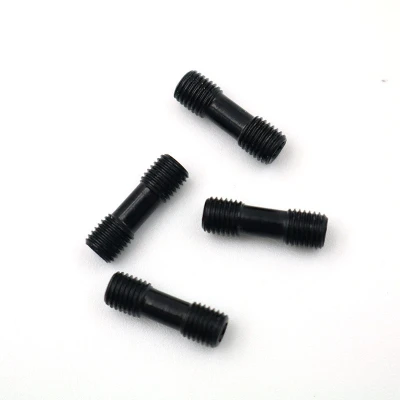
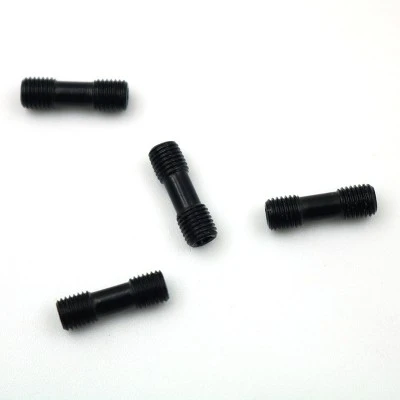
Oxidation blackening (+ sealing)
Low-cost solution, salt spray resistance for more than 48 hours (after sealing).
Applicable to M5/M6 small screws, avoiding the risk of hydrogen embrittlement.
Zinc-nickel alloy electroplating (12-15μm)
Salt spray resistance for morethan 500 hours, in line with DIN EN ISO 4042 standard.
Key step: After electroplating, dehydrogenation annealing at 200℃×4h to ensure 12.9 grade strength.
Dacromet coating: No hydrogen embrittlement risk, salt spray resistance for 1000 hours, but the friction coefficient needs to be used with thread anti-loosening agent.
4. Precautions
Hydrogen Embrittlement Control: 12.9-grade screws must be dehydrogenated after electroplating (200-230°C for 4-8 hours).
Thread Fit: Coating tolerances must be maintained (e.g., the pitch diameter of an M6 screw after plating should be 5.974-5.990mm).
Environmental Requirements: Cyanide-free zinc plating or trivalent chromium passivation is preferred.
5. Non-Standard Solutions
Laser Cladding: For heavy-duty shims, a WC-Co coating is deposited onto the surface, achieving a hardness of HRC 70+, but the cost is extremely high.
PTFE Coating: Spray-coated on the screw threads to reduce the friction coefficient (μ≤0.15), suitable for high-frequency disassembly operations.
The selection should be based on actual cost budget, corrosion resistance level, and wear resistance requirements. A combination of hard chrome plating for the shim and zinc-nickel plating for the screw is generally recommended.