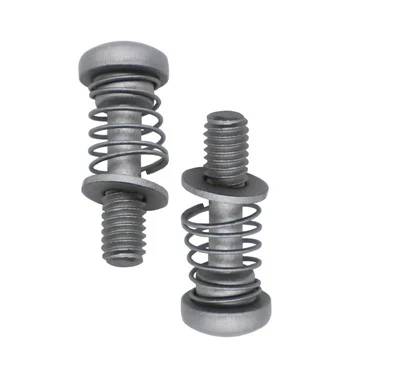
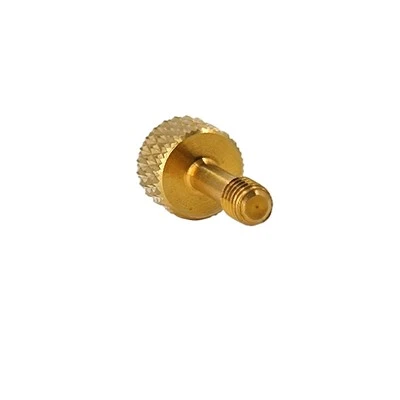
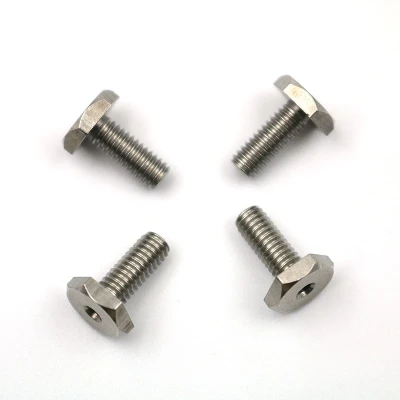
303 stainless steel is widely used in non-standard car parts (such as external hexagon, internal thread, external thread, hollow screws, etc.) due to its excellent machinability, corrosion resistance, and medium strength. The following is a relevant introduction and precautions about its surface treatment methods.
1. Common surface treatment processes
Mechanical treatment
Polishing
Mirror polishing: Ra ≤ 0.2 μm, improving aesthetics, suitable for the food/medical industries.
Brushed polishing: forms matte texture (straight/random lines), anti-fingerprint, and wear-resistant.
Sandblasting
Use glass beads/aluminum oxide (80-200 mesh) to form a uniform matte surface and enhance coating adhesion.
Chemical treatment
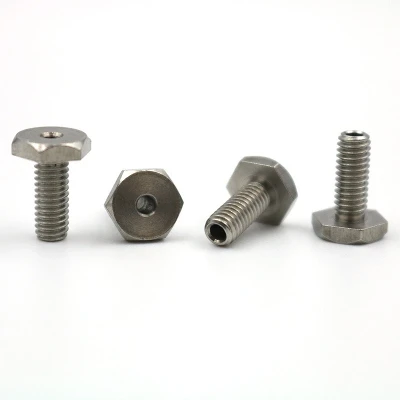
Passivation: nitric acid or citric acid passivation, remove free iron, improve corrosion resistance, salt spray test ≥ 96h. Retain the original color of the metal and meet ASTM A967 standards.
Pickling: Remove the oxide scale and restore the uniform grayish white, but the surface is slightly rough (Ra1.6-3.2μm).
Electrochemical treatment
Electroplating (be careful)
Nickel plating: Increase wear resistance (5-15μm), but may reduce the corrosion resistance of stainless steel.
Chromium plating: Hardness of 800-1000HV, suitable for high wear environment.
Electrolytic polishing: Remove the surface layer at the micron level, Ra can reach 0.1μm, and passivate the surface at the same time.
Coating treatment: PVD coating, titanium gold/black chrome plating, thickness 2-5μm, hardness above 2000HV, various colors.
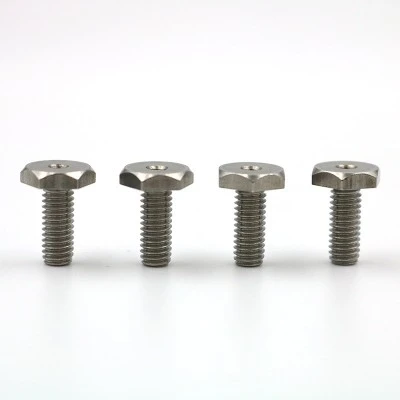
Dacromet: No risk of hydrogen embrittlement, salt spray resistance for more than 500h, but the color is limited to silver gray or dark gray.
2. Selection according to functional requirements
Anti-corrosion priority: Passivation plus electrolytic polishing is recommended. This process is low-cost and meets medical and food standards.
High wear resistance: PVD coating or hard chrome plating is recommended, which is applicable to tool parts and has a higher cost.
Insulation/chemical corrosion resistance: Teflon spraying process is recommended; the working temperature is -200℃~260℃, and it should be avoided for threaded parts.
Decorative appearance: Mirror polishing plus PVD gold titanium plating process is recommended, and regular maintenance is required to avoid scratches.
III. Special precautions
Threaded part treatment: Avoid thick coating affecting the fit, and passivation or electrolytic polishing is recommended.
Magnetic abrasive polishing can be used for internal teeth to improve the finish.
Hollow screws: The inner hole needs ultrasonic cleaning (40kHz) + passivation to prevent residual acid.
Non-standard size restrictions
Oversized parts (>1m): Sandblasting + passivation is preferred, and the size of the electroplating tank may be insufficient.
303 stainless steel contains sulfur and is easy to cut, but its corrosion resistance is slightly lower than that of 304. It is recommended to choose a passivation + electrolytic polishing combination process for key anti-corrosion scenarios.
Through reasonable selection and standardized operation, 303 stainless steel non-standard car parts can meet the special needs of most mechanical, electronic, and chemical fields, balancing cost and performance.