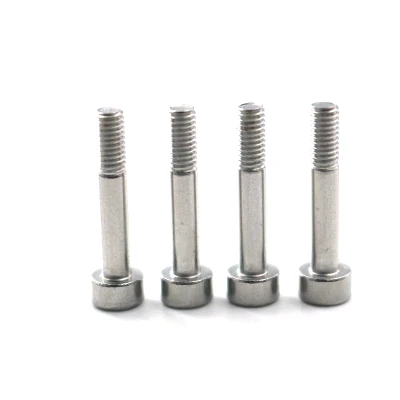
Cup-head hexagon socket screws with a half-thread design are a common mechanical fastener. The following explains how to use cup-head hexagon socket screws. This section will cover their characteristics, applicable scenarios, usage instructions, key considerations, and frequently asked questions.
1. Cup-head Hexagon Socket Screws with a Half-Thread Design
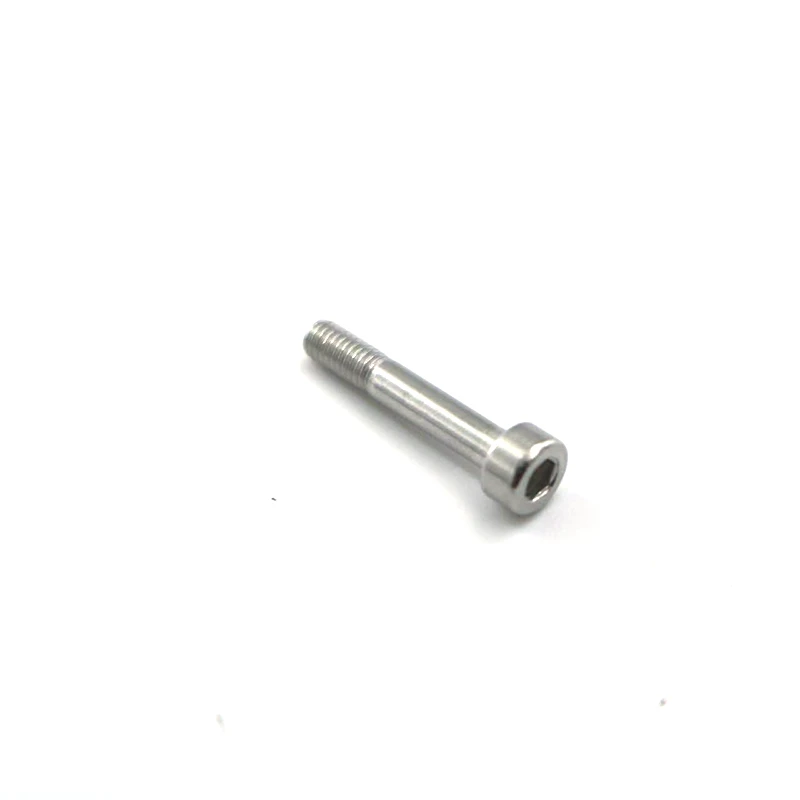
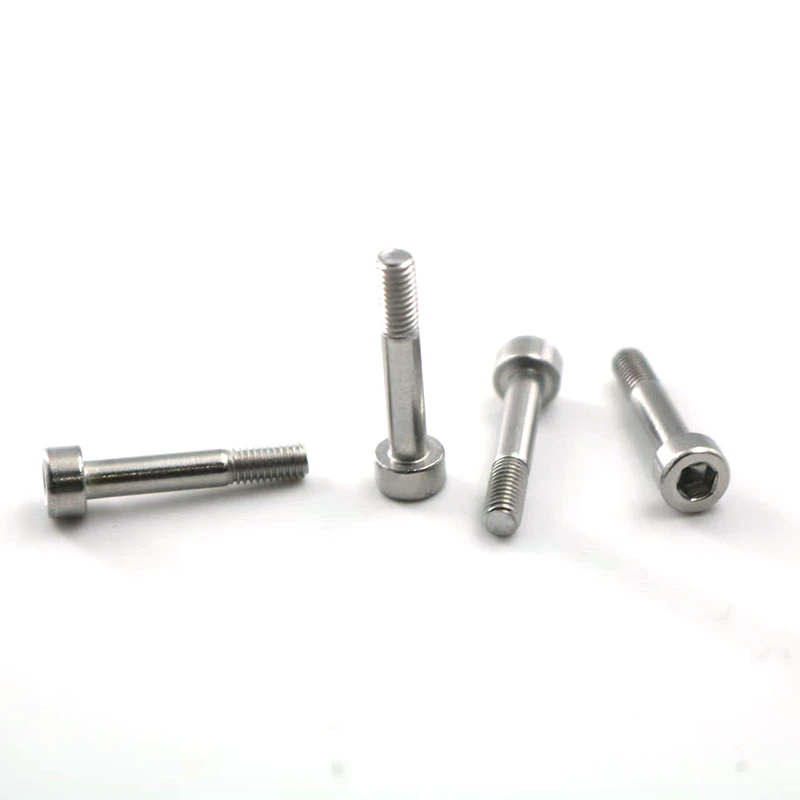
Cup-head: A cylindrical head with a flat top and vertical cylindrical sides. This design provides a large wrench contact surface and pressure-bearing area.
Hexagon: The head has a hexagonal hole and requires an Allen wrench for tightening and loosening.
Half-thread: The screw shank consists of two sections:
Plain: The unthreaded section, with a specified length.
Thread: The threaded section.
Metric specifications (M3, M4, M5): Refers to the nominal thread diameter. M3 is 3mm, M4 is 4mm, and M5 is 5mm. These are the most commonly used metric screw sizes.
Designed for: The plain shank provides a transitional or close clearance fit with the through-hole of the connected component. It provides positioning, centering, and shear resistance while preventing the threads from participating in shear, thus protecting them from damage. The threaded portion fully engages the threaded hole of the other part, providing a strong axial clamping force.
II. Applications and Advantages
Applications: Connections requiring precise positioning and centering: The smooth rod fits into the through-hole to prevent radial movement between the two parts. Common applications include mechanical structures, jigs, molds, automation equipment, and 3D printers.
Connections requiring shear resistance: The smooth rod has a larger diameter (equal to the major diameter of the thread) and can withstand forces perpendicular to the screw axis better than threads.
Connections requiring frequent disassembly: The hexagonal head drive offers high torque and is less prone to stripping, making it more reliable than Phillips or slotted screws.
Applications requiring space constraints: Compared to hexagonal head screws, the cup head has no exposed wrench space and requires only a single hole for operation, making it more compact.
Advantages: High load-bearing capacity: The head has a large contact area, high preload, and a secure connection.
High precision: The hexagonal head drive is less prone to slipping and can apply precise torque.
Neat and aesthetically pleasing: After installation, the head is exposed, giving it a more industrial and sturdy look than cou.

III. Detailed Usage Steps and Methods
Preparation:
Choose the correct screw: Confirm the screw's specifications, length, and performance rating according to the design requirements. Select the correct hexagonal wrench: Always use a wrench that exactly matches the screw head size.
Warning: Using an undersized wrench can severely damage the wrench and the screw hole, making it impossible to remove the screw.
Machining Holes
Through Holes: The drill hole diameter should be slightly larger than the screw's polished shaft diameter (for example, an M4 polished shaft is approximately 4mm; a through hole can be drilled to 4.2mm or 4.3mm). Ensure that the polished shaft can pass smoothly and without wiggling.
Threaded Holes: Tapping is required. Strict standards apply to the drill hole diameter: The depth of the threaded hole should be at least 1.2 times the screw's inserted length.
Installation Steps:
Alignment: Align the two parts to be connected, ensuring that the through hole and the threaded hole are aligned.
Insert: Insert the polished shaft of the screw through the through hole of the upper part.
Inserting: Gently thread the screw into the threaded hole of the underlying component several turns by hand to ensure there is no skewing and that the threads engage smoothly. Never force the screw in with a wrench, as this can easily damage the threads.
Tightening: Using the correct size Allen wrench, insert the screw head vertically until it stops. Tighten evenly in a clockwise direction.
Applying Torque: For critical mechanical connections, use a torque wrench set to the recommended torque value. This ensures sufficient preload without breaking the screw or damaging the threads.
IV. Key Considerations and Common Mistakes
Wrench Selection Error: Using an inappropriate or worn wrench is the main cause of screw thread slippage. Once the threads slip, removal becomes extremely difficult.
Oblique Operation: Failure to insert the wrench vertically and apply pressure can damage the screw hole in a "seesaw" motion, reducing the contact area and causing slippage.
Confusing Through-Hole and Threaded Hole Sizes
Mistake: Drilling the through hole the same size as the threaded base hole. This can cause the polished rod to be unable to pass through or to rub against the threads when passing through, damaging the connection.
Error: Drilling the threaded hole the same size as the through hole. This prevents effective thread formation and results in a lack of clamping force.
Incorrect tightening torque
Over-loosening: The connection is not secure and can easily loosen and fall off during operation.
Over-tightening: This can cause the screw to stretch, break, or cause the thread in the threaded hole to strip ("stripping"). Small screws like M3 and M4 are very fragile and particularly prone to breaking.
Cleaning: Before installation, ensure the screw hole is free of impurities such as iron filings and oil, as this can affect torque accuracy and connection strength.
This structured and well-detailed user guide allows you to efficiently understand and learn how to use this screw, ensuring you receive the product experience and value you desire.