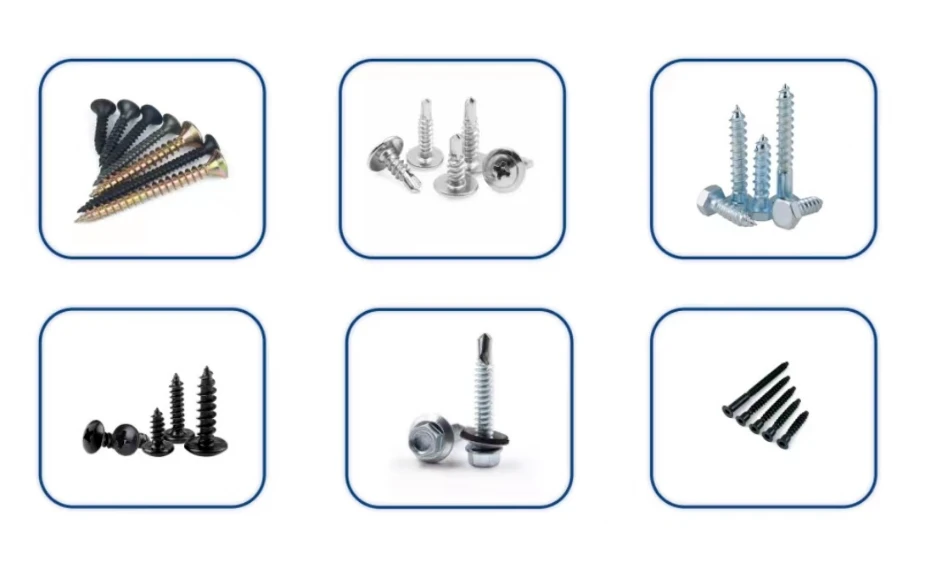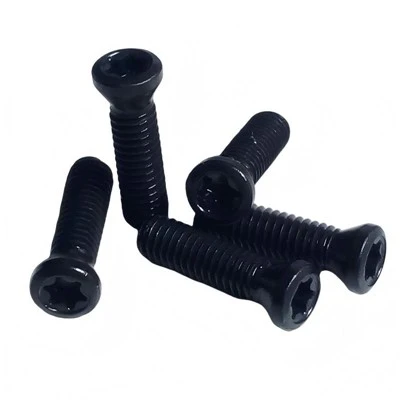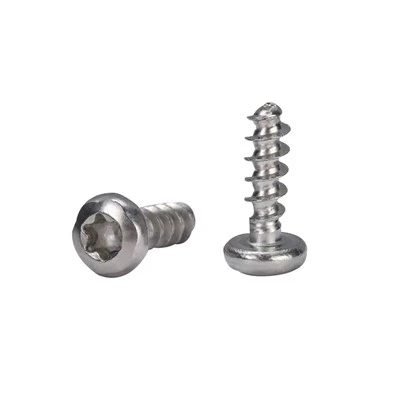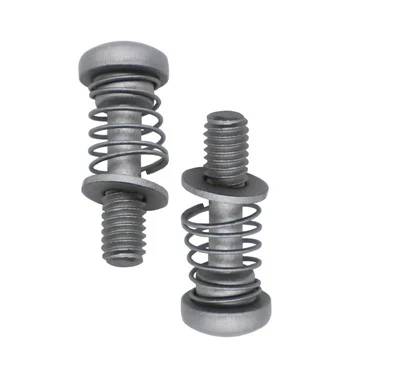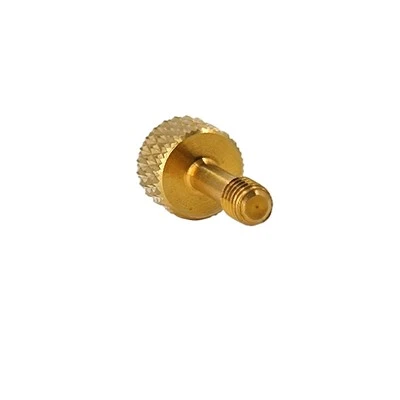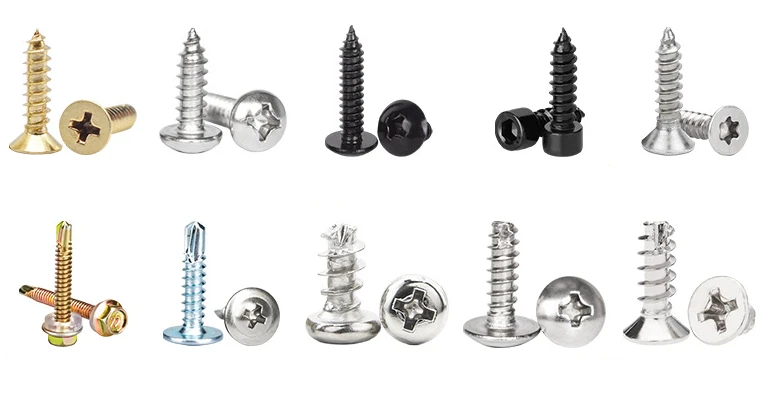
The pointed-tail self-drilling screw is a fastener with self-drilling properties. Its unique geometric design enables it to show excellent performance in the field of connection technology. The special conical design of the screw tip, combined with the sharp cutting edge, can easily penetrate the surface of various substrates. This design not only significantly reduces the torque required for installation (about 30% less than traditional screws) but also effectively avoids material cracking or deformation. The screw head usually adopts a composite groove design, which is compatible with multiple drive methods such as cross (PH) and hexagon (Hex), providing flexible installation options for different application scenarios.
The correct installation process is the key to ensuring that the screw performance is fully utilized. First, it is necessary to select the appropriate screw specifications according to the characteristics of the substrate: for metal sheets with a thickness of 0.8-1.2mm, it is recommended to use the ST3.5 series; for plastic parts, the fine-tooth ST2.9 specification is recommended. During installation, the power tool speed should be kept in the optimized range of 800-1200rpm, and a constant axial pressure of 5-8N should be applied at the same time. It is particularly important to reduce the speed when the torque reaches 80% of the preset value to avoid over-tightening and thread failure. For precision electronic assembly, it is recommended to use an intelligent screwdriver with closed-loop control, which can monitor the installation torque in real time and stop automatically to ensure that each connection point reaches the optimal tightening state.
Different substrates require targeted screw selection strategies. When using aluminum alloy, it is recommended to use anodized screws with a surface hardness of more than HV500; stainless steel substrates require SUS410 screws that have undergone special heat treatment. Pay special attention to thermal deformation when installing plastic parts. Nylon and other engineering plastics are suitable for fine-pitch screws with a pitch of 0.6mm, and they need to be left to stand for more than 2 hours after installation to eliminate internal stress. For composite panels, it is recommended to preapply special sealant on the bonding surface, which can enhance the sealing and prevent the expansion of microcracks. The newly developed nano-coated screws perform well on carbon fiber composites, and their friction coefficient can be as low as 0.08, greatly reducing the risk of installation damage.