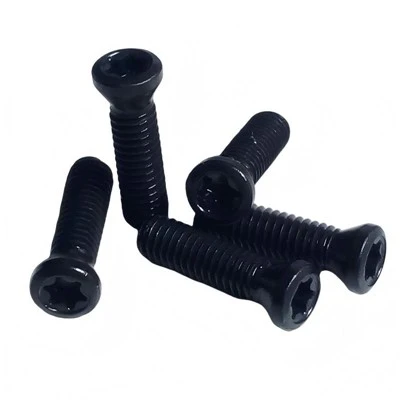
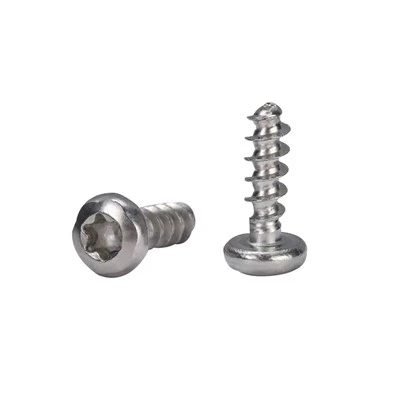
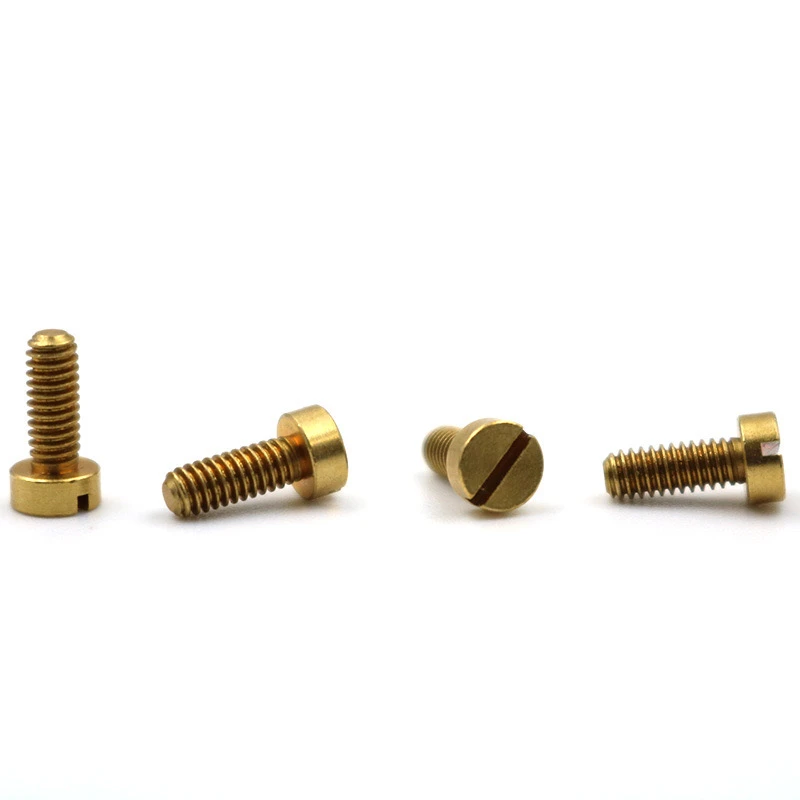
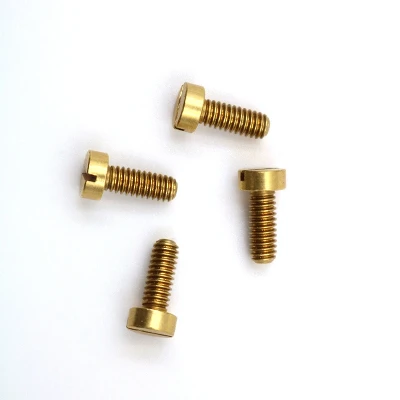
M1 M1.2 M1.4 M2 M3 Brass cylindrical head slotted screw" is a small mechanical fastener, belonging to the category of precision screws. It has the following characteristics.
Material: Brass (corrosion-resistant, good conductivity, beautiful appearance)
Head type: cylindrical head (flat top, vertical side)
Slot type: slotted (suitable for slotted screwdriver operation)
Application: small assembly of precision instruments, electronic equipment, decorative parts, etc.
Usage steps
1. Preparation
Tool selection:
Slotted screwdriver of corresponding specifications (the width of the blade should match the slot)
M1-M1.4: It is recommended to use a 0.8-1.2mm blade
M2-M3: It is recommended to use a 1.5-2.5mm blade
Workpiece preparation:
Make sure that the connected parts have prefabricated threaded holes of appropriate sizes. Brass screws are usually used for the installation of metal parts or pre-tapped threads
2. Installation method
Alignment and positioning:
Align the screw vertically with the threaded hole
For small specifications, it is recommended to use tweezers to assist in positioning
Initial screwing: Slightly rotate clockwise for 1-2 turns to make the thread bite, and keep the screw perpendicular to the workpiece surface
Tightening operation: Use appropriate force to rotate the screwdriver. Brass is soft, so excessive force should be avoided. Stop rotating when obvious resistance is felt
3. Precautions
Anti-slip groove treatment:
Make sure that the screwdriver fits the groove completely
A small amount of plasticine can be applied to the blade to increase friction (especially for small specifications)
Anti-damage measures:
Avoid repeated disassembly and assembly (brass threads are prone to wear)
The installation environment should be clean and free of debris
Special applications:
Conductive occasions: Make sure the screws are fully tightened to obtain good conductivity
Wet environment: Consider using a rust inhibitor (although brass itself is corrosion-resistant)3. Precautions
Anti-slip groove treatment:
Make sure the screwdriver fits perfectly in the groove
A small amount of plasticine can be applied to the blade to increase friction (especially for small specifications)
Anti-damage measures:
Avoid repeated disassembly and assembly (brass threads are prone to wear)
The installation environment should be clean and free of debris
Special applications:
Conductive occasions: Make sure the screws are fully tightened for good conductivity
Wet environments: Consider using rust inhibitors, although brass itself is corrosion-resistant
Common problem handling
Slip groove treatment
Precautions:
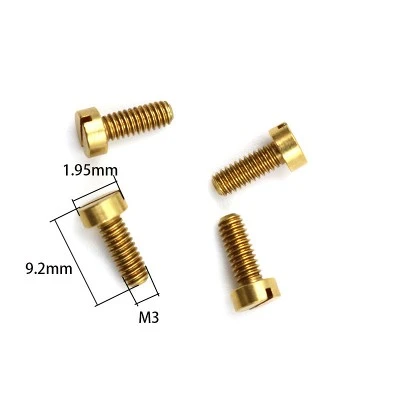
Use a screwdriver of the matching size
Apply appropriate downward pressure during installation
Repair method
Minor slide: try to increase friction with a rubber band
Severe slide: need to use a micro-extraction tool or drill to remove
Thread damage
Prevention: Make sure the threaded hole size is correct
Repair: Minor damage can be repaired with a tap; severe damage requires re-tapping
Maintenance recommendations
Regularly check the tightening status (especially in a vibrating environment)
Avoid using acidic cleaners when cleaning
Long-term exposure to air may cause oxidation, and can be maintained with a copper-specific cleaner
This solution takes into account both technical details and procurement decision efficiency, and can further simplify or expand specific modules according to actual needs.