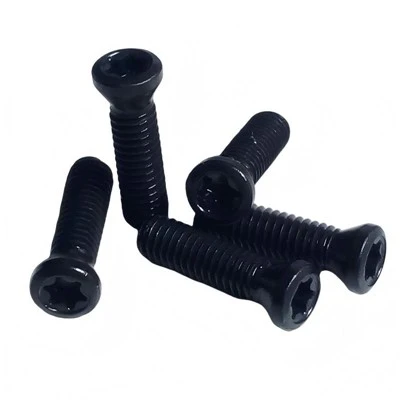
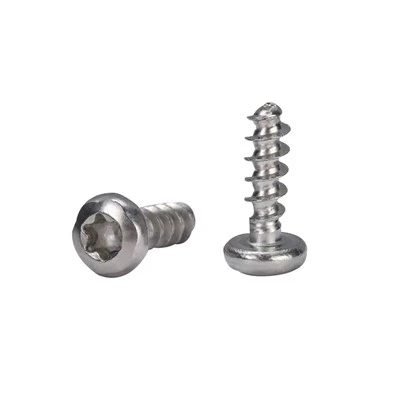
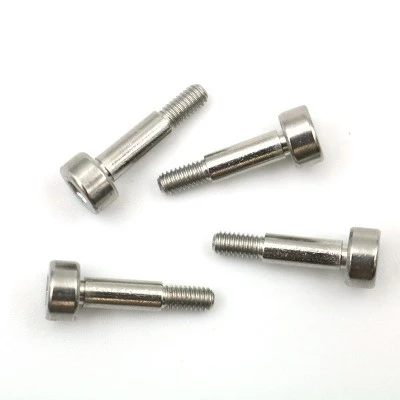
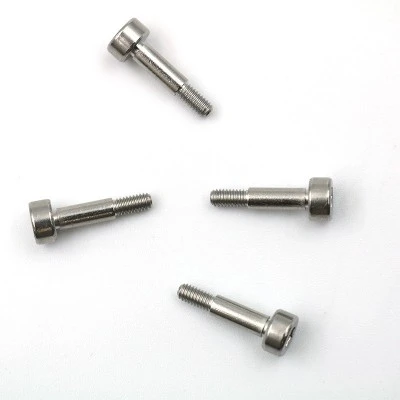
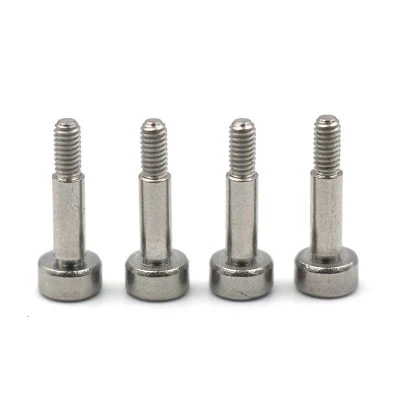
The 2-56 American standard thread stainless steel hexagon socket head cap screw (also known as a shoulder bolt or step bolt) is a specially designed fastener that combines positioning, limiting, and tightening functions, making it ideal for applications requiring precise height control. Below are detailed instructions and precautions for use.
I. Structural Features
Threaded Section: 2-56 American standard unified fine thread, approximately 2.06mm diameter, 0.453mm pitch.
Polished Shoulder: An unthreaded cylindrical section with a fixed height, used for limiting or locating, ensuring assembly clearance.
Hexagon Drive: The head features a hexagon socket for countersunk mounting.
II. Typical Applications
Precision machinery: Applications requiring controlled spacing between components, such as optical equipment and electronic instruments.
Limiting and Fixing: Prevents excessive compression of clamped components.
Alignment and Positioning: The polished section guides component alignment, which is then tightened using threads.
III. Installation Steps
Preparation: Check the bolt shoulder height, polished rod diameter, and compatibility with the component hole. Clean the threaded hole to ensure it is free of burrs.
Positioning and Installation: Insert the polished rod section into the component hole, with the lower end of the shoulder facing the base. Use an Allen wrench to tighten the threads until the shoulder fully contacts the base surface.
Torque Control: The reference torque for 2-56 stainless steel threads is approximately 0.09-0.12 N·m (to avoid stripping). Overtightening can cause the shoulder to deform and lose its retaining function.
IV. Key Considerations
Hole Design: The threaded hole depth must be greater than the thread length to avoid bumping or bottoming. The recommended clearance between the polished rod hole diameter and the shoulder is ≤0.05mm.
Preventative Measures: In high-temperature or vibration environments, thread sealant can be used.
Maintenance and Inspection: Regularly inspect the shoulder for deformation or wear. Stainless steel threads are prone to cold welding; therefore, use slow, reverse rotation during disassembly.
V. Troubleshooting
Problem 1: The shoulder does not contact the base surface. Cause: Insufficient hole depth or obstruction of the polished rod.
Solution: Remeasure the hole depth and clean.
Problem 2: Thread seizure.
Cause: Stainless steel material + dry friction.
Solution: Apply localized heat or use penetrating oil during disassembly.
Through proper selection and standardized operation, this type of bolt can significantly improve assembly accuracy and reliability, making it particularly suitable for precision machinery applications.