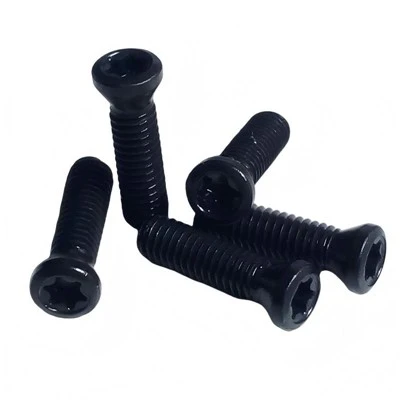
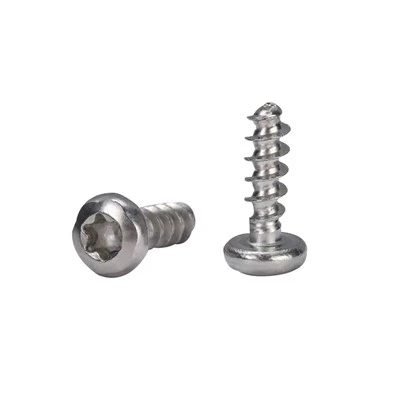
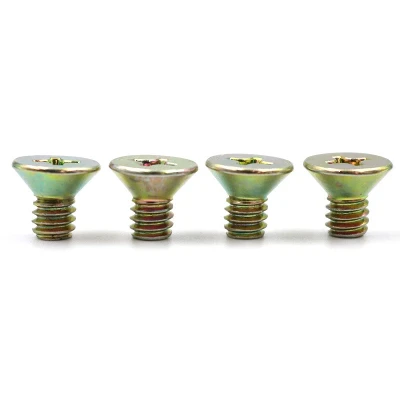
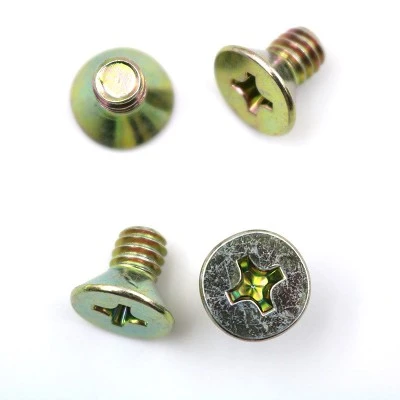
Carbon steel, zinc-plated Phillips countersunk machine screws are widely used in mechanical assembly, electronic equipment, furniture, and other fields. The following is a detailed guide to their use, covering key application points for common sizes from M2.5 to M8.
I. Screw Characteristics and Application Scenarios
Material and Coating
Carbon steel: High strength, low cost, suitable for general mechanical assembly.
Zinc-plated: Improved rust resistance, with a rainbow-colored appearance, suitable for indoor or slightly humid environments.
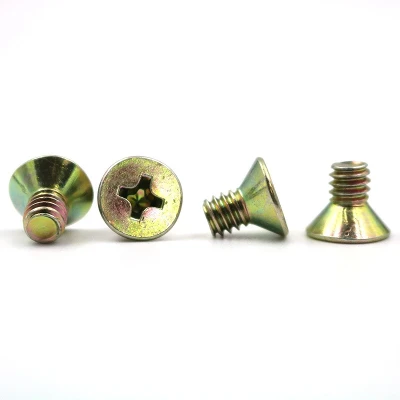
Countersunk head design: The screw head has a 90° taper, which allows it to be flush with the workpiece surface after installation. It must be used with a countersunk hole of the same angle to avoid interference with other components.
Phillips-slot design: A matching Phillips screwdriver (e.g., PH2 for M4-M6) is required to prevent slippage and damage to the notch.
II. Specification Selection and Matching
Specification Recommended Torque (N·m) Typical Applications
M2.5: 0.4-0.6 Small electronics, precision instruments
M3: 0.7-1.2 Circuit board mounting, plastic housings
M4: 1.5-2.5 Appliance assembly, metal brackets
M5: 3.0-5.0 Mechanical equipment, automotive interiors
M6: 6.0-9.0 Structural component connections, motor mounting
M8: 12-18 Heavy machinery, steel structure mounting
III. Installation Steps and Precautions
Pre-drilling Countersinking: Use a countersink drill bit to create a tapered hole (90° angle). The hole depth should ensure the screw head is fully seated.
Reference Hole Diameter: M4 countersink diameter ≈ 8.5mm, M6 ≈ 12mm (refer to ISO standards for details).
Screwdriver Compatibility: Prefer a magnetic Phillips bit to prevent the screw from falling out (e.g., PH1 for M3, PH2 for M5).
Tightening Operation
Hand Pre-tightening: First, gently turn counterclockwise to find the starting point of the thread, then tighten clockwise to avoid crooked threads.
Power Tool: Set to a low speed (<500 RPM) and use a torque limiter to prevent overloading.
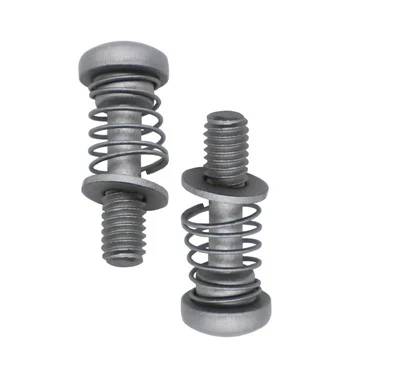
Preventing Loosening: In vibrating environments, add spring washers or apply thread sealant.
IV. Troubleshooting Common Problems
Thread Slippage: Place a rubber pad in the notch to increase friction, or try a larger screwdriver.
Rust Removal: Spray WD-40 and soak for 15 minutes before proceeding.
Bumped Head: Check for insufficient countersink depth or incorrect screw size.
V. Maintenance Recommendations: Regularly inspect the integrity of the plating. Apply rust preventative oil in humid environments.
Avoid direct contact with stainless steel or aluminum (this may cause galvanic corrosion).
Proper selection, precise pre-machining, and proper operation ensure optimal performance of these screws in assembly. For high-load or outdoor applications, it is recommended to upgrade to stainless steel or nickel-plated screws.