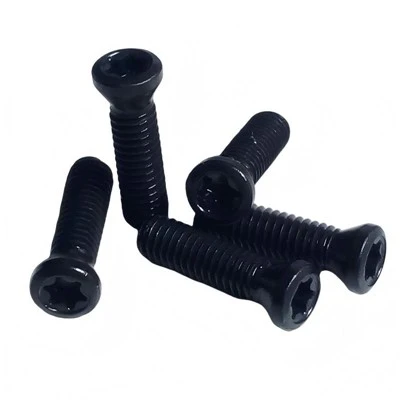
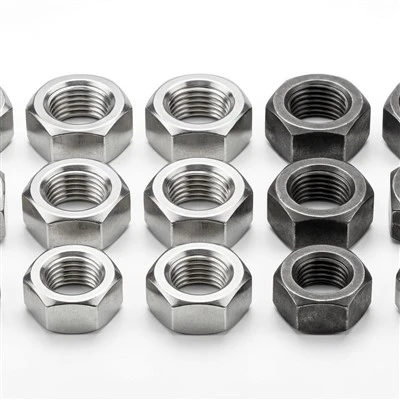
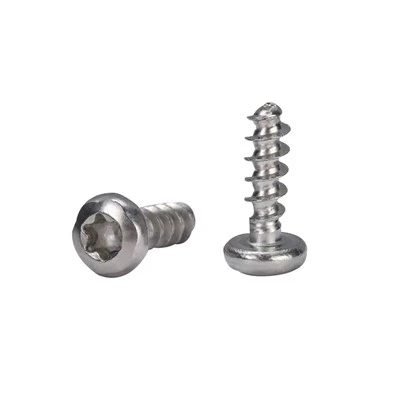
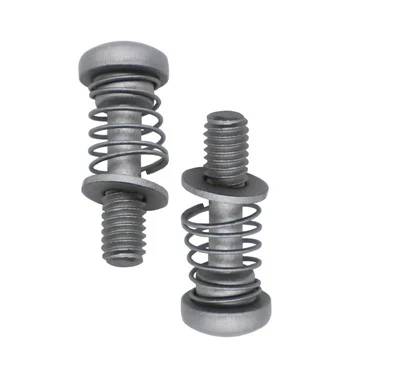
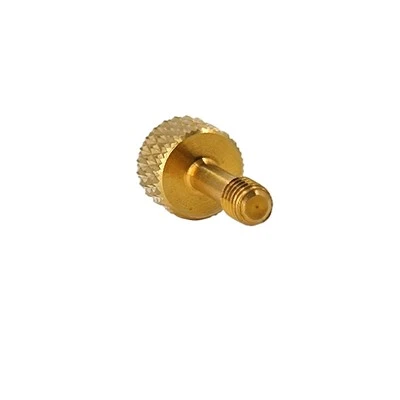
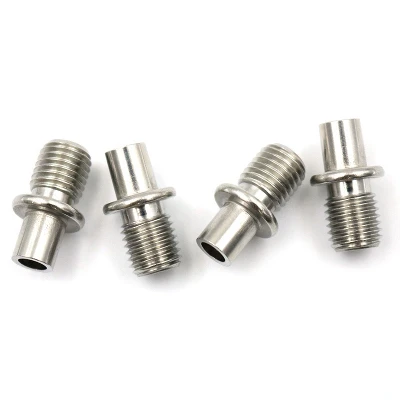
304 stainless steel, cold-forged non-standard M5, M6, and M8 adjustment bolts, as well as double-headed connecting screws, are often used in precision instruments, mechanical equipment, chemical pipelines, and other occasions that require adjustment or connection due to their corrosion resistance and high strength. The following are their typical uses and precautions.
1. Usage
Adjustment bolts (single or double-headed)
Function: used for fine-tuning the distance or tension adjustment between two components.
Installation steps: screw the threaded end into the threaded hole of one side of the component and pre-tighten manually. Use a wrench to fix the bolt head or one end, and rotate the double-headed screw or nut at the other end to adjust the length. After adjusting in place, fix it with a lock nut or thread glue to prevent loosening.

Double-headed connecting screw
Function: used to connect two components with threaded holes (such as flanges, brackets, etc.).
Installation steps:
Screw the two ends of the screw into the threaded holes of the two components respectively and align them manually.
Tighten the two ends alternately with a wrench to ensure uniform force and avoid eccentric loading.
If necessary, add gaskets at the connection to enhance sealing or disperse pressure.
2. Applicable scenarios
M5: Applicable to low-load scenarios such as electronic equipment and optical instruments.
M6/M8 (medium strength): Applicable to mechanical equipment, automation equipment, pipe supports, etc.
Environmental requirements: 304 stainless steel is corrosion-resistant in humid, acidic environments, but not suitable for strong acid or high-temperature chloride environments.
3. Precautions
Thread protection:
The cold-forged thread has high precision. Avoid forced screwing during installation to prevent random buckling. A small amount of lubricant (such as butter) can be applied to reduce friction.
Anti-loosening measures:
Spring washers, double nuts, or thread glue are required in vibration situations.
Load limit: The tensile strength of 304 stainless steel is about 500-700MPa. It needs to be designed and used according to the bolt specifications to avoid overloading.
Surface treatment:
The default is the original color of stainless steel. If corrosion resistance needs to be enhanced, electrolytic polishing or passivation can be selected.
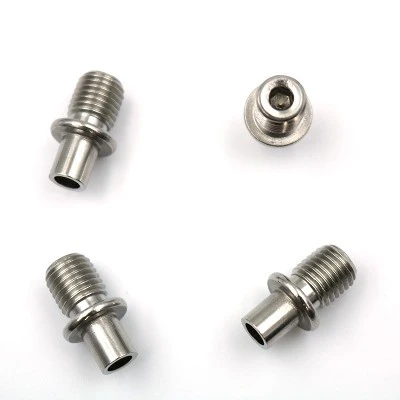
Non-standard customization: Non-standard sizes need to be confirmed for compatibility with supporting parts to avoid installation interference.
IV. Maintenance recommendations
Regularly check whether the bolts are loose or rusted, and avoid violent operation during disassembly to prevent thread damage.
Through reasonable selection and standardized installation, this type of bolt can ensure structural stability and long-term durability. If dynamic loads or extreme environments are involved, it is recommended to consult a professional engineer for further verification.
Through the coordinated optimization of materials, processes, and designs, this type of fastener is significantly superior to the ordinary standard
parts in precision, durability, and environmental adaptability, and is a key functional element in non-standard mechanical design.