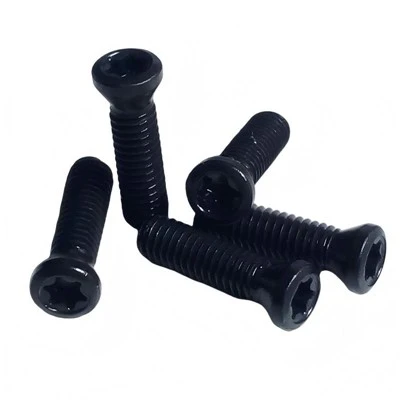
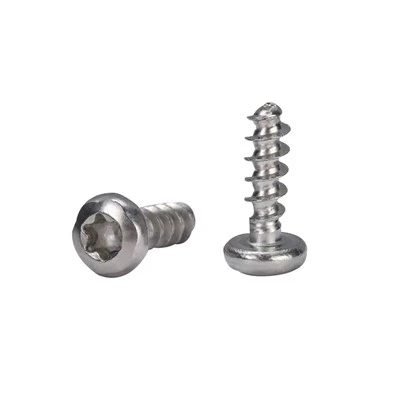
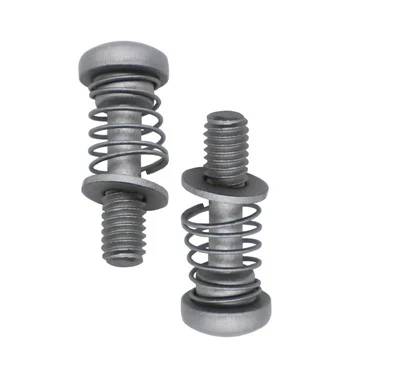
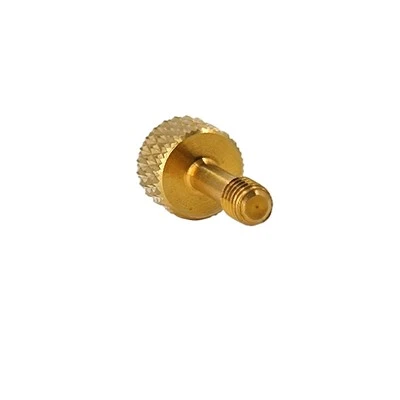
The following is a detailed guide to using 12.9-grade Torx screws and corresponding CNC toolholder screws (M2.5-M8), presented tiered by application requirements.
I. Characteristics of 12.9-Grade Torx Screws
Material and Strength: Grade 12.9 is a hardened alloy steel with a tensile strength of ≥1220 MPa. It is suitable for high-load, high-precision applications (such as securing toolholders on CNC machine tools).
Rust-Proofing: Common treatments include blackening, nickel plating, or Dacromet coating. Avoid acid and alkali corrosion.
Torque Sensitivity: Ultra-high strength leads to increased brittleness, requiring strict tightening according to torque to prevent breakage.
II. Key Usage Steps
Hole Preparation
The threaded hole must match the screw tolerance (grade 6H), and the hole edge must be chamfered to avoid burrs.
Clean the threaded hole (use compressed air or a dedicated tap to remove debris).
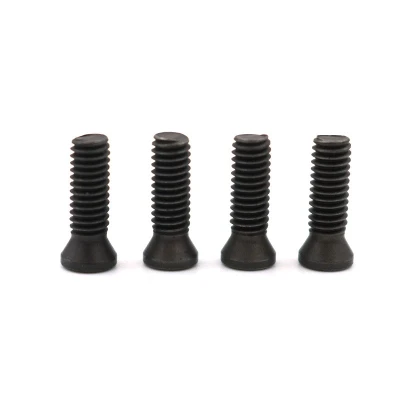
Screw Installation
Manual Pre-Tightening: Manually tighten the thread 2-3 times to ensure smoothness. Do not force the screw in.
Tightening in steps: Screws M6 and larger require increasing the torque in 2-3 increments.
Lubrication and Friction Reduction: Apply molybdenum disulfide grease under high-temperature conditions to reduce the friction coefficient by 20%-30%.
Torque Control: Use a preset torque wrench with a ±5% tolerance.
Dynamic loads (such as milling) require an additional 10%-15% safety margin.
IV. Typical Failures and Prevention
Thread Slippage: Caused by threaded hole wear, which can be repaired by replacing the thread insert with a wire thread insert.
Broken Head:
Cause: Excessive torque or worn hexagon socket (T-wrench mismatch).
Solution: Replace with a hexagon socket screw designed for impact wrenches (with a reinforced slot).

Loosening: Under vibrating conditions, it is recommended to add a spring washer and thread sealant for double protection.
V. Maintenance Recommendations
Regular Inspection: Recheck the torque of screws M6 and larger after every 8 hours of machining. Replace if the torque decreases by more than 15%.
Rejection Criteria: Thread deformation ≥5% or visible indentation on the threads.
Storage: Individually packaged to protect against impact, keep humidity <60% to avoid hydrogen embrittlement.
IV. Typical Failures and Prevention
Slippage: Caused by threaded hole wear (most common in M2.5-M3 screws). Replace with a wire screw insert for repair.
Broken Head:
Cause: Excessive torque or worn threaded socket (T-wrench mismatch).
Solution: Replace with a threaded head screw designed for impact wrenches (with a reinforced slot).
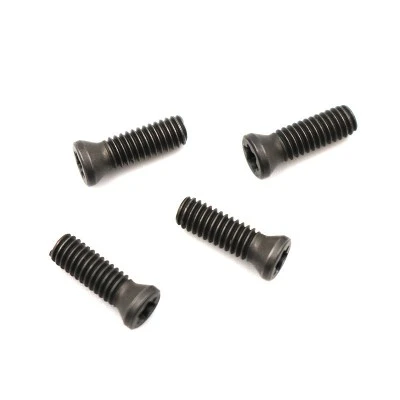
Loosening: Under vibrating conditions, it is recommended to add a spring washer and thread sealant for double protection.
V. Maintenance Recommendations
Regular Inspection: Recheck the torque of screws larger than M6 every 8 hours after machining (replace if loss exceeds 15%).
Rejection Criteria: Thread deformation ≥5% or visible indentation on the threads.
Storage: Individually packaged to protect against impact, keep humidity <60% to avoid hydrogen embrittlement.
Through standardized operation and regular maintenance, Grade 12.9 screws can significantly improve the rigidity and lifespan of CNC tool systems, making them particularly suitable for high-speed machining (>8000 rpm). It is recommended to establish a "Key Fastener Replacement Log" to track usage cycles.
The core of this series of tools lies in the integration of materials, geometric design, and CNC adaptability to achieve high-precision and efficient screw machining, making it particularly suitable for high-volume precision manufacturing.