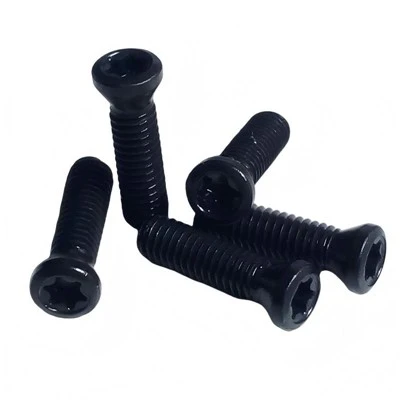
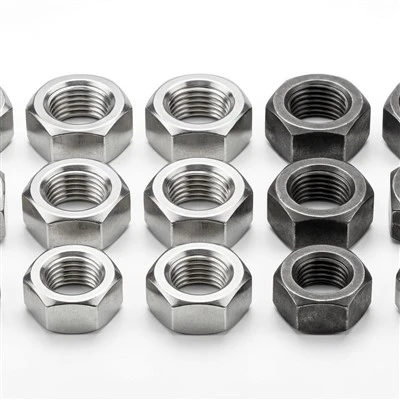
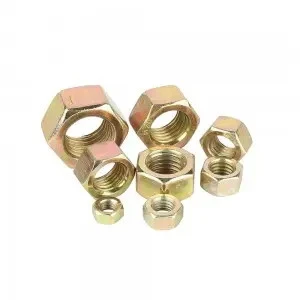
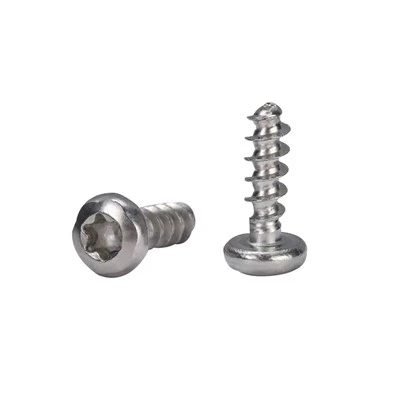
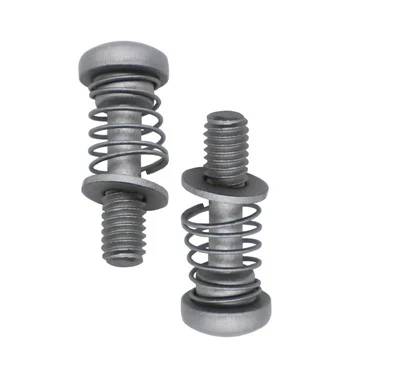
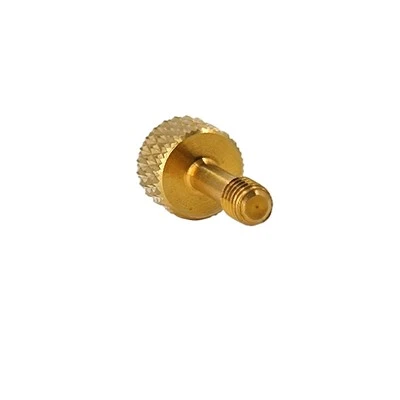
The non-standard double-head screws (M5/M6/M8) in the 12.9-level CNC tool turning tool bar accessories are mainly used for high-strength connections between the turning tool bar and the blade, tool holder, or other accessories. The following is an explanation of its use.
1. The use of non-standard double-head screws
Double-head design: The thread specifications at both ends differ, allowing for the connection of components of varying sizes to address space limitations or compatibility issues.
Non-standard customization: Designed according to the special needs of the toolbar structure to ensure accurate matching.
2. Usage steps and precautions
Selection confirmation
Thread matching: Confirm the thread specifications at both ends of the screw (such as the M5 end connects the blade and the M6 end is fixed to the tool bar).
Length and strength: The non-standard length must be consistent with the tool bar hole depth, and the 12.9-level screws must be equipped with an anti-fracture design.
Installation process
Cleaning the threaded hole: Use compressed air or a brush to remove iron filings and oil stains in the tool bar threaded hole.
Thread lubrication: Apply a small amount of molybdenum disulfide grease to reduce friction and prevent cold welding.
Preload control: Use a torque wrench to tighten according to the standard to avoid over-tightening and causing thread slippage.
1. Use of non-standard double-head screws
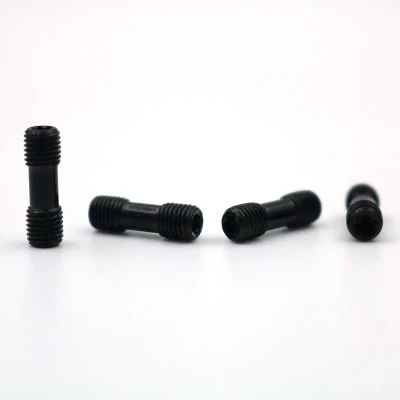
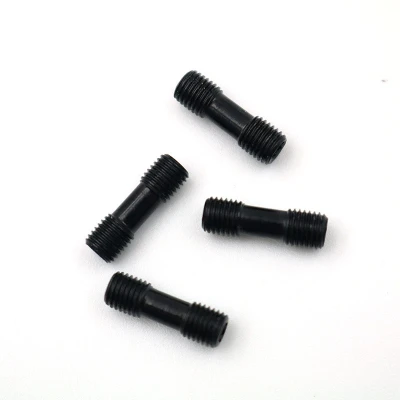
Non-standard double-head screws are mainly used for high-strength connections between turning tool bars and blades, tool holders, or other accessories. Its characteristics include:
12.9 grade high strength: tensile strength reaches 1220MPa, suitable for high-load and high-speed CNC machining scenarios.
Double-head design: different thread specifications at both ends (such as M5/M6/M8), used to connect components of different sizes to solve space limitations or compatibility issues.
Non-standard customization: designed according to the special requirements of the toolbar structure (such as length, thread depth) to ensure precise matching.
2. Usage steps and precautions
Selection confirmation
Thread matching: Confirm the thread specifications at both ends of the screw (such as the M5 end connected to the blade and the M6 end fixed to the tool bar).
Length and strength: Non-standard length must be consistent with the tool bar hole depth, and 12.9 grade screws must be equipped with anti-fracture design.
Installation process
Cleaning threaded holes: Use compressed air or a brush to remove iron filings and oil stains in the threaded holes of the tool bar.
Thread lubrication: Apply a small amount of molybdenum disulfide grease to reduce friction and prevent cold welding.
Preload control: Use a torque wrench to tighten according to the standard to avoid over-tightening and causing thread slippage.
Anti-loosening measures
Thread glue application: High-temperature resistant thread glue (such as Loctite 262) can be applied under high temperature conditions to prevent vibration loosening.
Double nut locking: If the structure allows, a locking nut can be added to one end of the screw.
Maintenance and inspection
Regular inspection: Check whether the screw is loose after every 8 hours of processing, especially in heavy cutting conditions.
Replacement standard: Replace immediately when thread wear, head slippage, or stretching deformation are found.

III. Common problem handling
Thread misalignment: When non-standard screws do not match the hole position, the drawing needs to be reviewed to avoid forced screwing and damage to the tool bar.
Screw breakage: Check for over-torque or material defects, and give priority to rust-proof screws with nickel plating or blackening treatment.
IV. Application scenario examples
Toolbar modification: When the original screw hole is M6, but the blade needs to be connected to M5, use M5/M6 stud screws for transition.
Space-restricted areas: Stud screws replace traditional bolts + nuts to save installation space.
Through standardized use and regular maintenance, non-standard stud screws can significantly improve the stability and life of CNC tool systems.