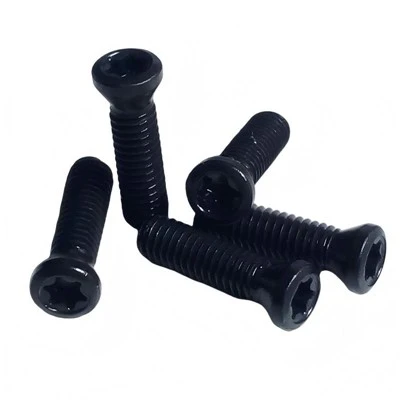
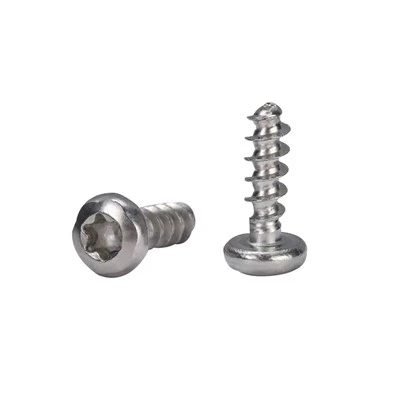
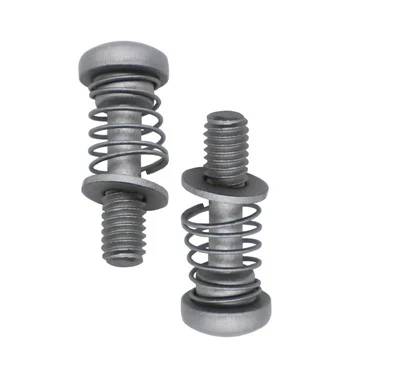
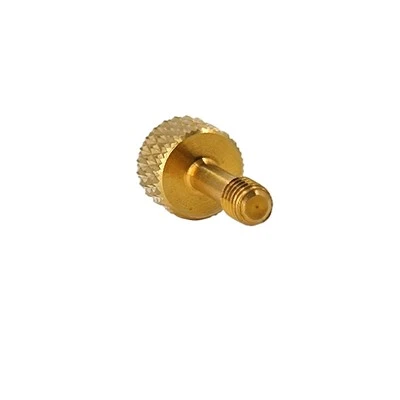
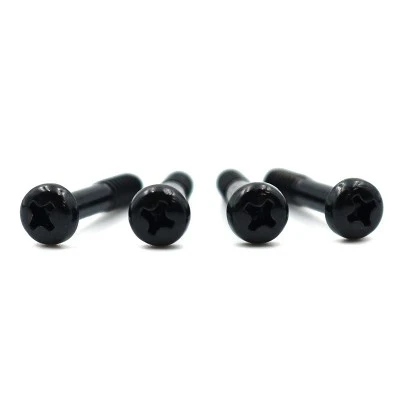
10.9 grade carbon steel black plated pan head cross slot captive screw (GB818 standard) is a high-strength anti-loosening fastener suitable for occasions that require frequent disassembly and assembly, and need to prevent loosening. The following is its detailed usage.
1. Product characteristics
Material and strength
10.9 grade carbon steel: tensile strength ≥1000MPa, high hardness, strong wear resistance.
Surface black plating: rust-proof, beautiful, suitable for an industrial environment.
Structural design
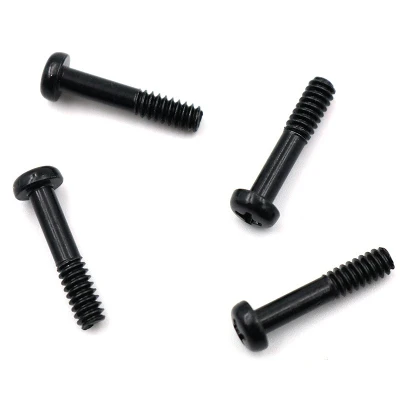
Pan head cross slot: easy to operate with a cross screwdriver, the pan head provides a larger contact surface and disperses pressure.
Captive function: After the screw is screwed in, anti-loosening is achieved through a nylon rubber ring or a thread deformation design.
Half-tooth thin rod: the threadless part reduces the wear on the mating thread and enhances the shear resistance.
2. Usage steps
Preparation work
Check the screw and hole position: ensure that the thread specification (such as M3/M4, etc.) matches the installation hole, and the hole depth ≥ the effective thread length of the screw.
Clean the thread: remove the debris in the hole to avoid affecting the anti-loosening effect.
Installation method
Manual pre-tightening: First, screw the screw into the hole by hand to ensure that the threads are aligned to avoid cross-thread damage.
Tool tightening: Use a cross screwdriver (recommended PH2 or PH3 specifications) to tighten, torque reference:
M4 screw: about 3.5~4.5N·m (adjusted according to GB818 standard and material).
Anti-loosening trigger: When the screw is fully screwed in, the nylon rubber ring or the deformed part of the thread will produce resistance. At this time, a little force is required to ensure locking.
Disassembly precautions
Reverse rotation is required during disassembly. The loose-never-loosening design will keep the screw stuck in the hole to avoid complete falling off.
Avoid excessive force that causes the nylon ring to fail or the thread to slip.
III. Application scenarios
Recommended scenarios: electrical housings, mechanical equipment panels, automotive parts, and other occasions that require anti-vibration and anti-loosening.
Unsuitable scenarios: high temperature (>120℃ may damage the nylon ring), strong corrosive environment (stainless steel material needs to be used instead).
IV. Maintenance and inspection
Regular inspection: In a vibrating environment, it is recommended to check whether the screws are loose every 3 months.
Reusable: Nylon anti-loosening screws can be repeatedly disassembled and assembled 3 to 5 times. After exceeding the number of times, the anti-loosening effect decreases, and it is recommended to replace them.

Replacement standard: If the cross groove of the screw is found to be worn, the thread is deformed, or the nylon ring is cracked, it needs to be replaced immediately.
V. Common problem handling
Screw slippage: Replace the matching cross screwdriver to avoid using worn tools.
Anti-loosening failure: Check whether the thread is clean, or replace with a new screw (nylon ring aging).
Through standardized operation and regular maintenance, the high strength and anti-loosening performance of the 10.9-level screw can be fully utilized to ensure connection reliability.