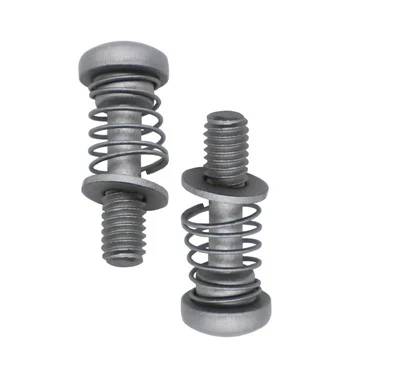
A high-quality hex bolt not only determines the stability of a structure but also directly affects the safety and lifespan of equipment. Therefore, choosing a professional and reliable Chinese hex bolt manufacturer is not just about finding a supplier, but about establishing a safety assurance system for the entire project.
This article will explain the basics of hex bolts and the advantages of Chinese manufacturers in detail, helping buyers truly understand how to choose the most suitable Hex Bolt manufacturer for their needs.
What is a Hex Bolt?
A hex bolt is an externally threaded fastener with a hexagonal head, used to fit a nut. It is typically used in applications requiring heavy loads or structural connections, such as steel structures, bridges, and machinery installations. Its structure mainly consists of three parts: a hexagonal head, a smooth shank (some thread types), and a threaded section.
In terms of standard classification, hex bolts generally follow the following international standards:
DIN (German Standard)
ISO (International Standard)
ANSI/ASTM (American Standard)
GB (Chinese National Standard)
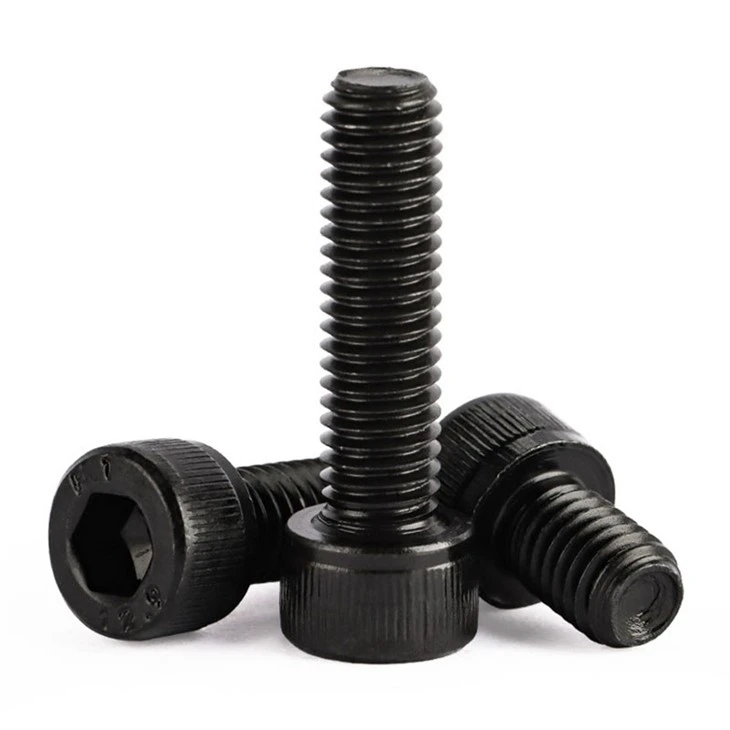
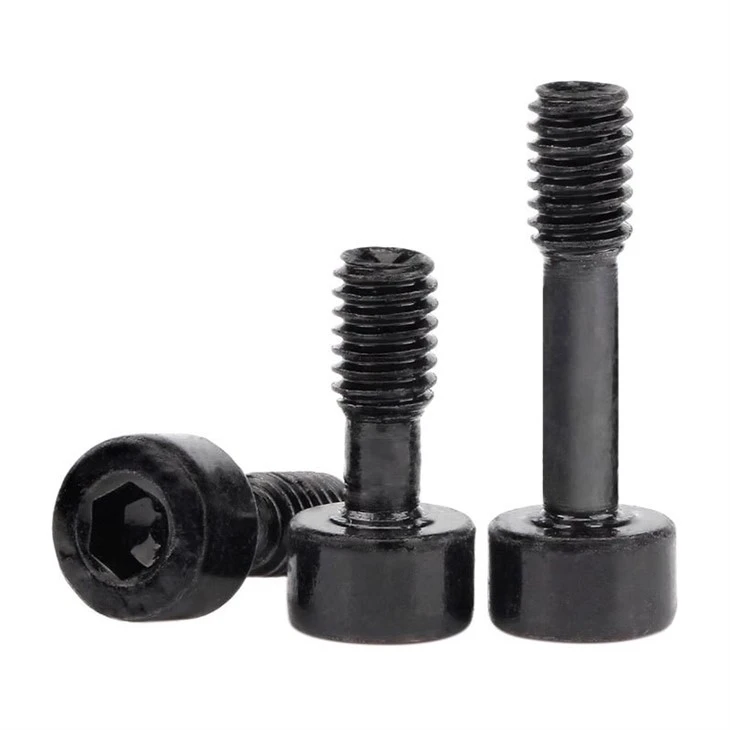
Why Choose a Chinese Hex Bolt Manufacturer?
China has become a major production base for hex bolts in the global fastener supply chain. Whether in construction engineering, machinery equipment, automotive manufacturing, or energy projects, an increasing number of overseas buyers are choosing to cooperate with Chinese hex bolt manufacturers.
Below, we will analyze the core advantages of Chinese manufacturers in three aspects: cost structure, supply chain integrity, and order flexibility.
Cost Advantages and Large-Scale Production Capabilities
Firstly, China boasts a mature steel supply system. From wire rod procurement to forming and processing, the entire process is highly centralized. Large steel mills provide a stable supply of raw materials, enabling manufacturers to maintain stable prices over the long term.
Secondly, in terms of production equipment, Chinese hexagonal bolt factories are equipped with automated cold heading production lines and high-speed thread rolling equipment. Automated equipment can complete large-scale production in a short time while ensuring dimensional consistency.
Furthermore, automated production reduces human error and improves product consistency. For overseas customers requiring long-term supply, batch stability is particularly important.
Therefore, the cost advantage of Chinese manufacturers stems from:
Large-scale centralized procurement of raw materials
Automated cold heading and thread rolling equipment
High-efficiency production cycle
A mature industrial division of labor system
Complete supply chain support
The production of hex bolts is not a single process, but involves multiple key stages. A mature Chinese factory can independently complete the entire process as follows:
Raw material procurement
Cold heading
Thread rolling
Heat treatment for strengthening
Surface anti-corrosion treatment
Quality inspection
Automatic packaging
If the production process is distributed across multiple outsourced factories, the difficulty of quality control will increase significantly, and delivery time will be difficult to guarantee.
Flexible Order Structure
Established Chinese Hex Bolt manufacturers not only support large-volume orders but also handle small-batch trial orders or development-oriented orders.
This is crucial for overseas distributors or engineering project purchasers.
For example:
During the new market testing phase, customers may only require a trial order of 5,000–10,000 pieces.
Special engineering projects may require small-batch production of non-standard specifications.
Brand customers may require customized engraving or special packaging.
Factories with flexible production capabilities can adjust production plans flexibly according to order structure. This flexibility is often difficult to achieve in traditional large European and American factories.
Common Hex Bolt Types
Carbon Steel Hex Bolts
Carbon steel is the most common material, with relatively low cost. They are typically used for general mechanical equipment or indoor structural connections. Common strength grades include 4.8, 8.8, etc. Suitable for projects with moderate strength requirements and strict budget controls.
Stainless Steel Hex Bolts
Common materials include SS304 and SS316. Stainless steel has excellent corrosion resistance, suitable for outdoor equipment, marine engineering, or food processing machinery. SS316 performs better than SS304 in terms of chloride ion corrosion resistance, making it suitable for coastal or high-salt environments.
Alloy Steel High-Strength Hex Bolts
Common strength grades are 8.8, 10.9, and 12.9. Higher strength grades mean higher tensile strength and yield strength. Widely used in steel structure bridges, large mechanical equipment, and high-load structural engineering projects.
Hex Bolt Production Process
Raw Material Selection
Reputable factories provide Material Certificates (MTCs), including chemical composition and batch tracking information. Buyers can verify that the steel conforms to ASTM or ISO standards through the material report.
Cold Heading
The cold heading process uses a high-pressure die to extrude wire into a hexagonal head shape. This process determines the head dimensional accuracy and internal metal flow structure. Good metal flow improves tensile strength.
Thread Rolling
The thread rolling process uses a die to form threads, ensuring a continuous distribution of metal fibers and increasing thread strength. Compared to cutting, rolled threads are stronger and more durable.
Heat Treatment
For high-strength bolts, quenching and tempering are required. By controlling temperature and time, the material achieves the specified mechanical properties. Incorrect heat treatment can lead to brittleness or insufficient strength.
Surface Treatment and Salt Spray Testing
After anti-corrosion treatment, a salt spray test is typically performed to verify corrosion resistance. For example, hot-dip galvanized products may require a salt spray test of 96 hours or longer.
Chinese hex bolt manufacturers hold a significant position in the global market due to their mature manufacturing systems, complete supply chains, and strong customization capabilities. However, not all manufacturers possess the same level of expertise. When selecting partners, buyers should focus on production capacity, quality control systems, customization experience, and service responsiveness.