1. How They Prevent Loosening
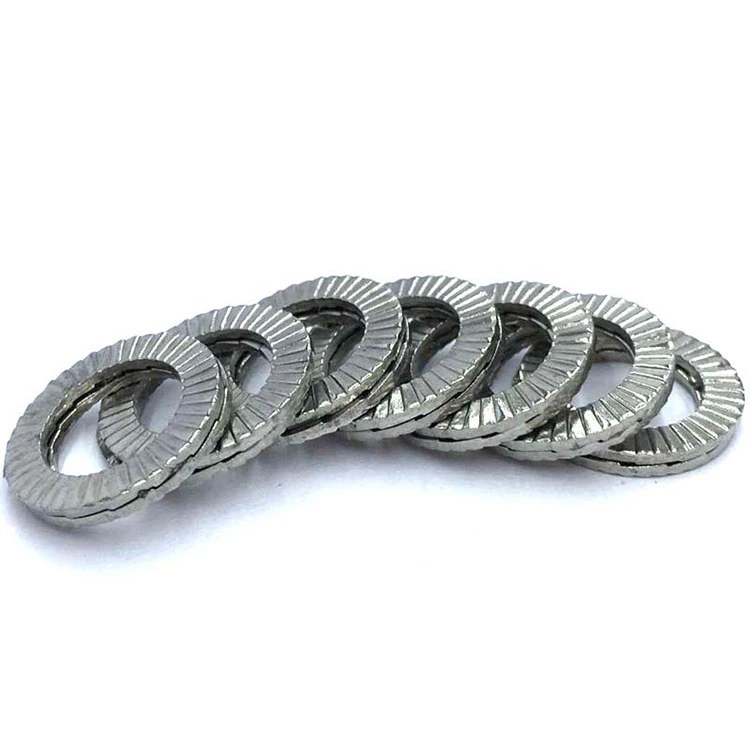
Double-Layer Wedge Lock Washer: Uses tension and wedge action. When tightened, its teeth grip the surfaces. If vibration stretches the bolt, the slanted teeth slide and create upward tension. When the bolt shrinks, the teeth push the nut back to place. This stops loosening from shaking or heavy loads.
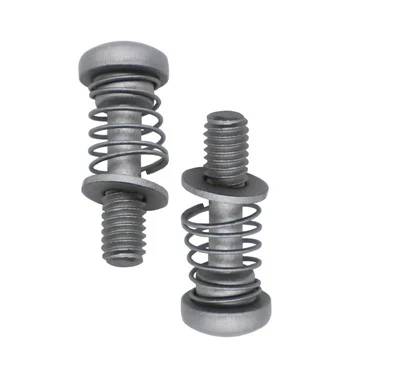
Spring Washer: Relies on spring force to press threads together. But under constant shaking, it can get tired, lose springiness, and fail.
2. Design Differences
Double-Layer Washer: Has special slanted teeth that self-lock. Any loosening is stopped by the wedge action, keeping a strong grip.
Spring Washer: Has a split design with sharp ends meant to bite into surfaces. But the edges often wear down or bend, and hardness or torque limits its bite. It is less reliable.
3. Performance in Different Conditions
Double-Layer Washer: Works well in hot or cold places, just like standard bolts/nuts. It isn't easily affected by temperature changes.
Spring Washer: Heat can make it soft and weak. Cold can make it brittle and break. Temperature changes hurt its performance.
4. Reuse
Double-Layer Washer: Can be reused if the teeth are not broken and it is installed correctly. It still works well after multiple uses.
Spring Washer: Loses springiness after being used a few times. It often bends or breaks and should not be reused.
Summary:
The double-layer wedge lock washer is better at stopping loosening under vibration, works in more environments, and can be reused. The spring washer is simpler but less reliable, especially with shaking or temperature changes, and wears out faster.

 English
- English
- Français
- Deutsch
- 日本語
- Italiano
- Español
- Português
- русский
- Nederlands
- ไทย
- Latviešu
- Srbija jezik (latinica)
- Lietuvių
- Български
- Malti
- عربي
- עברית
- Català
- magyar
- Svenska
- Indonesia
- українська
- dansk
- Cymraeg
- suomi
- Melayu
- O'zbek
- Polski
- Norsk
- Gaeilgenah Éireann
- فارسی
- Ελληνικά
- slovenčina
- বাংলা
- Kreyòl Ayisyen
- Türkçe
- 한국어
- hrvatski
- Čeština
- bosanski
- Bai Miaowen
- Việt Nam
- Eesti
- íslenska
- اردو
- हिंदी
- slovenščina
- România limbi