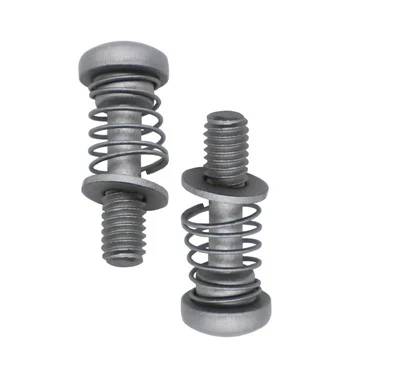
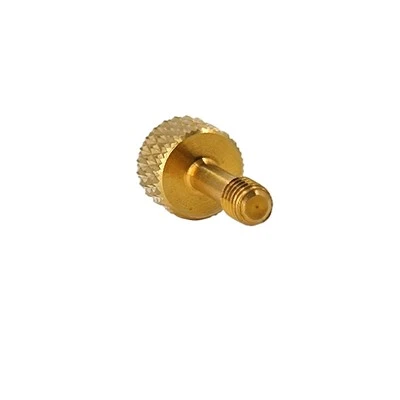
I. Basic Definition and Commonalities
Material Commonalities: Both are primarily made of brass (copper-zinc alloy), offering excellent electrical conductivity, corrosion resistance, and decorative properties, making them suitable for medium-strength or rust-resistant applications.
Structural Features
Step Design: Both feature a stepped structure (step) for positioning or controlling riveting thickness.
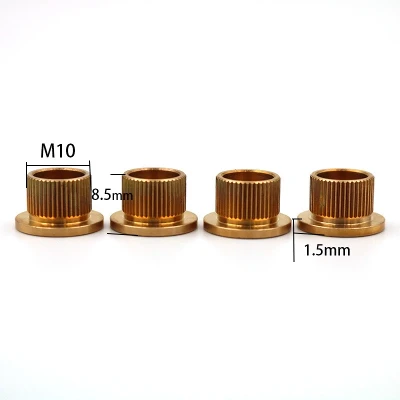
Flange Structure: A flange (flange) is included at the end to increase the contact surface, distribute load, or prevent fallout.
Knurling: Both have a knurled pattern (straight, mesh, etc.) to enhance slip resistance and facilitate manual installation or adjustment.

Applications: Suitable for applications requiring both securement and aesthetics, such as electronic equipment, decorative hardware, and light machinery.
II. Comparison of Differences
Step Design: A single step is suitable for riveting thin sheets, while multiple steps accommodate materials of varying thicknesses or for layered fixing.
Flange Shape: Round flanges are standard and offer greater versatility; hexagonal flanges are used for applications requiring anti-rotation.
Knurl Type: Coarse knurling offers high slip resistance and is suitable for frequent manual installation. Fine knurling prioritizes aesthetics and is used for precision equipment.
Applications: Suitable for applications requiring both securement and aesthetics, such as electronic equipment, decorative hardware, and light machinery.
II. Comparison of Differences
Step Design: A single step is suitable for riveting thin sheets, while multiple steps accommodate materials of varying thicknesses or for layered fixing.
Flange Shape: Round flanges are standard and offer greater versatility; hexagonal flanges are used for applications requiring anti-rotation.
Knurl Type: Coarse knurling offers high slip resistance and is suitable for frequent manual installation. Fine knurling prioritizes aesthetics and is used for precision equipment.

Environmental Compatibility: Nickel plating is recommended for high-humidity environments. For high-temperature applications, verify the brass alloy model.
Similarities are reflected in basic structure and function, while differences arise through detailed design (such as steps, flanges, and knurling) to meet diverse requirements. The actual selection should be carefully considered based on load bearing, installation method, and environmental conditions.