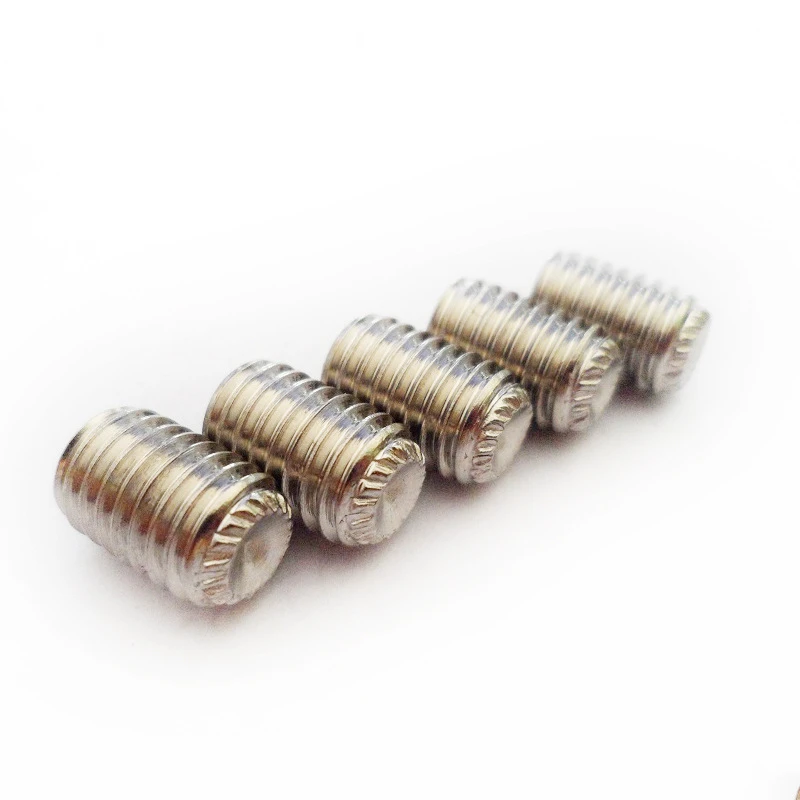
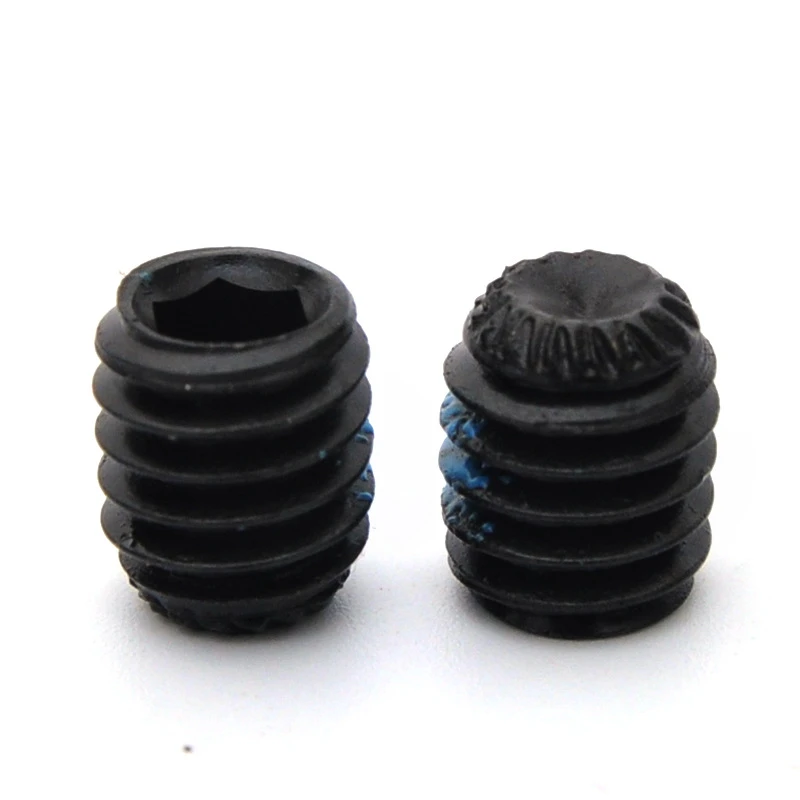
Set Screws (also known as grub screws, headless screws, stop screws, or retaining screws) are commonly made from grade 12.9 alloy steel (blackened) or stainless steel.
They feature different tail-end designs, including:
Cup point (concave end)
Knurled cup point (convex end)
Cone point (tapered end)
Flat point (flat end)
Set screws are simple to use and widely applicable. Their function is similar to that of dowel pins, typically used to secure mating parts in place. They can be fully threaded in, providing a flush and aesthetically clean appearance.
Different End Types and Their Applications
Flat Point: Has a large contact area and is suitable for pressing against hard surfaces. The contact surface should be flat.
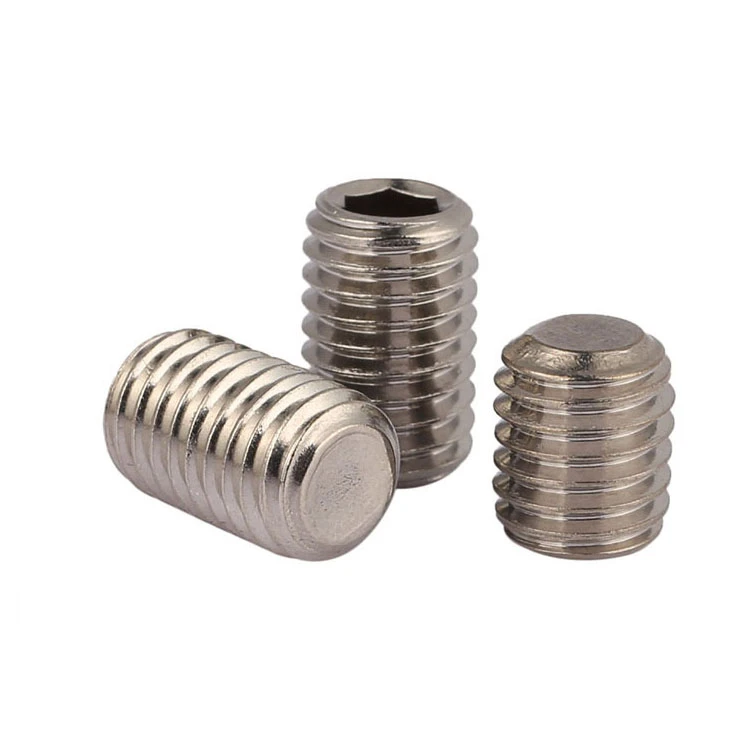
DIN914 Cone Point (Sharp Tip): Best for use on softer materials.
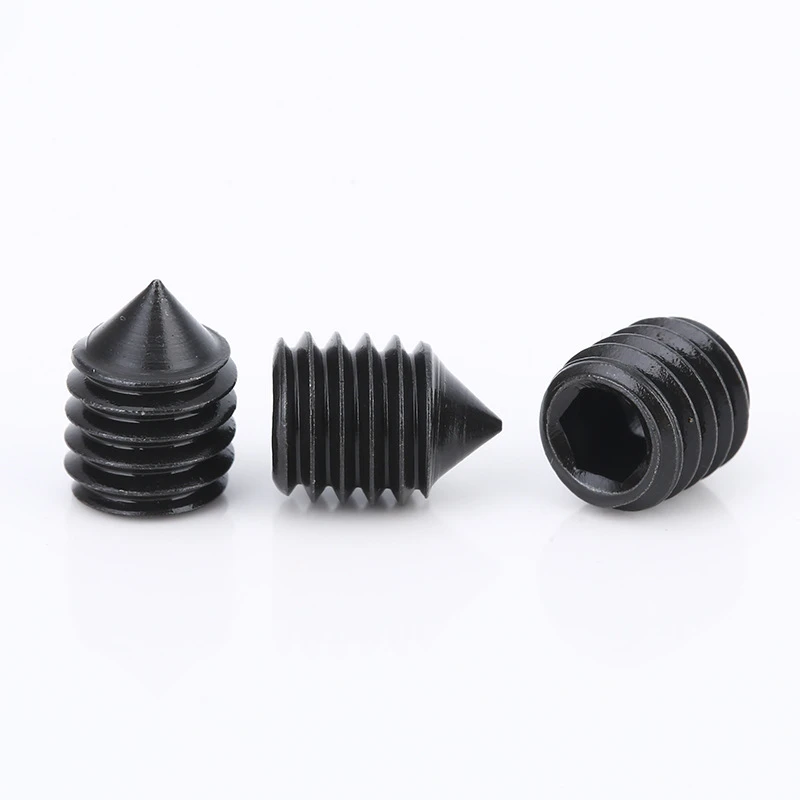
Cone Point (Blunt Tip): Requires a pre-drilled dimple on the contact surface to enhance load transfer by pressing into the recess.
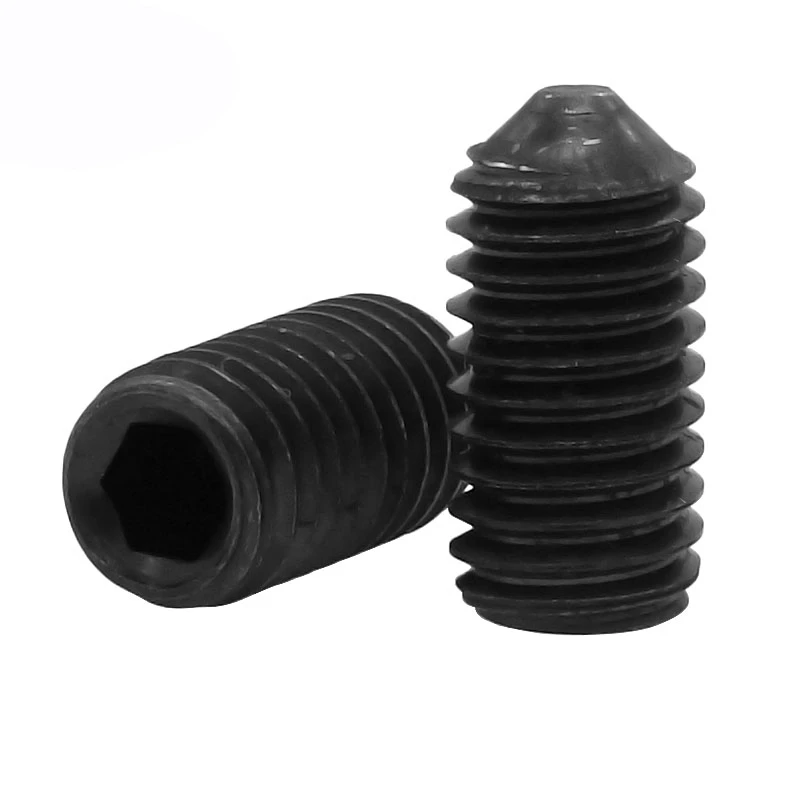
Cup Point (Concave End): Ideal for harder materials or applications requiring frequent adjustments.
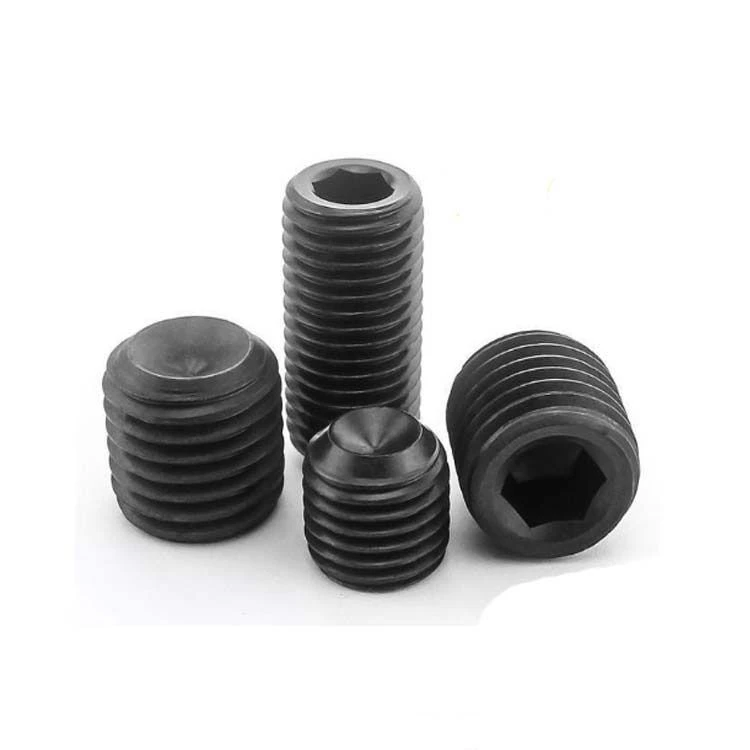
Knurled Cup Point (Convex End): Used in frequently adjusted assemblies or for securing parts on tubular shafts (thin-walled components). The rounded end fits into a larger hole in the shaft, transmitting higher loads via shear resistance. Anti-loosening measures should be used with this type.