A hex nut may seem like a simple, standard fastener, but it's an indispensable component of any connection system. From industrial machinery and automotive manufacturing to construction projects, photovoltaic equipment, and automated production lines, almost all equipment using bolted connections relies on hex nuts for fastening. Because of its widespread use, many purchasing personnel often assume that "any hex nut will do," focusing primarily on price while neglecting the compatibility between materials, strength grades, surface finishes, dimensional standards, and the intended use environment.
This guide will provide a comprehensive overview of how to select the right hexagonal nuts based on project requirements, from the perspectives of both buyers and engineering applications. It will also analyze the differences between various materials, standards, and application environments to help you control procurement costs and improve the reliability of the entire fastening system while ensuring product performance.
Why is choosing the right hex nut so important?
The primary function of a hex nut is to mate with a bolt, generating preload through the threads to securely connect multiple components together. If the nut's material, strength grade, or size does not match the bolt, even if installation is successful initially, long-term vibration, high loads, or harsh environments can lead to thread stripping, loosening, or even breakage.
For example, in high-load environments such as automotive chassis, construction machinery, and wind power equipment, nuts need to withstand continuous impact and vibration. If ordinary low-strength nuts are chosen, the connection may gradually loosen over time, affecting equipment operational safety. Furthermore, for marine engineering, outdoor construction, or chemical equipment, corrosion is often more destructive than mechanical loads. Without choosing suitable stainless steel materials or anti-corrosion surface treatments, nuts may rust quickly, leading to difficulty in disassembly and even affecting the entire connection structure.
Understand the Different Types of Hex Nuts Before Choosing
Depending on different application environments, installation methods, and functional requirements, various types of hex nuts have been developed on the market. Understanding the differences between these products is the first step in making the right selection.
Standard Hex Nut
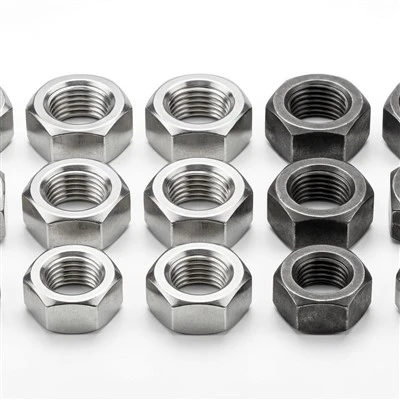
Standard hex nuts are the most common type used in industrial applications, manufactured according to international standards such as DIN 934 and ISO 4032. They are characterized by simple structure, complete specifications, low cost, and strong versatility, and can be widely used in machinery, construction engineering, furniture manufacturing, electronic equipment, and general industrial assembly.
Nylon Insert Lock Nut
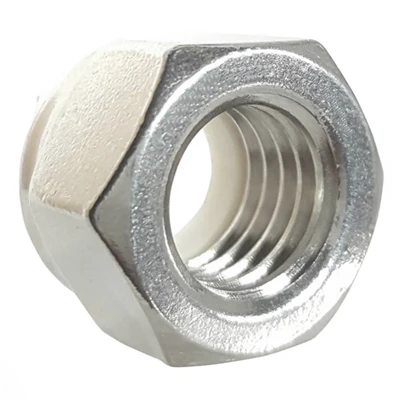
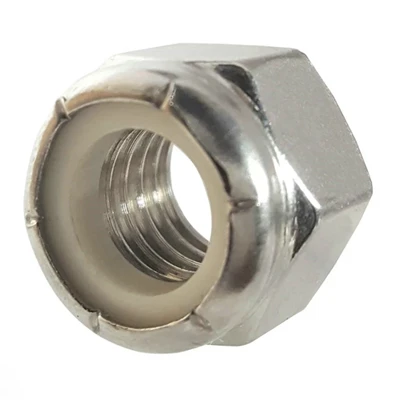
When equipment is subjected to long-term vibration, the friction of ordinary threads alone is often insufficient to prevent loosening. Nylon insert lock nuts increase frictional resistance through internal nylon rings, allowing the nut to maintain a stable locking effect even under continuous vibration. Therefore, they are widely used in the automotive, motorcycle, agricultural machinery, and automation equipment industries.
Flange Hex Nut
A flange hex nut adds an integrated flange to the bottom of a standard nut. Similar to a washer, it increases the load-bearing area, reduces indentation on the workpiece surface, and improves connection stability. In many devices, flange nuts also reduce the need for additional washers, thus lowering assembly costs and improving installation efficiency.
Heavy Hex Nut
Compared to standard hex nuts, heavy hex nuts have a larger cross-flat dimension and a thicker structure, allowing them to withstand higher preload and loads. These products are commonly used in bridges, pressure vessels, oil and gas equipment, wind power equipment, and large steel structure projects where high safety and load-bearing capacity are required.
Coupling Nut
Coupling nuts are primarily used to connect two bolts or extend the thread length. Due to their longer internal threads, they provide a larger connection area, making them widely used in building installations, electromechanical engineering, solar panel systems, and various pipeline installations.
Select the appropriate nut material based on the usage environment
Different materials not only determine the product's strength, corrosion resistance, and service life, but also directly affect procurement costs and subsequent maintenance expenses. If the material is not selected properly, even if the product's dimensions and strength grade fully meet the requirements, it may still fail prematurely due to corrosion, fatigue, or insufficient environmental adaptability.
Carbon Steel Hex Nuts
Carbon steel is the most widely used material for hex nuts in the industrial sector and one of the largest global purchasing choices. It possesses high mechanical strength, good machinability, and low manufacturing costs, making it widely used in machinery, construction engineering, industrial automation, furniture manufacturing, and general steel structures.
For indoor environments or general industrial applications, carbon steel hex nuts can meet most connection requirements. Through heat treatment processes, carbon steel can also achieve different strength grades, such as grade 8, 10, and even 12, to adapt to high-load equipment and mechanical structures.
However, carbon steel itself has relatively weak corrosion resistance. If exposed to humid, rainy, high-salt, or chemically corrosive environments for extended periods, it is prone to rust. Therefore, carbon steel products are typically treated with electro-galvanizing, hot-dip galvanizing, Dacromet, or Geomet surface treatments to improve corrosion resistance.
Stainless Steel 201 Hex Nuts
201 stainless steel is an economical material, with a lower cost compared to 304 stainless steel. Therefore, it is often used in applications where corrosion resistance is not critical. It provides some rust resistance and performs well in ordinary indoor environments or slightly humid environments, while also having a good appearance. Therefore, it is widely used in furniture, decorative hardware, home appliances, and some consumer products.
However, due to the limited corrosion resistance of 201 stainless steel, it may still rust after prolonged exposure to rain, sea breezes, or chemical media. Therefore, it is not suitable for long-term outdoor use.
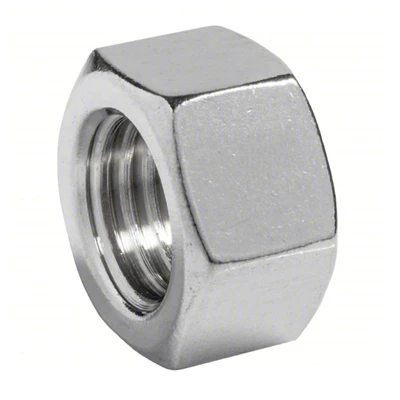
Stainless Steel 304 Hex Nuts
304 stainless steel is currently the most widely used material for hex nuts globally and is the preferred choice for many equipment manufacturers and brands. It boasts excellent corrosion resistance, resisting rain, moisture, and corrosion in most industrial environments for extended periods. Therefore, it is widely used in construction, food processing equipment, medical equipment, photovoltaic systems, machinery, and outdoor facilities.
Compared to carbon steel products, 304 stainless steel requires no additional rust-preventive coating, maintaining high corrosion resistance while reducing long-term maintenance costs. Therefore, although the initial purchase price is slightly higher, 304 stainless steel often offers greater overall value over its entire product lifecycle.
Stainless Steel 316 Hex Nuts
For highly corrosive environments, 316 stainless steel is a more reliable choice. Due to the addition of molybdenum (Mo), 316 stainless steel has stronger resistance to chloride ion corrosion than 304, making it suitable for long-term use in harsh conditions such as marine environments, ship equipment, the chemical industry, offshore wind power, and coastal engineering. Although the purchase cost of 316 stainless steel is higher, its excellent corrosion resistance effectively reduces replacement frequency and maintenance costs for equipment requiring long-term stable operation, thus offering high long-term investment value.
Alloy Steel Hex Nuts
For high-strength connection applications, ordinary carbon steel alone may not meet the requirements. In such cases, alloy steel hex nuts become a more suitable choice. By adding alloying elements such as chromium, molybdenum, and nickel, and combining this with specialized heat treatment processes, alloy steel can achieve higher tensile strength, hardness, and fatigue resistance. Therefore, it is commonly used in high-load applications such as construction machinery, mining equipment, heavy trucks, pressure equipment, and large industrial machinery.
Brass Hex Nuts
Brass hex nuts possess excellent electrical and thermal conductivity, as well as corrosion resistance, and do not produce sparks. Therefore, they are widely used in electronic equipment, electrical systems, instruments, and explosion-proof equipment. Furthermore, brass's good machinability and aesthetically pleasing metallic appearance also make it frequently used in decorative products and high-end hardware accessories.
Aluminum Hex Nuts
With the development of lightweight design, aluminum hex nuts are increasingly used in aerospace, rail transportation, new energy equipment, and light machinery. The biggest advantage of aluminum alloy is its light weight, while also possessing good corrosion resistance, making it ideal for equipment requiring overall weight reduction. However, compared to steel, its mechanical strength is lower, therefore it is generally not used for high-load connections.
Select the appropriate surface treatment process based on the usage environment
Even when using the same material, different surface treatment methods will directly affect the corrosion resistance, appearance quality, and service life of hexagonal nuts.
Electro-galvanizing
Electro-galvanizing is one of the most widely used surface treatment methods. It provides basic corrosion protection and is characterized by low cost, attractive appearance, and high production efficiency, making it widely used in indoor equipment, machinery manufacturing, and general industrial products. However, its corrosion resistance is limited in long-term humid or outdoor environments.
Hot-dip galvanizing
Hot-dip galvanizing significantly improves corrosion resistance by forming a thicker zinc layer on the product surface. Therefore, it is particularly suitable for bridges, steel structures, power facilities, photovoltaic supports, and other projects exposed to outdoor environments for extended periods.
Blackening
Blackening is mainly used for internal parts of mechanical equipment. It improves the product's appearance and provides some rust prevention, but it usually requires the use of rust-preventive oil and is therefore not suitable for long-term outdoor environments.
Dacromet
Compared to traditional zinc plating, Dacromet offers superior salt spray resistance and does not cause hydrogen embrittlement, making it widely used in the automotive industry, construction machinery, and high-end industrial equipment.
Geomet Environmentally Friendly Coating
Geomet is a new generation of environmentally friendly coating developed based on Dacromet. It not only boasts excellent corrosion resistance but also complies with environmental regulations such as RoHS, making it increasingly popular in European and American markets. For products exported to Europe and the Americas, Geomet has become a key choice for many brand customers.
Select the Correct Thread Size and International Standard
Size matching is fundamental to ensuring proper installation of hexagonal nuts. Even if the material and strength grade are exactly the same, the product will still be unusable if the thread size is inconsistent. Therefore, the thread size, pitch, and applicable standard must be confirmed before purchasing.
Metric Thread
Metric threads use "M" as the size designation, for example:
• M4
• M5
• M6
• M8
• M10
• M12
• M16
Imperial Standard Thread (UNC / UNF)
The North American market primarily uses Imperial Standard thread.
Among them:
·UNC (coarse thread)
·UNF (fine thread)
When purchasing for export to markets such as the United States and Canada, special care should be taken to avoid mixing with metric threads.
Common International Standards
Currently, the following standards are mainly used for hexagonal nuts worldwide:
DIN Standard: German industrial standard, widely used in Europe and international markets.
ISO Standard: Standards developed by the International Organization for Standardization; increasingly, more and more countries are adopting ISO standards for international trade.
ANSI/ASME Standards: Primarily used in the US market.
How to select the right hexagonal nut for different application scenarios?
Different industries, equipment, and working conditions have different performance requirements for hexagonal nuts.
Automotive Industry
The automotive industry has extremely stringent requirements for fasteners because vehicles are constantly subjected to vibration, impact, and temperature changes during long-term operation. Insufficient strength or poor anti-loosening performance of hexagonal nuts can affect the safety and reliability of the entire vehicle.
For critical components such as the engine, chassis, and suspension system, high-strength carbon steel or alloy steel hexagonal nuts are typically chosen, used in conjunction with grade 8, 10, or even higher strength bolts. Furthermore, to improve corrosion resistance, many automotive fasteners undergo environmentally friendly surface treatments such as Geomet and Dacromet to meet long-term use and international automotive industry standards.
Construction & Structural Projects
For general building connections, galvanized carbon steel hex nuts can be selected depending on the project budget. Projects such as bridges, steel structure factories, and power facilities that are exposed to rain and sunlight for a long time are more suitable to use hot-dip galvanized products to obtain better anti-corrosion effects. If the project is located in a coastal area, high humidity environment or chemical industry area, it is recommended to choose 304 or 316 stainless steel hexagonal nuts to reduce later maintenance costs and extend the service life of the overall structure.
Industrial Machinery and Equipment Manufacturing
Industrial machinery typically requires long-term continuous operation; therefore, fasteners must not only possess sufficient strength but also maintain stable dimensional accuracy and thread fit performance. For general machinery, grade 8 carbon steel hexagonal nuts are sufficient for most applications. However, for heavy machinery, automated equipment, or high-load equipment, it is recommended to choose high-strength alloy steel products and ensure that the strength grades of the nuts and bolts match.
Solar & Renewable Energy
For most photovoltaic mounting systems, 304 stainless steel hex nuts are sufficient for long-term outdoor use. If the installation site is near the coast or subject to prolonged salt spray, upgrading to 316 stainless steel is recommended for further enhanced corrosion resistance. For large wind turbines, which are subjected to significant mechanical loads and continuous vibrations over extended periods, high-strength fasteners are typically required, combined with specialized anti-corrosion surface treatments to ensure long-term stable operation.
Marine & Chemical Applications
The marine environment is considered one of the most demanding operating environments for fasteners. High humidity, high salinity, and chemical media accelerate the corrosion of ordinary steel, making material selection crucial. In these projects, 316 stainless steel is often a more reliable choice. Compared to 304 stainless steel, 316 has stronger resistance to chloride ion corrosion, effectively resisting the corrosion risks posed by seawater and salt spray environments.
Food, Medical & Electronics
Food processing equipment and medical devices require high hygiene standards, making 304 and 316 stainless steel the most common choices. These materials are not only corrosion-resistant but also have good cleaning properties, meeting the requirements of the food and medical industries. In electronic and electrical equipment, in addition to common stainless steel products, brass hexagonal nuts are also widely used in conductive connections, spark-resistant environments, and precision electronic equipment.
Why do global clients choose Zeyao Hardware as a long-term partner?
Among numerous Chinese fastener manufacturers, an increasing number of international clients are choosing to partner with factories possessing long-term production capabilities and OEM experience. Zeyao Hardware is one such manufacturer specializing in non-standard fasteners and OEM customization, boasting over 19 years of industry experience and serving global clients in the automotive, machinery, new energy, and industrial engineering sectors.
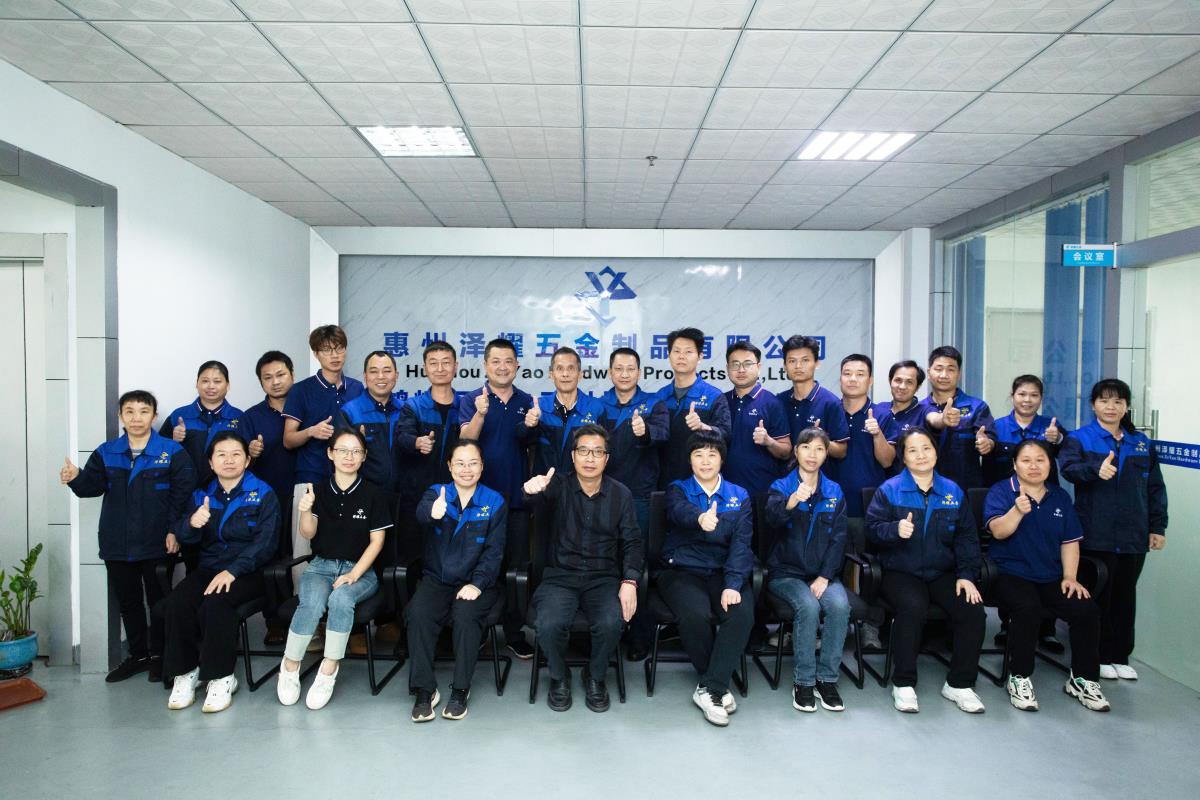
19+ Years of Manufacturing Experience
Zeyao Hardware boasts over 19 years of manufacturing and engineering experience in the fastener industry, focusing on the R&D and manufacturing of hexagonal nuts, bolts, washers, and non-standard fasteners. Through 19+ years of accumulation, we have developed a systematic understanding of different material properties, processing techniques, and international standards, enabling us to provide customers with more valuable technical advice, not just product manufacturing.
160+ Advanced Production Machines
The factory is equipped with over 160 advanced production machines, covering the entire process from cold heading, CNC machining, thread cutting, heat treatment, and testing. This highly automated production system not only improves production efficiency but also ensures product consistency and dimensional stability, allowing us to simultaneously support sample development, small-batch trial production, and large-scale long-term supply projects.
Monthly Capacity Over 10 Million Pieces
With a mature production system and stable supply chain management capabilities, Zeyao Hardware has a monthly production capacity exceeding 10 million pieces. This capability enables us to meet the continuous procurement needs of our global customers for large volumes of fasteners, while ensuring delivery stability and reducing supply chain risks.
OEM & Non-Standard Fastener Expertise
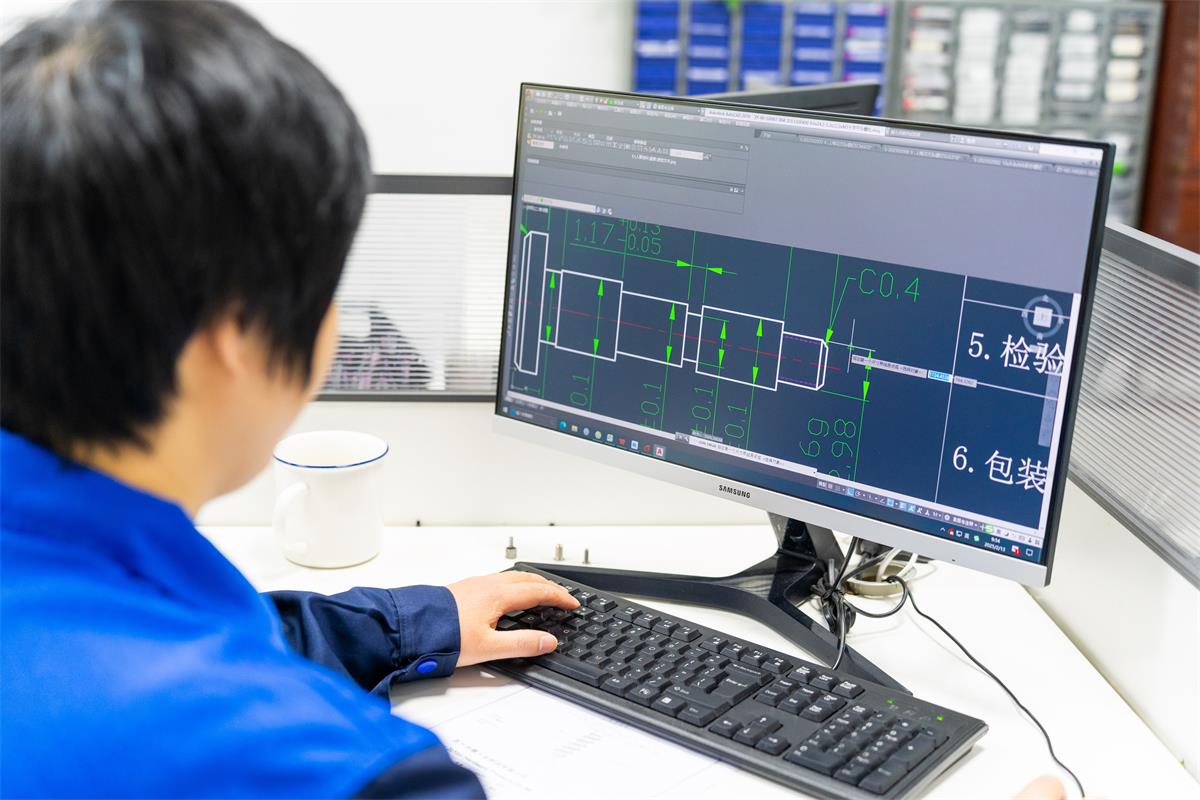
We not only provide standard fastener products, but also specialize in OEM and non-standard fastener customization development.
Support:
· Custom drawing production
· Non-standard structural design support
· Material and strength optimization suggestions
· Custom surface treatment solutions
· Custom brand logo and packaging
Strict Quality Control System
Zeyao Hardware implements a rigorous quality control system covering the entire process from raw materials to shipment. All products undergo multiple inspections, including dimensional inspection, thread accuracy inspection, mechanical property testing, and salt spray corrosion testing, ensuring that every batch meets international industrial standards.
Flexible MOQ & Fast Response
We support flexible order models, including small-batch trial orders, medium-batch production, and long-term large-volume supply projects. We also provide rapid quotation and engineering response services to help customers shorten development cycles and accelerate project progress.
Global Export Experience
Our long-term service to the European, American, Southeast Asian, and Middle Eastern markets has given us familiarity with the technical standards, quality requirements, and packaging specifications of different countries. We can quickly adapt to customer needs and provide stable supply solutions that comply with international trade standards.
Long-Term Reliable Partnership
We are not only a manufacturer but also a long-term supply chain partner for our clients. Through a stable quality system, continuous production capacity assurance, and engineering support capabilities, we help our clients reduce procurement risks and achieve long-term, stable partnerships.
Conclusion
Choosing the right hex nut is not a simple product procurement process, but a systematic engineering decision that requires comprehensive consideration of material, strength grade, surface treatment, thread standard, and application environment. In actual projects, there is no "one-size-fits-all" hex nut suitable for all conditions. Carbon steel is suitable for economical and general industrial applications, stainless steel is suitable for corrosion-resistant environments, while alloy steel is suitable for high-strength load scenarios.
FAQ
Q: What are the uses of hexagonal nuts?
A: Hexagonal nuts are used to fasten bolts in mechanical and structural applications.
Q: How to choose the right hexagonal nut?
A: Choose based on material, strength grade, thread size, and working environment.
Q: What is the best material for hexagonal nuts?
A: 304 stainless steel is best suited for general outdoor use, while 316 stainless steel is better suited for marine environments.
Q: What is the difference between carbon steel hexagonal nuts and stainless steel hexagonal nuts?
A: Carbon steel hexagonal nuts offer better value for money, while stainless steel hexagonal nuts have better corrosion resistance.
Q: What is a DIN 934 hexagonal nut?
A: DIN 934 is the standard for metric hexagonal nuts, widely used in industrial fields.
Q: Which industries use hexagonal nuts?
A: Hexagonal nuts are widely used in the automotive, construction, machinery, energy, and industrial equipment industries.