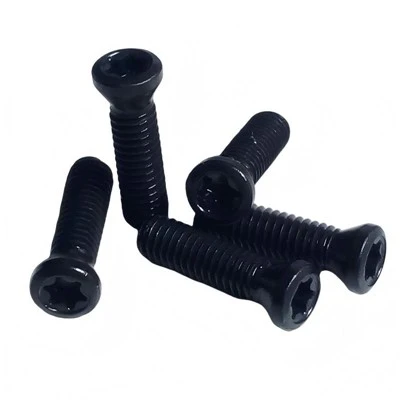
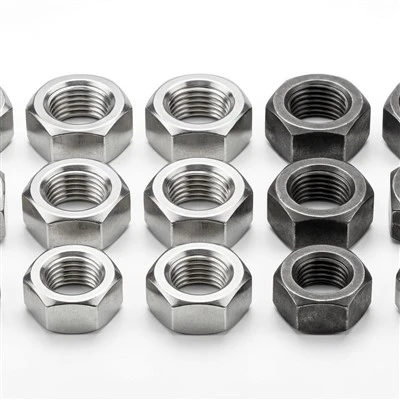
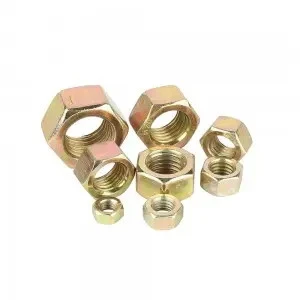
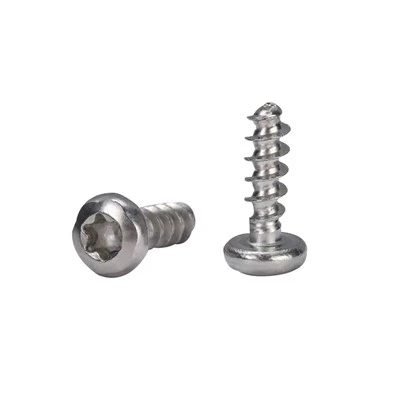
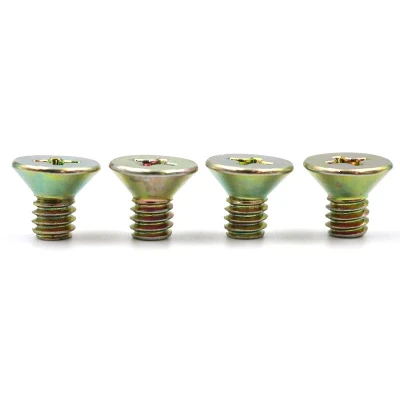
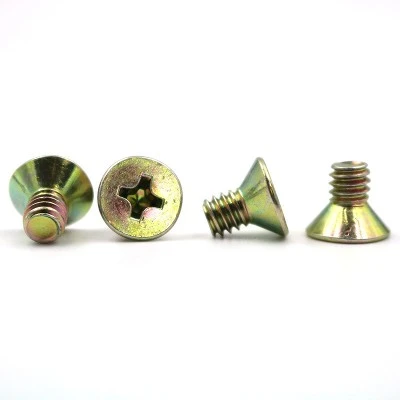
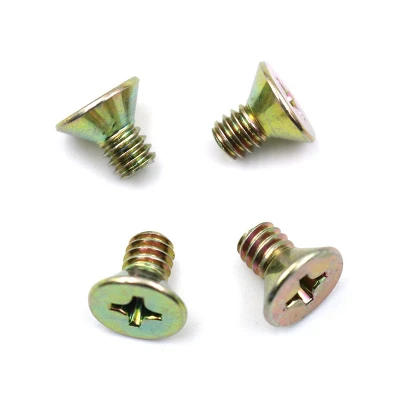
Carbon steel, zinc-plated cross-head countersunk machine screws are widely used in mechanical assembly, electronic equipment, furniture, and other fields. Their core functions and features are as follows.
1. Core Function
Securing Connections
Core Function: Threaded screws mate with nuts or pre-threaded holes to securely connect two or more components, withstanding mechanical loads such as shear and axial tension.
Applications: Suitable for applications requiring a flat surface or where space is limited. The countersunk head design ensures the screw head is flush with the workpiece surface, eliminating protrusions.
Corrosion Protection
Zinc Coating: Zinc coating applied through electroplating or hot-dip galvanizing, followed by a color passivation treatment, significantly enhances rust and corrosion resistance. Suitable for humid and mildly chemical environments.
Easy Installation
Cross-slot Design: Compatible with Phillips screwdrivers, provides greater torque transmission efficiency, reduces the risk of slippage, and is suitable for automated assembly.
Countersunk Head: After installation, the head recesses into the workpiece, maintaining a flat surface and preventing interference with other components or scratches on the operator.
2. Key Parameters and Specifications
Common specifications: M2.5, M3, M4, M5, M6, M8
Material: Carbon steel, balancing strength and cost.
Strength Grade: Typically 4.8 (tensile strength 400 MPa), some grades up to 8.8 (requiring special heat treatment).
Surface Treatment: Colored zinc plating, salt spray test resistant for 72-240 hours.
3. Applications
Electronic and electrical appliances: PCB mounting, chassis assembly (e.g., small sizes M2.5-M4).
Mechanical equipment: Sheet metal connection, bearing seat mounting (medium sizes M5-M8).
Furniture and home furnishings: Metal frame and hardware mounting (must be equipped with anti-loosening washers).
Automotive accessories: Interior trim and lighting mounting (must pass vibration testing).
4. Advantages and Limitations
Advantages
Low Cost: The carbon steel material and galvanizing process offer high cost-effectiveness, making it suitable for large-volume purchases.
Versatile: The cross recess is compatible with standard tools, and the countersunk head design adapts to a variety of applications.
Weather Resistance: The colored zinc coating is more aesthetically pleasing and corrosion-resistant than standard galvanizing.
Limitations
Not suitable for heavy loads: High-vibration environments require anti-loosening measures (such as thread sealant).
Material Limitations: Carbon steel is susceptible to corrosion in strong acid/alkaline environments; stainless steel should be used instead.
5. Selection Recommendations
Dimensional Matching: Select the screw length based on the thickness of the connected component (e.g., M5×10 means 5mm diameter and 10mm length).
Environmental Compatibility: For high-humidity environments, thicker blue-white zinc or Dacromet coatings can be used.
Torque Control: Avoid overtightening small screws (e.g., M2.5) to prevent thread stripping.
The core function of carbon steel, zinc-plated cross-countersunk machine screws is to provide a smooth, corrosion-resistant fastening connection. Available in sizes from M2.5 to M8, they balance strength, cost, and ease of use, making them a fundamental fastener in both industrial and residential applications. Selection should be based on a comprehensive consideration of load, environment, and installation conditions.