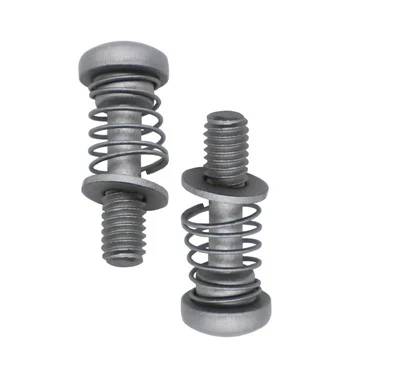
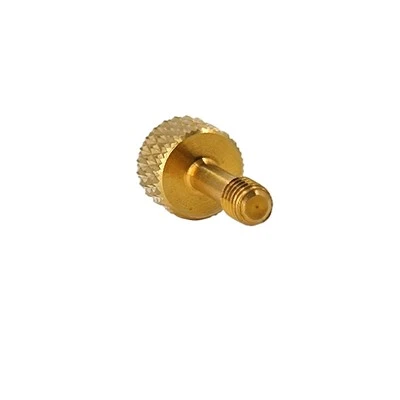
In the fastener industry, screw size standards are one of the most important parameters for every buyer. Different sizes are suitable for different applications, from electronic components to heavy equipment.
1. Basic Components of Screw Sizes
Every screw consists of the following main dimensions:
Diameter: The outer diameter of the thread, the main parameter determining the screw's thickness.
Pitch: The distance between adjacent threads, measured in mm.
Length: The distance from the bottom of the head to the end of the thread.
Head Type: Such as Hex Head, Pan Head, Flat Head, etc.
These data are usually written as: M6 × 20mm (meaning a diameter of 6mm and a length of 20mm).
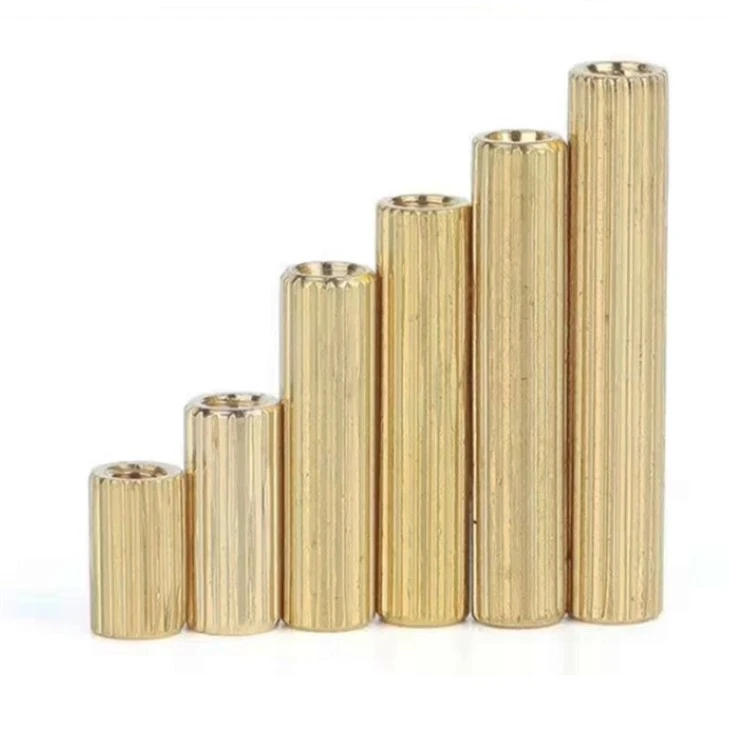
2. Metric Screw Standard Sizes
Metric screws are the most commonly used type in industrial, mechanical, and construction fields. The following are common standard sizes:
|
Size |
Thread Pitch (mm) |
Common Lengths (mm) |
Typical Use |
|
M2 |
0.4 |
4–20 |
Electronics, small devices |
|
M3 |
0.5 |
6–25 |
Electrical appliances |
|
M4 |
0.7 |
8–30 |
Furniture, light fixtures |
|
M5 |
0.8 |
10–40 |
Automotive interior parts |
|
M6 |
1.0 |
12–50 |
Machinery, hardware assembly |
|
M8 |
1.25 |
16–80 |
Heavy-duty connections |
|
M10 |
1.5 |
20–100 |
Structural connections |
|
M12 |
1.75 |
25–120 |
Building and steel structures |
3. Standard Sizes of Imperial Screws
Imperial screws are common in Europe and America and are measured in inches. They are usually indicated by "#" or fractions to indicate diameter, such as #4, #6, 1/4", etc.
Below is a table of common imperial unit specifications:
|
Size |
Threads Per Inch (TPI) |
Major Diameter (inch) |
Typical Use |
|
#4-40 |
40 |
0.112 |
Small electronics |
|
#6-32 |
32 |
0.138 |
General-purpose fastening |
|
#8-32 |
32 |
0.164 |
Automotive, machinery |
|
#10-24 |
24 |
0.190 |
Construction and fixtures |
|
1/4"-20 |
20 |
0.250 |
Equipment assembly |
|
5/16"-18 |
18 |
0.312 |
Structural joints |
|
3/8"-16 |
16 |
0.375 |
Heavy machinery |
|
1/2"-13 |
13 |
0.500 |
Industrial equipment |
4. Screw Size Recommendations for Different Applications
Electronics & Appliances: M2–M3 or #4–#6 sizes are recommended for compact and precise applications.
Furniture & Home Use: M4–M6 or #8–#10 are commonly used for moderate load-bearing capacity.
Automotive & Machinery: M6–M10 or 1/4"–3/8" are frequently used for good torque resistance.
Construction & Structural: Larger screw sizes (M12 or 1/2" and above) are recommended for greater stability and durability.
5. Key Factors for Choosing Screw Size
Load Bearing: Larger diameter screws are required for heavy-duty equipment.
Installation Space: Shorter screws or hex head designs are suitable for limited space.
Material Strength: Carbon steel is used for high-strength connections; stainless steel is suitable for corrosion-resistant environments.
Thread Fit: Fine threads are better suited for high-precision tightening.