Anodizing is a widely used metal surface treatment process, most commonly applied to aluminum and its alloys. Among all anodizing applications, aluminum anodizing is by far the most prevalent. For example, the colorful casings of power banks and the sleek housings of Apple products-such as the iPhone 5, 5S, and iPhone 7-are all made with aluminum combined with anodizing technology.
Why Anodizing?
The anodizing process enhances aluminum by making products lightweight, durable, and long-lasting while preserving the natural metallic texture. It enables vibrant, fade-resistant colors and allows a variety of surface finishes and textures-ranging from glossy to matte effects.
(Illustration: left-glossy finish; right-matte finish)
How Does Anodizing Work?
Anodizing is an electrochemical process in which aluminum or its alloys are immersed in an acidic electrolyte solution. A direct current is applied, causing a controlled "corrosion" on the surface, forming a protective anodized oxide film.
In natural environments, aluminum develops a very thin oxide layer, but this natural film is too weak for industrial use. Through anodizing, however, the oxide layer is deliberately thickened, dramatically improving the metal's performance.
(Microstructural diagram of anodized film)
For example, aluminum alloys are valued for good machinability and high specific strength, but they also have shortcomings:
low hardness,
poor wear resistance,
relatively low melting point,
limited working temperature (<200 °C).
These disadvantages restrict their applications. But once anodized, aluminum alloys gain significant improvements in:
wear resistance,
corrosion resistance,
electrical insulation,
thermal insulation.

Types of Anodized Finishes
By color, anodizing can be classified as:
Clear Anodizing: keeps the natural metallic tone without coloring.
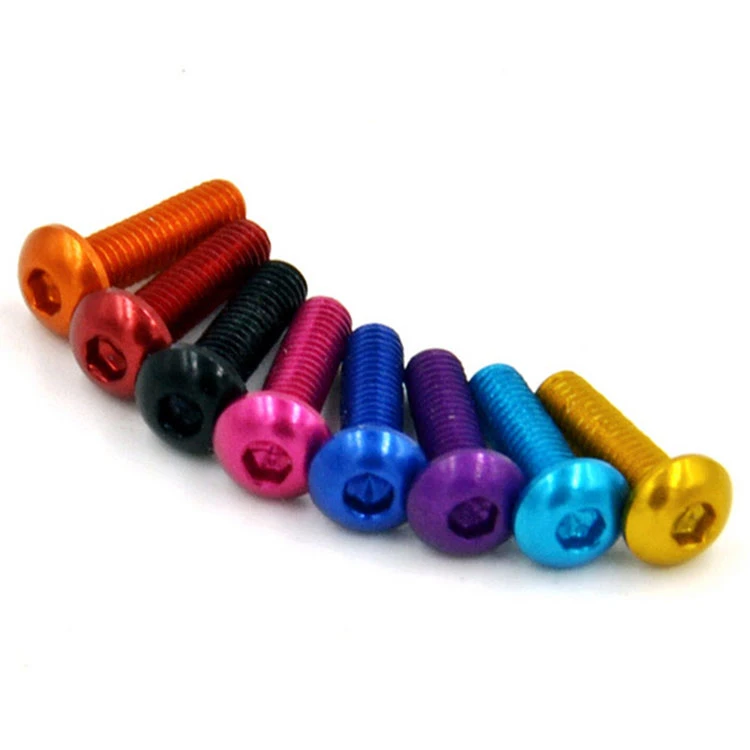
Single-Color Anodizing: dyed in one color; the most widely used and mature process.
Two-Tone Anodizing: also called double anodizing, where a part is anodized twice to create different colors or gloss levels (e.g., iPhone 5 body and logo).
Gradient Anodizing: a newer process, popular in products like e-cigarette casings (for demonstration purposes only), achieved by multiple coloring and gradient treatments.
By surface gloss/texture, it can be classified as:
Textured Anodizing: pre-treated by sandblasting, grinding, or brushing to create patterns or matte effects.
Glossy (Mirror) Anodizing: involves mechanical polishing before and after treatment to achieve a mirror-like surface, such as the "Jet Black" iPhone 7 finish.
Typical Anodizing Process Flow
Pre-treatment – Mechanical treatments such as sandblasting or polishing to achieve the desired texture.
Degreasing & Cleaning – Removes oils or contaminants for better processing.
Alkaline Etching – Eliminates the natural oxide film that forms on aluminum.
Acid Pickling – Removes whitish residues left from etching.
Chemical Polishing – Immersing the part in a solution to smooth surface marks (distinct from mechanical polishing).
De-smutting – Cleans discoloration or residues caused by previous steps.
Anodizing – Immersion in an electrolyte bath (commonly sulfuric acid, which accounts for ~95% of anodizing in industry). Produces a corrosion-resistant, insulating, and dye-absorptive oxide layer.
Activation – Enlarges surface pores in preparation for coloring.
Rinsing & Neutralization – Removes residual acids, ensuring uniform dyeing.
Coloring – Done by two main methods:
Electrolytic coloring (using current and electrolytes to achieve metallic tones).
Chemical dyeing (using dyes for a wide range of colors).
Sealing – Closes the microscopic pores of the anodized film to improve corrosion resistance, prevent staining, and extend service life.

Summary
Anodizing gives aluminum products the best of both worlds: the light weight and machinability of aluminum combined with a hard, wear-resistant, corrosion-proof, and visually appealing surface. From smartphones and laptops to automotive parts, building materials, lighting, and consumer goods, anodizing continues to define the standard for high-performance and stylish aluminum products.