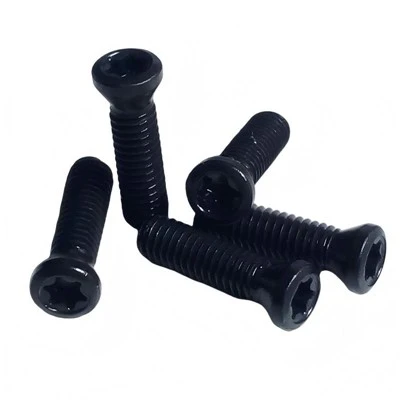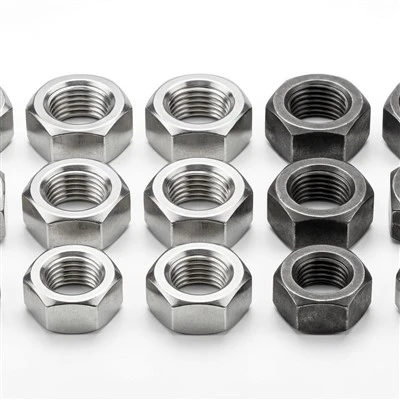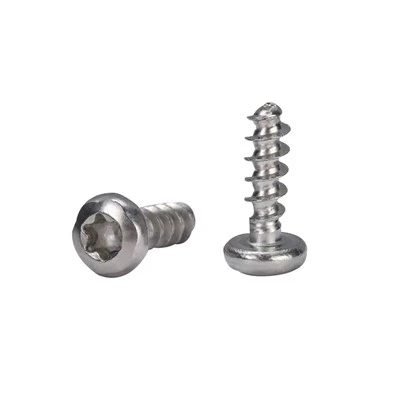
Stainless steel screws are widely used in industries such as shipbuilding, chemical industry, medical treatment, and food machinery due to their excellent corrosion resistance. However, many users have found that even if they are labeled as "stainless steel", the screws may still rust. Is this a quality problem, or is it caused by the use environment? This article will deeply analyze the core reason for the rust of stainless steel screws - intergranular corrosion, and give prevention suggestions.
1. The "stainless" principle of stainless steel
The corrosion resistance of stainless steel mainly depends on the passivation film (mainly composed of Cr₂O₃) formed on its surface. When the chromium (Cr) content is ≥10.5%, the steel can spontaneously form this dense oxide film in an oxygen environment to prevent further corrosion.
However, stainless steel is not absolutely "stainless". Under certain conditions, its corrosion resistance may be destroyed, leading to rust, among which intergranular corrosion is one of the most common failure mechanisms.
2. What is intergranular corrosion?
Intergranular corrosion (IGC) refers to the local corrosion phenomenon of stainless steel that occurs preferentially at the grain boundaries. The root cause is:
Chromium carbide (Cr₂₃C₆) precipitation: When stainless steel is at 450~850℃ (such as welding or heat treatment), carbon (C) will combine with chromium (Cr) to form chromium carbide at the grain boundary.
Formation of chromium-poor area: Due to the consumption of Cr, the Cr content near the grain boundary drops below 10.5%, resulting in the inability to form a passivation film in this area, which becomes a weak point for corrosion.
Corrosion process:
Chloride ions (Cl⁻), acid, or high-temperature water vapor in the environment invade the chromium-poor area.
Electrochemical reactions occur at the grain boundary, and iron (Fe) is oxidized to form reddish-brown rust (Fe₂O₃).
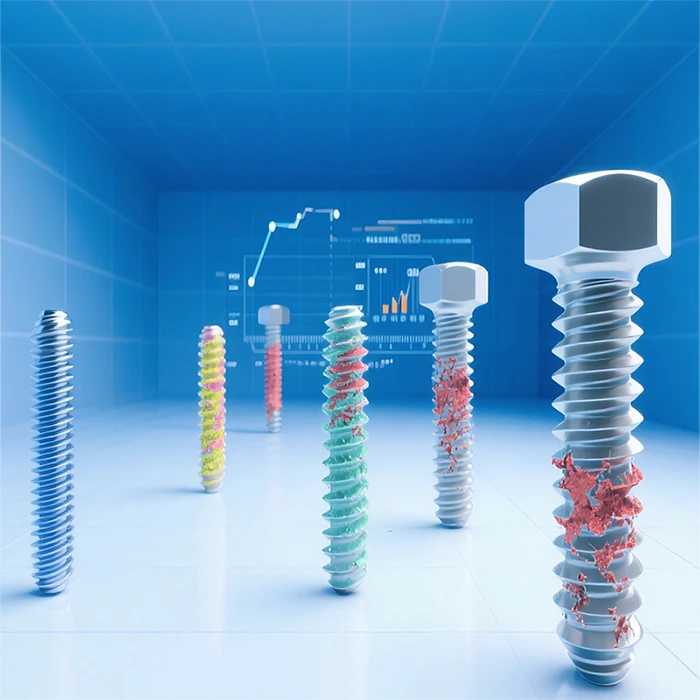
Corrosion spreads along the grain boundary, and in severe cases, even causes brittle fracture of the screw.
3. What situations will accelerate the rusting of stainless steel screws?
(1) Material issues
High carbon content (such as 304 vs. 304L): 304 stainless steel (carbon content ≤ 0.08%) is more susceptible to intergranular corrosion than 304L (carbon content ≤ 0.03%).
Poor quality stainless steel: Some manufacturers use low chromium (Cr<16%) or high sulfur (S) materials to impersonate 304/316, which greatly reduces corrosion resistance.
(2) Improper processing technology
Welding or heat treatment: If the screws are subjected to high temperatures (such as welding) during manufacturing or installation, and no solid solution treatment is performed, the risk of chromium carbide precipitation is high.
Mechanical damage: Surface scratches or cold hardening during thread forming will damage the passivation film.
(3) Harsh operating environment
High chlorine environment: In coastal areas, swimming pool equipment, chemical pipelines, etc., chloride ions (Cl⁻) will penetrate the passivation film.
Acidic medium: Strong acids with a pH of <2 (such as hydrochloric acid) or sulfur-containing environments (such as industrial waste gas) will accelerate corrosion.
4. How to prevent stainless steel screws from rusting?
(1) Choose the right material
(2) Optimize processing technology
Solution treatment: Heat to 1050℃ and then cool rapidly to dissolve the chromium carbide again.
Surface passivation: Soak in nitric acid or citric acid to enhance the passivation film.
(3) Correct installation and maintenance
Avoid contact with carbon steel (galvanic corrosion).
Clean regularly to prevent dirt accumulation (such as salt and organic matter).