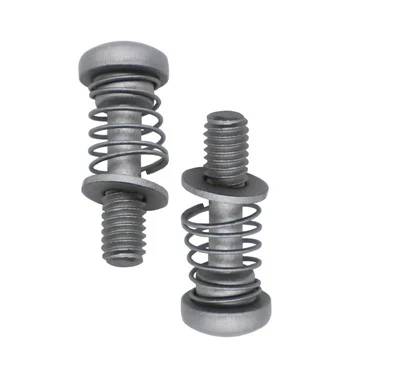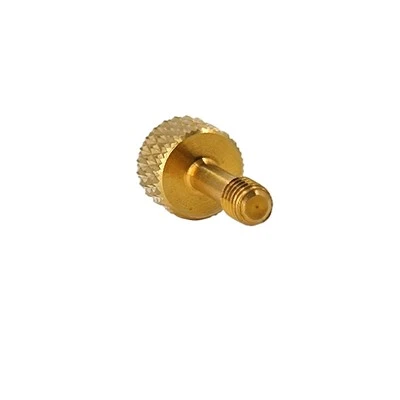
When you purchase bolts, you must often see digital markings such as 8.8, 10.9, and 12.9. These seemingly simple digital codes hide important material performance information. Understanding the meaning of these grades can help you avoid equipment failure or safety accidents caused by incorrect selection. This article will deeply analyze the scientific principles behind these numbers and make you a true bolt expert.
1.1 What the numbers represent
The bolt strength grade usually consists of two numbers separated by a decimal point (such as 8.8). This coding system is derived from the ISO 898-1 international standard.
The first digit represents 1/100 of the nominal tensile strength (MPa) of the bolt material
The second digit represents 10 times the yield strength ratio (yield strength/tensile strength)
Take 8.8 grade bolts as an example:
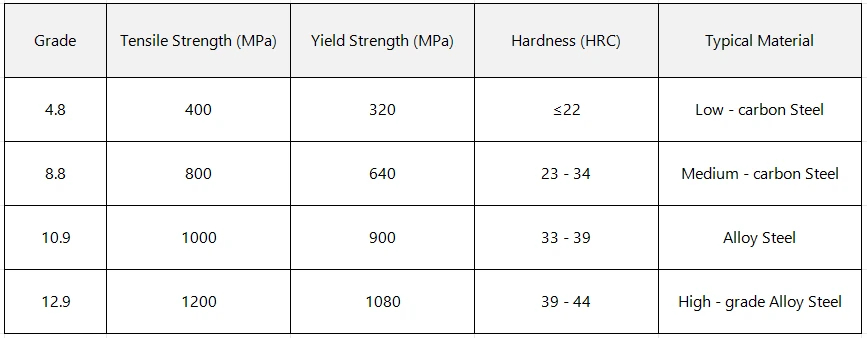
Tensile strength = 8 × 100 = 800MPa
Yield strength ratio = 8/10 = 0.8 → yield strength = 800×0.8 = 640MPa
1.2 Performance comparison of common grades
2.1 Key processes for strength improvement
The performance differences of bolts of different grades mainly come from material composition and heat treatment processes:
8.8 grade: carbon content 0.3-0.5%, quenching + tempering treatment
10.9 grade: add alloy elements such as Cr and Mo, and accurately control the tempering temperature
12.9 grade: use high-grade alloy steel such as 34CrNiMo6, multiple heat treatments
2.2 Differences in metallographic structures
Through electron microscope observation, it can be found that:
Grade 4.8: mainly ferrite, coarse grains
Grade 8.8: tempered bainite structure
Grade 12.9: fine martensite structure, uniform distribution of carbides
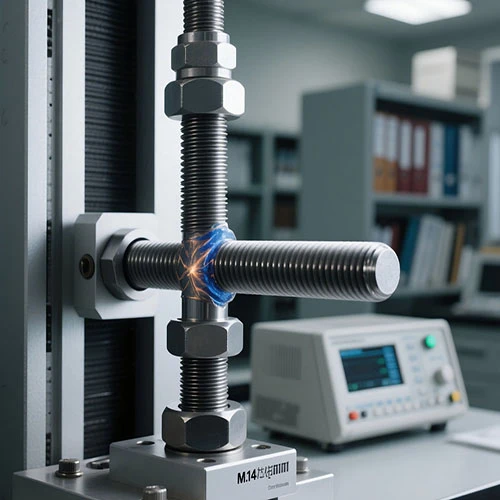
3.1 Common misunderstandings in selection
Misunderstanding A: The higher the grade, the better
Fact: 12.9-grade bolts are prone to hydrogen embrittlement in a humid environment
Misunderstanding B: Only look at tensile strength
Fact: Fatigue performance is equally important, and 10.9-grade is often the best balance point
3.2 Recommended selection guide
General structure: Grade 8.8 (best price/performance ratio)
Automobile chassis: Grade 10.9 (good fatigue resistance)
Aerospace engine: Grade 12.9 (special protection required)
Chemical equipment: A4-80 stainless steel (corrosion resistance first)
The most suitable grade is the best choice, not just the pursuit of the highest strength. If you need further technical advice, our team of engineers is always at your service.