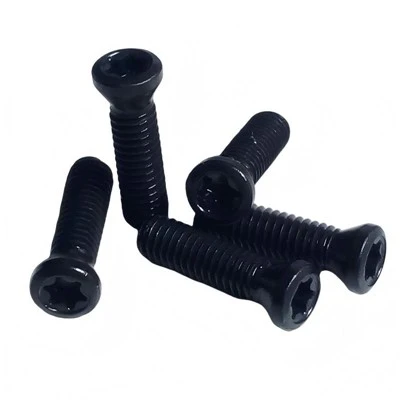
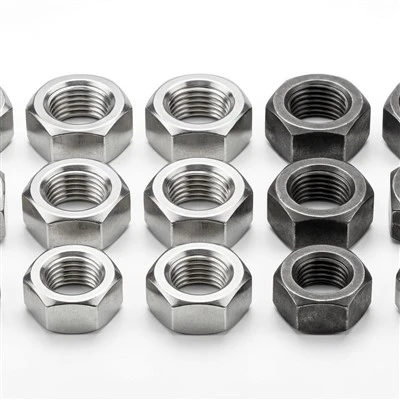
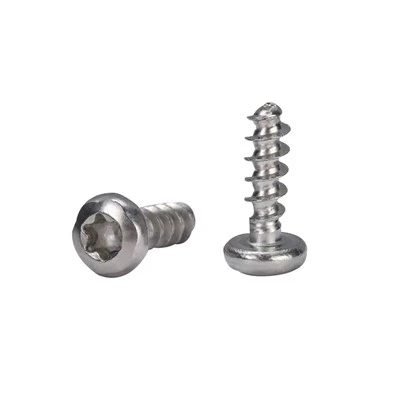
In industrial production, equipment manufacturing, and even daily maintenance, screws are one of the parts we come into contact with most frequently. However, most people may never have noticed the seemingly random characters and numbers on the screw head. These markings are not just decorations; they are the screw's "ID card" and "performance declaration." Understanding them is the first step to ensuring project safety and selecting the right parts. In this article, we will thoroughly decipher these codes, giving you a keen eye for identifying screw quality.
I. Why do screws need an "ID card"?
Screws are critical load-bearing and connection components. Their performance is directly related to the safety and reliability of the entire structure. An internationally recognized marking system is designed to allow users to quickly understand a screw's:
Material type (e.g., carbon steel, stainless steel)
Mechanical property level (e.g., strength, toughness)
Applicable standards (e.g., ISO, DIN, GB)
Choosing the wrong screw can lead to loose connections and equipment downtime, or even serious safety incidents. Therefore, understanding ID card reading is a must-have skill for every engineer, purchaser, and DIY enthusiast.
II. The Strength Code for Carbon Steel/Alloy Steel Screws: "X.Y" Grades
The most common markings are numbers like 4.8, 8.8, 10.9, and 12.9. These are the mechanical property grade designations for metric bolts based on the ISO 898-1 international standard.
The rules for deciphering this code are very simple:
The number before the period (X) represents 1/100 of the nominal tensile strength (σb) of the screw material.
For example, for grade 8.8, its nominal tensile strength is 8 × 100 = 800 MPa.
The number after the period (Y) represents 10 times the ratio of the screw material's yield strength (σs) to its tensile strength (σb) (yield strength ratio).
For example, for grade 8.8, its yield strength ratio is 8 ÷ 10 = 0.8, meaning the yield strength is 80% of the tensile strength. Therefore, its nominal yield strength is 800 MPa × 0.8 = 640 MPa.
III. Corrosion Resistance Code for Stainless Steel Screws: "A-B" Grades
The designation system for stainless steel screws is completely different from that for carbon steel and follows the ISO 3506 standard. It primarily indicates the material group and tensile strength. The most common are A2-70 and A4-70.
How to decipher this code:
The alphabetic portion (A2/A4) represents the material group and chemical composition of the stainless steel.
A2: The most commonly used 304 stainless steel. It offers excellent corrosion resistance and is suitable for most environments (air, freshwater, and food media).
A4: 316 stainless steel. The addition of molybdenum (Mo) provides excellent resistance to chloride corrosion (acid, alkali, and seawater), making it suitable for harsh environments such as coastal areas, chemical plants, and ships.
The numerical portion (-70/-80) represents 1/10 of the screw's nominal tensile strength. -70: Tensile strength is 70 × 10 = 700 MPa. -80: Tensile strength is 80 × 10 = 800 MPa.
IV. How to make the right choice with the help of the "ID card"?
Confirm the force requirements: First, evaluate the force conditions of the connection parts (static, dynamic, vibration). Do not use low-grade screws (such as 4.8 grade) in key force-bearing parts.
Evaluate environmental factors: Is it humid, chemically corrosive, indoors, or outdoors? Carbon steel parts need to be electroplated (such as zinc plating, nickel plating) in humid environments, while A4 (316) stainless steel should be preferred in chemical and marine environments.
Avoid "excessive strength": There is no need to use the highest grade screws (such as 12.9 grade) on all occasions. This will lead to cost waste and in some cases (such as hydrogen embrittlement risk) it is disadvantageous.
Procurement with accurate markings: When purchasing from suppliers, clearly specify the performance grade code (e.g., "Grade 8.8," "A4-70") and verify that the markings on the actual product are clear and meet the requirements. This is the first step in eliminating counterfeit and substandard products.