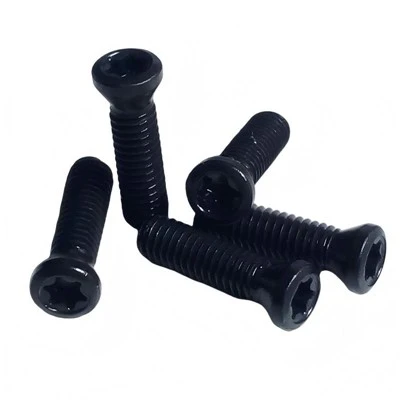
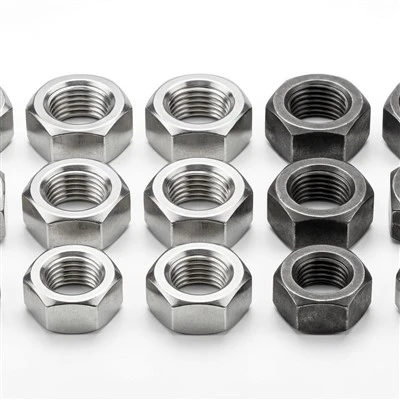
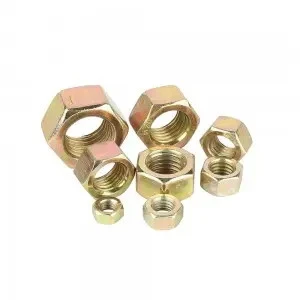
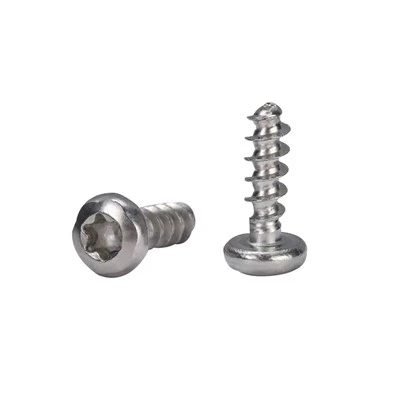
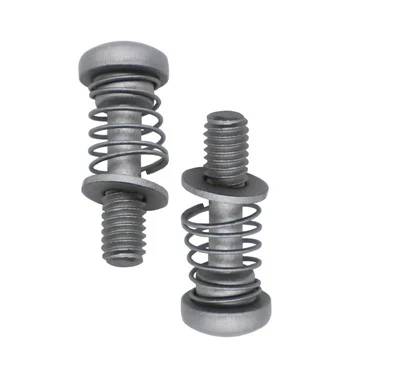
The surface treatment method for 304 stainless steel cross-head slotted pins, dowels, retaining rings, locating studs, cylinders, and other fasteners should be selected based on the application. The following is a classification and detailed explanation of common treatment methods.
1. Passivation
Process Principle: A nitric or citric acid solution is used to remove free iron particles from the surface, forming a dense chromium oxide layer.
Features: Preserves the original color of stainless steel and improves corrosion resistance, making it particularly suitable for clean environments such as food and medical applications. It is low-cost and environmentally friendly, while maintaining color and hardness.
Suitable for: General corrosion protection needs, such as indoor equipment and non-extreme environments.
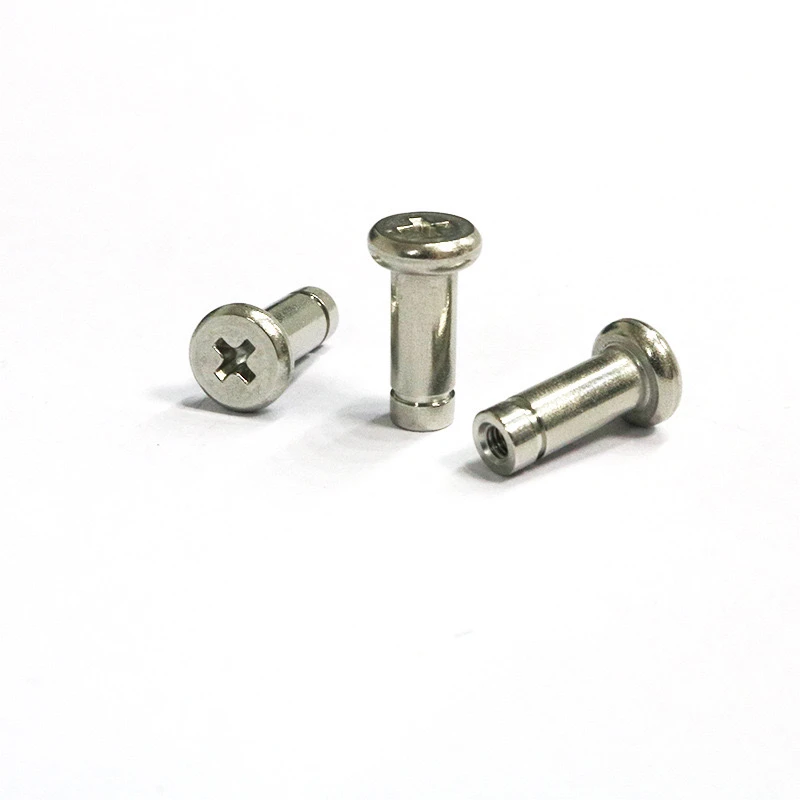
2. Electroplating
Nickel plating increases wear resistance and conductivity, resulting in a bright silver or matte black nickel finish. This may reduce corrosion resistance.
Galvanizing offers low-cost rust prevention, often with a blue-white or colored passivation finish. However, it is not as corrosion-resistant as natural stainless steel and should be used with caution.
3. Electropolishing
Process: Electrochemically dissolves microscopic surface bumps, creating a mirror-like finish.
Advantages: Reduces friction, facilitates assembly, and is suitable for high-precision instruments. Enhances corrosion resistance, but at a higher cost.
4. Oxidation Coloring
Process: Physical vapor deposition (PVD) creates a coating of compounds such as titanium and chromium.
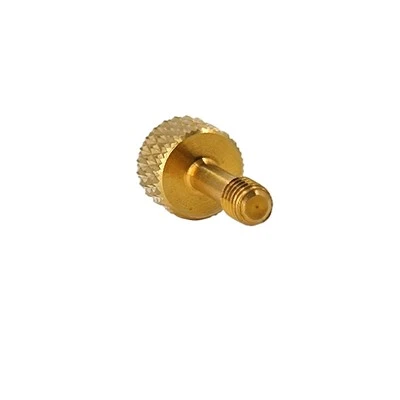
Result: Customizable colors include gold, black, and blue, offering both decorative and wear-resistant properties.
The coating is thin (micron-level), without compromising dimensional accuracy, making it suitable for high-end tools and outdoor equipment.
5. Sandblasting/Brushing
Sandblasting: Creates a matte finish that hides scratches and is commonly used on industrial equipment.
Brushing: Targeted texture enhances aesthetics, such as in electronic housing connectors.
6. High-Temperature Oxidation
Process: Heat is applied to form a black Fe₃O₄ film, which is wear-resistant but brittle.
Limitations: May reduce corrosion resistance and requires subsequent oiling for protection.
Selection Recommendations
Requirements Recommended Treatment Notes
Basic Corrosion Protection: Passivation (Best Cost-Effective)
High Corrosion + Wear Resistance: Electrolytic Polishing + PVD Coating (High Cost, Longer Life)
Conductive/Electromagnetic Shielding: Nickel Plating (Avoid humid environments)
Decorative Appearance: PVD Coloring or Black Nickel Electroplating (Coating Adhesion Verification Needed)
Anti-Fingerprint/Easy Cleaning: Nano-Coating (Suitable for Frequently Contacted Adjustment Parts)

Precautions
Avoid electroplating processes on carbon steel, such as chrome plating and colored zinc plating, as they may cause intergranular corrosion of stainless steel.
Salt Spray Test Requirements: After passivation, the product must typically pass a 48-72 hour neutral salt spray test.
Dimensional Impact: Electroplating thickness is approximately 5-20 μm, and tolerances must be allowed for precision fittings.
A combination of processes may be used depending on actual operating conditions. It is recommended to clarify standards with the supplier.