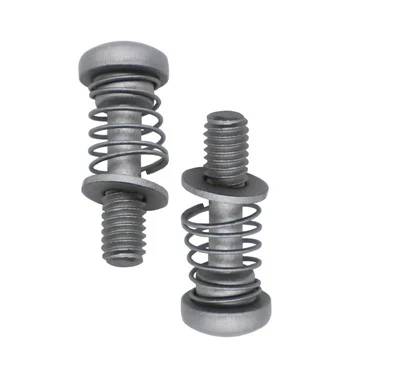
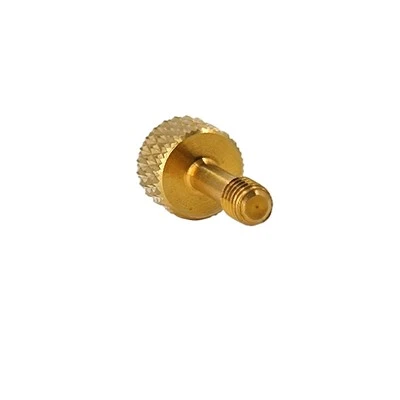
Anodized aluminum alloy colored hand-tightened knurled nut is a DIY fastener that combines functionality and aesthetics. It is widely used in electronic equipment, furniture assembly, model making, and other fields. The following is its detailed usage and precautions.
1. Usage steps
Preparation
Check accessories: Confirm that the nut specifications match the matching bolts/screws to avoid thread incompatibility.
Clean the contact surface: Remove oil and debris from the threaded hole or screw to ensure smooth tightening.
Select tools: Usually, no tools are required, just hand-tighten directly; if the space is narrow, you can use needle-nosed pliers to lightly clamp the knurled part to apply force.
Installation method
Align the thread: Align the nut vertically with the screw and rotate counterclockwise until you feel resistance.

Hand-tightening: Rotate the nut clockwise to increase friction through the knurled pattern, and tighten it to the appropriate force by hand.
Fine-tuning positioning: If used for panel adjustment, a slight damping feeling can be retained for subsequent adjustment.
Disassembly operation: Loosen by rotating counterclockwise to avoid violent disassembly that causes aluminum alloy thread slippage.
2. Precautions
Force control: Aluminum alloy has low hardness, and over-tightening may cause thread deformation or wear of the surface anodic layer. It is recommended to tighten manually and then apply a 1/4 turn. If high-strength fixation is required, it can be matched with anti-loosening washers or steel nuts.
Environmental adaptation: Avoid long-term exposure to acid and alkali environments or high temperatures to prevent fading or corrosion of the anodized layer. It is recommended to apply a small amount of anti-rust grease in humid environments.
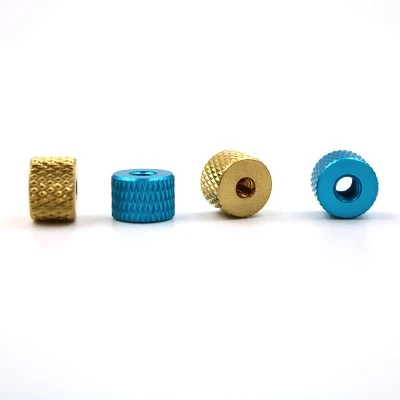
Maintenance and care: Check the tightening status regularly, especially in scenes with frequent vibration. Surface stains can be wiped with a soft cloth dipped in neutral detergent, and hard objects are prohibited from scratching.
3. Common application scenarios
Electronic equipment, such as radiator fixing and chassis panel installation, taking into account conductivity and aesthetics.
DIY projects: Model, display stand assembly, colored nuts improve visual coordination.
Furniture decoration: used for detachable connectors, easy adjustment, and no tool marks.

4. Troubleshooting
Thread slippage: Replace the nut or use a thread repairer.
Color shedding: The anodized layer cannot be repaired after wear, and it is recommended to replace the nut with a new one.
This product is based on "manual quick operation + lightweight and durable" and combines color management needs. It is the preferred accessory for precision assembly and creative design. Through reasonable use and maintenance, anodized aluminum alloy colored nuts can maintain functionality and aesthetics for a long time. The key points are matching specifications, moderate force, and environmental protection.