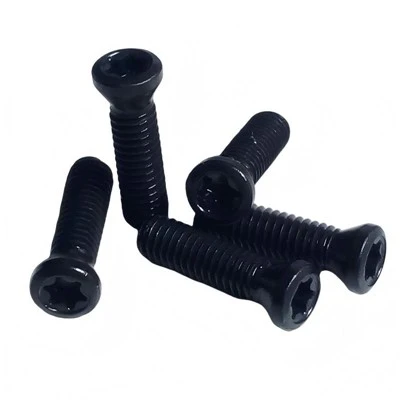
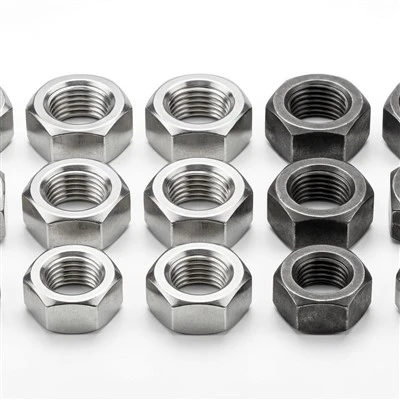
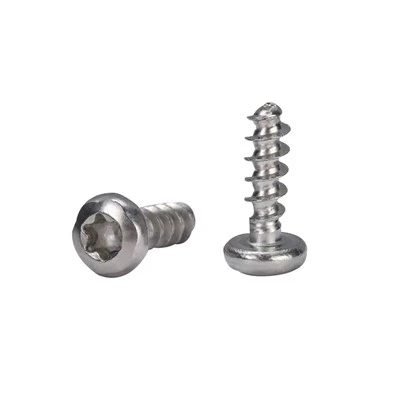
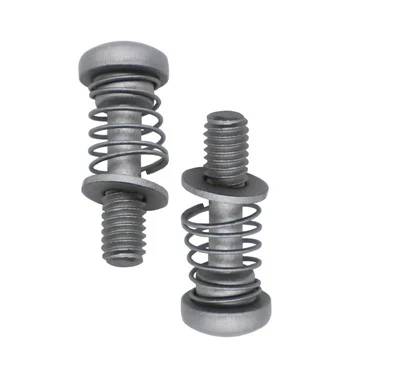
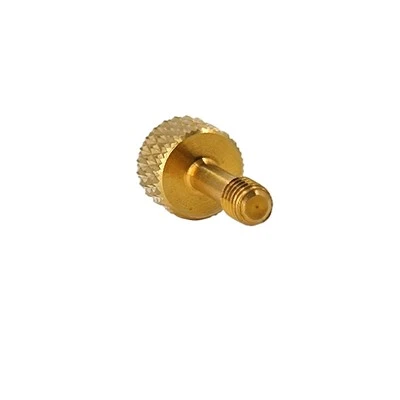
Stainless steel hexagon socket countersunk head dispensing screws (360-degree flat head hexagon socket screws) are multifunctional fasteners suitable for precision assembly applications requiring anti-loosening, sealing, or aesthetically pleasing features. Below are detailed instructions and precautions.
I. Product Features
Material: 304 or 316 stainless steel, corrosion-resistant and high-strength.
Head Design: Countersunk head (flat head): Flush with the workpiece surface after installation, eliminating protrusions.
Hexagon socket (hexagon socket): Requires a hexagonal wrench of the corresponding specifications (such as H-type).
Dispensing Function: Pre-applied anti-loosening adhesive on the threads, which cures to enhance locking force.
360-degree flat head: The head has no directional restrictions, suitable for installation at various angles.
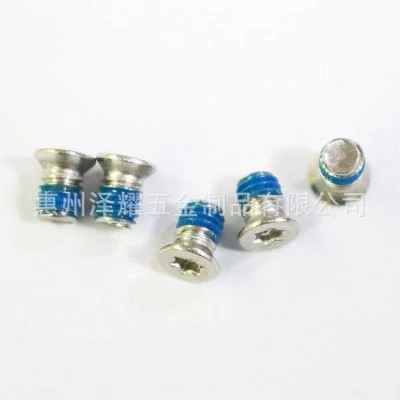
II. Usage Instructions
1. Preparation
Tools: Matching hexagonal wrench, electric/manual screwdriver, and drill.
Inspect the screw: Confirm the specifications (diameter and length) and ensure the dispensing is intact (visible adhesive layer on the threads).
Workpiece Preparation: Pre-drill the countersink at the angle of the screw head (usually 90°) to a depth consistent with the head height. Remove any debris from the hole to prevent it from affecting the fit or adhesive.
2. Installation Procedure
Alignment: Insert the screw perpendicularly into the countersink, ensuring the head is fully seated.
Initial Tightening: Use a hex wrench to tighten the screw clockwise, feeling for any misalignment.
Final Tightening: Manually tighten the screw until the head is flush with the surface, using a moderate torque (refer to the material torque table).
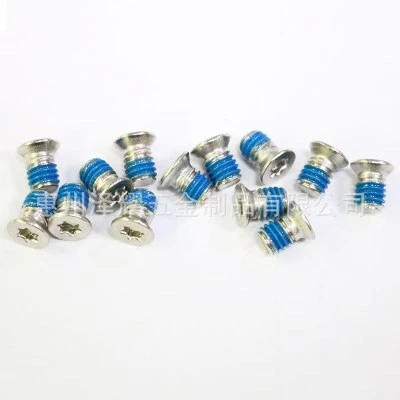
Power Tool: Use a low speed setting to avoid stripping or premature damage to the adhesive layer.
Adhesive Activation: After fully tightening the glued screw, allow it to rest for 5-10 minutes to allow the glue to cure and lock in place.
3. Special Scenarios
Reuse: If disassembly is necessary, it may be necessary to clean the old glue and reapply glue.
High Temperature/Humid Environments: Select a heat-resistant adhesive type and wait 24 hours before applying any load.
3. Precautions
Torque Control: Overtightening can cause cracking in the countersink, while over-loosening can render the anti-loosening mechanism ineffective (stainless steel is prone to galling; a small amount of lubricant can be applied).
Adhesive Protection: Avoid contact with solvents and oils before installation to prevent loss of adhesion.
Compatibility: The countersink material must be harder than the screw to prevent head deformation (aluminum alloy workpieces require a steel washer).
4. Common Problems and Solutions
Slide: Replace with an unworn hexagonal wrench and apply force vertically.
Adhesive Failure: Check for expiration or improper storage (need a dry environment, away from light).
Bumped Head: Insufficient countersink depth; re-reaming is required.
5. Applications
Precision Instruments: Optical devices and electronic housings (both aesthetics and shock absorption are important).
Outdoor Facility: Guardrails and signage (rust and anti-loosening).
Automotive Parts: Interior panels and sensors (vibration resistance is required).
Standardized operation and meticulous attention to detail are essential to fully realize the sealing, anti-loosening, and aesthetic benefits of this type of screw.