1. Thread Matching: The Embarrassment and Hidden Dangers of Tightening
Imagine discovering incompatible bolt and nut threads during emergency repair-this scenario is not uncommon in factories. Thread mismatches can lead to lost work time at best, or even thread breakage and complete component failure due to forced installation.
1. Metric and Imperial: Two Systems That Cannot Be Mixed
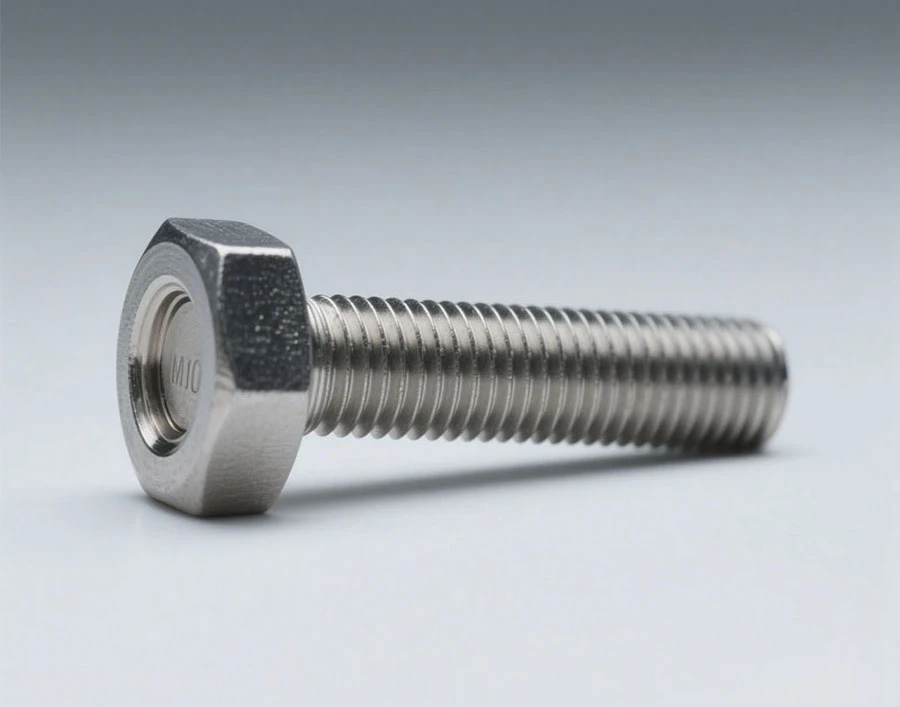
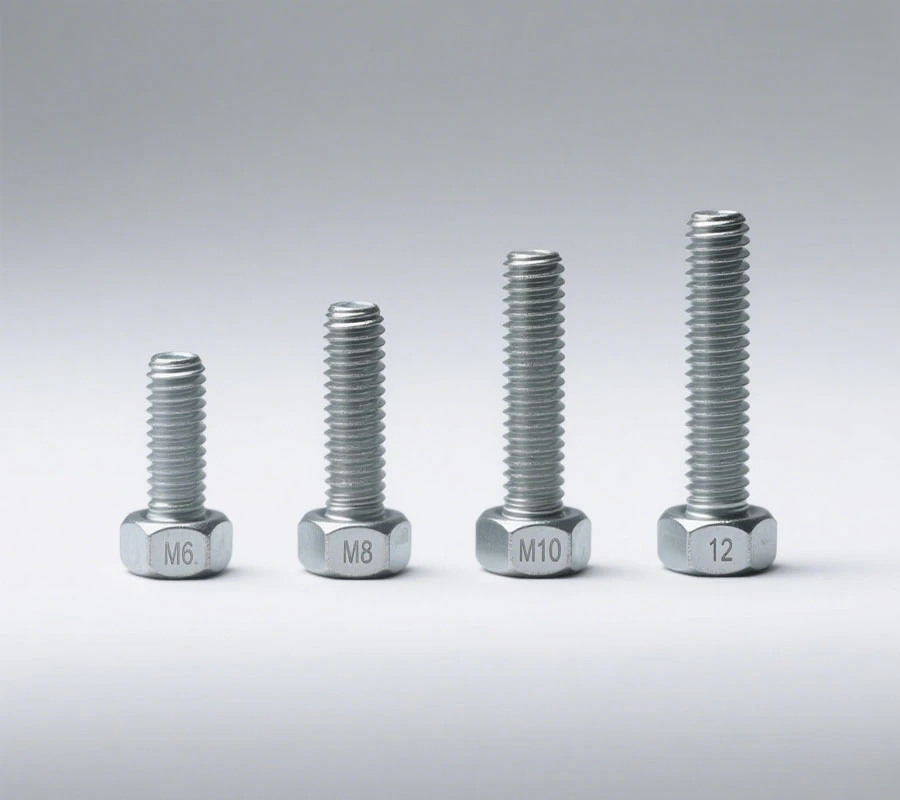
Metric threads (e.g., M10×1.5): Measured in millimeters, they are widely used in domestic machinery.
Imperial threads (e.g., 1/2"-13): Measured in inches, they are commonly found on imported equipment.
Key difference: Metric threads have a 60° flank angle, while imperial threads have a 55° flank angle. Mixing them will result in uneven contact surfaces and reduced load-bearing capacity.
2. Coarse and fine threads: Same diameter, different missions
Coarse threads (e.g., M10×1.5): Quick assembly and disassembly, slightly less vibration-resistant, suitable for general connections.
Fine threads (e.g., M10×1.25): Smaller pitch, better self-locking properties, suitable for precision equipment and vibrating environments.
Measured data: In vibration testing, fine threads exhibited a breakaway cycle over three times longer than coarse threads.
II. Strength Matching: Which is Stronger?
Which is more dangerous, bolt breakage or nut stripping? The answer is the latter. This is because nut failure is often more subtle and can trigger a chain reaction.
Decoding Strength Grades
The digital code on the bolt: For example, in grade 8.8, the first "8" represents a tensile strength of 800 MPa, and the second ".8" refers to a yield ratio of 80%.
Hidden Requirements for Nuts: International standards stipulate that the proof load stress of a nut must be ≥ 1.2 times the tensile strength of the bolt.
III. Material Pairing: The Invisible Electrochemical Killer
In humid coastal factories, we often see a strange phenomenon: stainless steel bolts appear shiny and new, while carbon steel nuts are covered in rust. This is due to electrochemical corrosion.
IV. Anti-Loosening Design: The Ultimate Solution to Vibration Resistance
Statistics show that 80% of bolt failures are due to loosening, not breakage. The following anti-loosening technologies have been proven effective in field tests:
1. Mechanical Locking
Double-Nut Structure: Mutually restraining the upper and lower nuts increases breakaway torque by five times.
Wedge-Shaped Washer: Remains firm after 20,000 cycles of vibration testing.
2. Chemical Locking
Threadlocker Application: Medium-strength threadlockers (such as Loctite 243) can withstand a breakaway torque of 30 N·m.
3. Deformation-Proof Locking
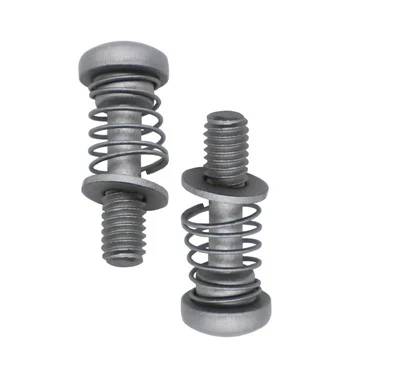
All-Metal Locking Nut: Creates permanent locking force through thread deformation, with high-temperature resistance up to 800°C.