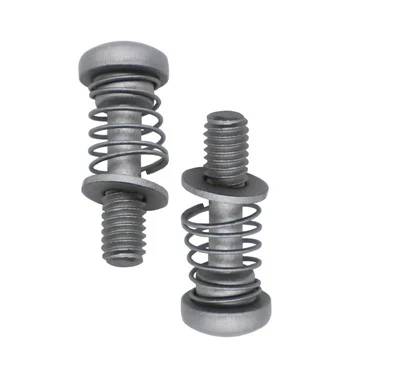
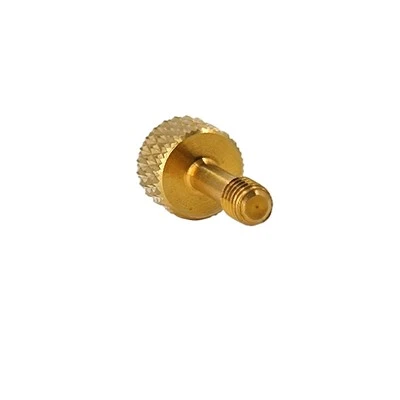
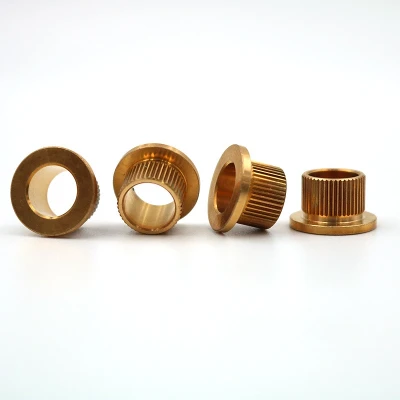
A brass knurled step flange rivet is a specially designed rivet that combines a variety of structural and functional characteristics. Its core functions and features can be systematically summarized as follows.
1. Core functions
High-strength mechanical fastening
Permanent connection is achieved through the riveting process, suitable for vibration environments, and has better anti-loosening performance than threaded fasteners. The step design provides axial positioning to ensure fixed spacing between components during assembly and avoid pressure damage to thin plate materials.
Anti-slip and enhanced grip: The straight and mesh patterns on the knurled surface increase the friction coefficient, which is convenient for manual screwing operations, and at the same time enhance the anti-rotation ability with soft materials such as plastic and rubber after riveting.
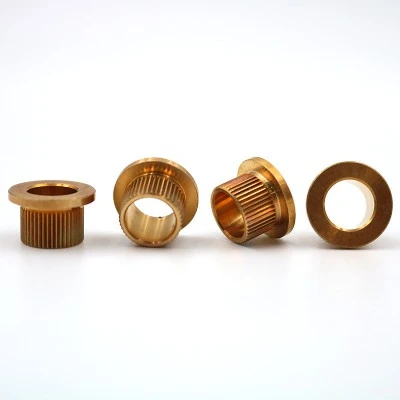
Sealing and stress dispersion: The flange structure expands the contact surface, reduces the surface pressure of the connector, and prevents deformation of the thin plate; some designs are matched with sealing gaskets for low-pressure leak-proof scenarios.
Conductive and corrosion-resistant: Brass material has both conductivity and environmental corrosion resistance, which is better than ordinary steel rivets.
2. Key design features
Step structure: Precisely control the component gap after riveting, commonly used in electronic equipment, PCB board fixing.
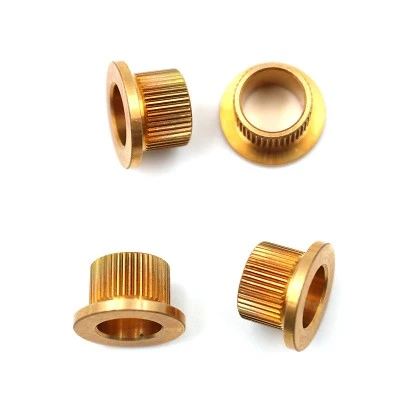
Flange type: flat flange, serrated flange, select according to load requirements.
Knurling parameters: pitch and depth affect the holding force, coarse teeth are suitable for quick assembly, and fine teeth are used for precise adjustment.
3. Typical application scenarios
Electrical industry: circuit breaker panel, motor end cover.
Transportation equipment: automotive interior panels, high-speed rail carriage decoration parts.
Industrial design: instrument housing.
4. Selection considerations
Material substitution: Beryllium bronze can be selected for high-strength working conditions, but the cost increases.
Installation restrictions: special riveting tools are required, and blind holes are more suitable than through holes.
This design achieves a balance between functionality, reliability, and process cost through the coordinated optimization of materials and structures, and is suitable for the precision assembly needs of small and medium-sized equipment.