Screws are the most commonly used fasteners in industrial, mechanical, furniture, and construction projects. But did you know that many screw problems actually originate from the installation process? Incorrect installation can not only affect structural safety but also lead to loose screws, breakage, or even product damage.
Today, we'll analyze common screw installation mistakes in detail and provide effective prevention methods.
1. Incorrect Screw Type Selection
Incorrect screw type selection is one of the most common mistakes:
Wood Screws vs. Machine Screws
Wood screws are used for wood, plywood, etc., and are prone to stripping or breaking when directly screwed into metal or hard plastics.
Machine screws are used for metal and hard materials and require a nut or pre-drilled holes.
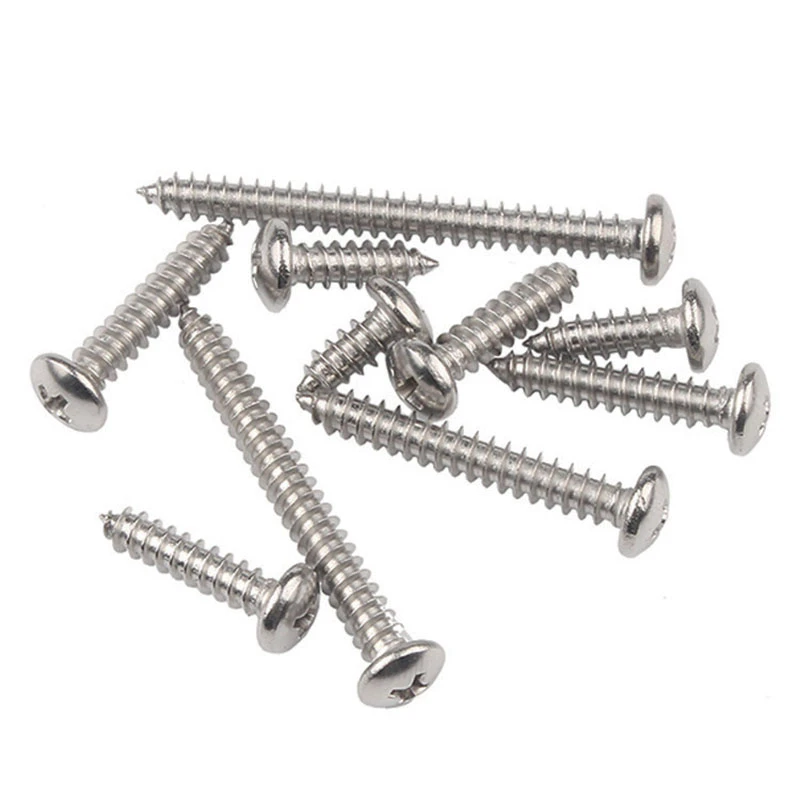
Improper Use of Self-Tapping Screws
Screwing them into hard materials without pre-drilling holes can cause the screw head to break or damage the material surface.
Prevention Recommendations:
Select the screw type according to the material;
Confirm the usage instructions and specification sheet provided by the screw manufacturer before bulk purchases;
For special materials, consult with the screw factory to customize dedicated screws.
 |
 |
2. Inappropriate Screw Size Selection
The length and diameter of the screw directly affect the fixing effect:
* Too short: Insufficient fixing force, easily loosened or detached.
* Too long: Penetrates material, potentially damaging the product or causing personal injury.
* Too small a diameter: Insufficient load-bearing capacity, threads easily stripped.
* Too large a diameter: Difficult to screw in, may damage mounting holes or material.
Prevention Recommendations:
* Select the appropriate length and diameter according to material thickness and load-bearing requirements.
* For special projects, choose OEM custom screws to ensure accurate dimensions.
3. Incorrect Tightening Method
Tightening screws is also a key factor causing problems:
* Uneven force or overtightening
* Overtightening can damage threads or cause the screw to break.
* Undertightening results in insufficient fixing force, easily loosening.
* Incorrect tightening sequence
* Failure to tighten multi-hole or multi-screw connectors in a cross-sectional sequence may cause stress concentration, increasing the risk of loosening.
* Failure to use a torque tool
* Uneven torque can cause some screws to loosen, affecting the overall structural stability.
Prevention Recommendations:
Use a torque wrench or power tool with the appropriate torque value;
Tighten multi-hole connectors in a staggered sequence;
For batch installations, establish standard operating procedures to ensure consistent installation of each screw.
4. Neglecting Anti-Loosening Measures
Vibration and load are the main causes of screw loosening:
Industrial machinery, furniture, and vehicles operate in environments with frequent vibration;
Screws can easily loosen on their own if anti-loosening nuts, spring washers, or threadlockers are not used.
Prevention Measures:
Use nylon lock nuts or spring washers to increase friction;
Use threadlockers (Loctite) for critical screws;
Establish a regular inspection and maintenance mechanism to promptly detect loose screws.
5. Incorrect Materials and Surface Treatments
Screw material and surface treatment directly affect service life and safety:
Ordinary steel screws are prone to rust in humid environments;
Improper surface treatment can lead to stripping or damage to the screw head during tightening;
Using low-strength screws in high-strength equipment increases the risk of breakage.
Prevention Recommendations:
For indoor use, galvanized or nickel-plated screws are generally recommended;
for outdoor or humid environments, stainless steel or corrosion-resistant coated screws are preferable;
for special loads or environments, OEM-customized high-strength corrosion-resistant screws are ideal.