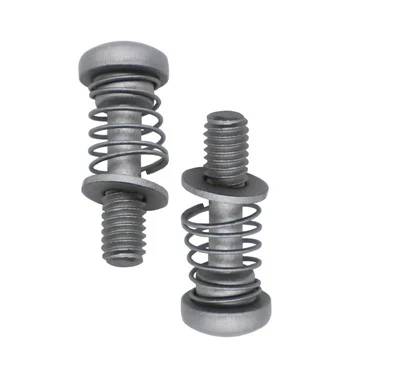
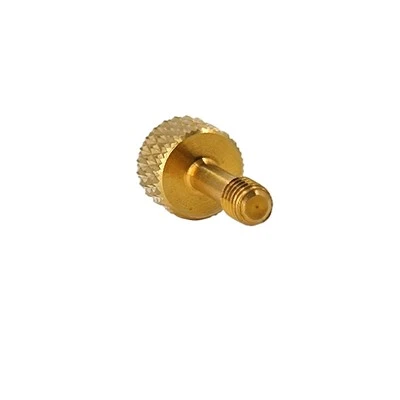
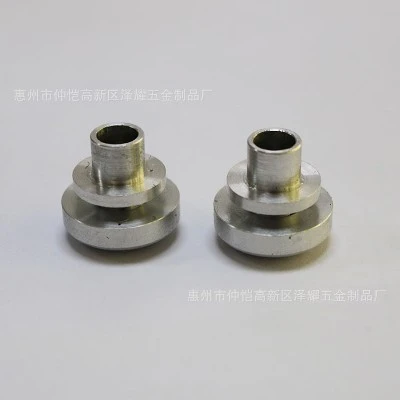
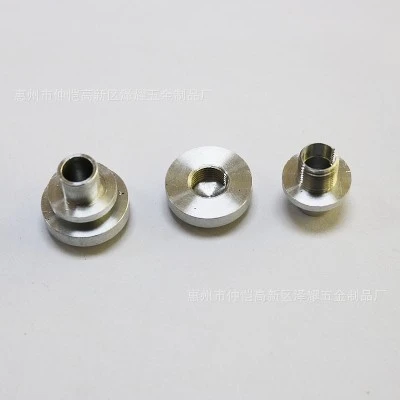
The full name of non-standard step aluminum turning parts is non-standard step-shaped aluminum alloy turning parts. It is a customized aluminum alloy part with a unique structural design and performance characteristics. It is widely used in automobiles, aerospace, and other fields. However, problems often occur during the processing due to improper material properties, structural design, or process parameters. Below, we have collected some common problems and solutions.
1. Dimensional accuracy out of tolerance
Actual problem: Key dimensions such as step height and diameter are out of tolerance, and coaxiality or verticality is not up to standard.
Cause analysis:
Clamping deformation: Aluminum alloy has low hardness, and excessive clamping force will cause workpiece deformation.
Tool wear: Aluminum alloy is easy to stick to the tool, and the tool is not replaced in time after wear, which affects the accuracy.
Thermal deformation: Local temperature rise during high-speed cutting causes material expansion.
Solution:
Optimize clamping: Use soft claws or hydraulic clamps to disperse the clamping force; increase auxiliary support
Tool management: Use diamond-coated tools to reduce tool sticking; regularly check tool wear and set replacement cycles.
Process control: divided into rough and fine machining stages, cooling to room temperature before finishing; using small cutting depth and high speed to reduce cutting heat.
2. Surface quality defects
Problem manifestation: high surface roughness, scratches, or vibration marks. And obvious burrs at the step transition.
Cause analysis:
Improper cutting parameters: too large feed rate or too low speed.
Wrong tool selection: too small radius of the tool tip or insufficient back angle.
Vibration: too long overhang of workpiece or insufficient rigidity of tool.
Solution:
Parameter optimization: high speed and low feed are used for finishing.
Special tool: Use an aluminum alloy special tool with a large arc tool tip and a sharp front angle.

Vibration reduction measures: shorten the overhang length of the workpiece; use a damping tool rod or increase cutting fluid concentration.
3. Poor thread processing
The thread tooth profile is incomplete and chaotic; the thread diameter size is unstable.
Cause analysis: It may be that the material sticks to the tool, and the aluminum alloy chips stick to the thread tool, causing the thread tool to break, and the chips are entangled and block the thread groove.
Solution:
Thread cutter optimization: Use high-speed steel or carbide thread cutters with a rake angle of ≥20° and apply coating.
Process improvement: Use the "oblique feed method" to reduce cutting force; use a high-pressure air gun to assist in chip removal during processing.
Lubrication enhancement: Use cutting oil containing extreme pressure additives.
IV. Efficiency and cost issues
Problem manifestation: Single-piece processing time is too long, and tool consumption cost is high.
Optimization measures: Use high spindle speed and ceramic bearing toolholders.
Compound tool: Customize stepped drilling and milling compound tools to reduce tool change time.
Simulation verification: Use CAM software to simulate the cutting process and optimize the tool path.
By systematically optimizing materials, tools, process parameters, and clamping solutions, the qualification rate of non-standard stepped aluminum parts can be significantly improved, and the overall manufacturing cost can be reduced.