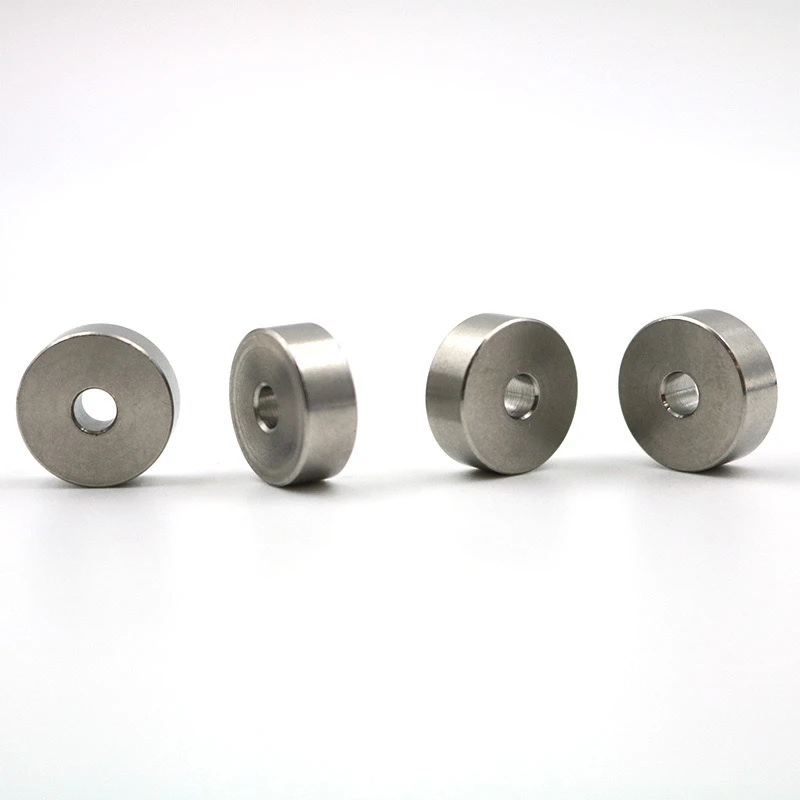
As a lightweight and corrosion-resistant metal accessory, aluminum washers are widely used in multiple industrial fields. Their main functions include sealing, anti-wear, gap adjustment and stress dispersion. The following is a detailed analysis of their specific applications and characteristics:
I. Main functions and advantages of aluminum washers
Stress dispersion and anti-wear
Aluminum washers are installed under the head of screws or bolts. They disperse pressure by expanding the contact area to avoid damage to parts caused by local stress concentration. They are particularly suitable for scenes that require frequent tightening or dynamic loads13.
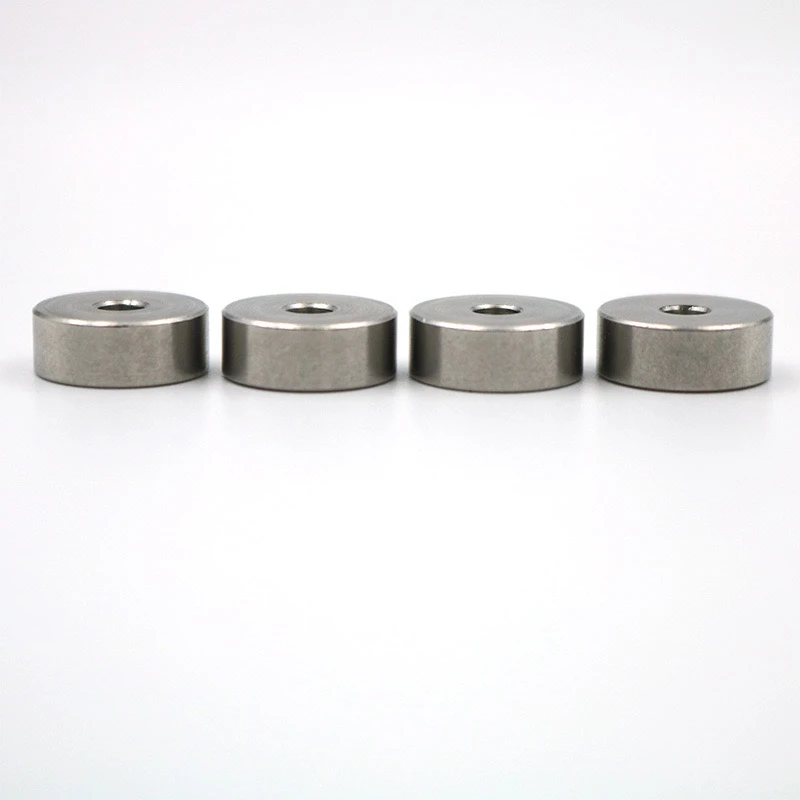
Sealing and corrosion protection
The corrosion resistance of aluminum makes it suitable for corrosive environments such as chemicals and petroleum. For example, in thermal oil pumps, aluminum washers combined with polytetrafluoroethylene sealing layers can maintain sealing performance at high temperatures (such as 300°C) and corrosive media.
Gap adjustment and balancing
Aluminum adjustment gaskets can accurately fill the assembly gap of mechanical equip
2. Main application areas of aluminum washers
Machinery manufacturing and industrial equipment
Used for machine tool guide rail calibration, conveyor belt system and other equipment installation to ensure horizontal alignment of components.
Control the closing height in mold adjustment, or for the positioning of stamping dies.
Automobile and transportation
Tightening and adjustment of engine components (such as timing system, belt tensioner).
Height adjustment of suspension system and optimization of shock absorber hardness.
Chemical and energy
Sealing of equipment such as thermal oil pumps, pipeline valves, etc., to withstand high temperature and weakly corrosive liquids5.
Angle adjustment gaskets for solar brackets and wind turbine blades to optimize energy efficiency.
Aerospace and electronic equipment
Precision docking of spacecraft components, such as satellite brackets and rocket thrusters.
Leveling and sealing of optical instruments (microscopes, telescopes), wafer positioning in semiconductor manufacturing.
Architecture and home
Tension compensation and thermal expansion and contraction adjustment of steel structure bridges.
Gap filling and stability enhancement for adjustable furniture (e.g. office chairs, cabinet door hinges).
III. Types and material properties of aluminum washers
Common types
Flat washers: Basic type, used to disperse pressure and protect surfaces.
Spring washers: Provide continuous tension through elastic deformation to prevent bolt loosening.
Peelable washers: With peeling layer design, easy to install and replace, suitable for electronic equipment sealing.
Material advantages
Lightweight: Low density, suitable for weight-sensitive fields (e.g. automobiles, aerospace).
Thermal conductivity: Rapid heat dissipation, reducing the risk of equipment overheating (e.g. engine components).
Flexible processing: Customizable in different sizes (e.g. M2-M8), shapes and surface treatments (anodization, electroplating, etc.).
IV. Future development trends
High performance: Improve strength and corrosion resistance through new aluminum alloys (e.g. 6061, 7075)47.
Intelligent management: Combine IoT technology to monitor the status of washers in real time and optimize equipment maintenance cycles24.
Integrated design: Develop modular gaskets to adapt to complex mechanical systems and reduce assembly time (such as multi-layer gaskets)78.
V. Typical industry cases
Chemical industry: A thermal oil pump uses an aluminum gasket and a polytetrafluoroethylene seal combination to extend the seal life by 25 times.
Automobile manufacturing: A car company uses aluminum adjustment gaskets to optimize engine clearance, reduce noise and improve fuel efficiency
ment by stacking multiple layers of gaskets, reduce vibration and noise, and improve the stability of equipment operation. They are commonly used in automotive engines, industrial equipment and other fields.