There are many types of nuts, mainly including the following common types:
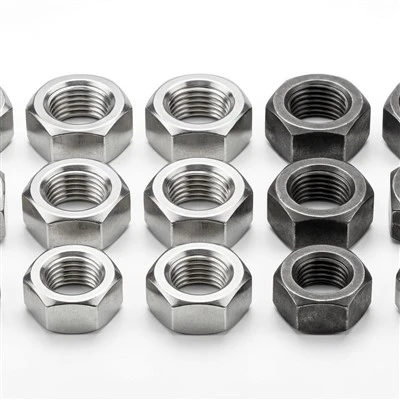
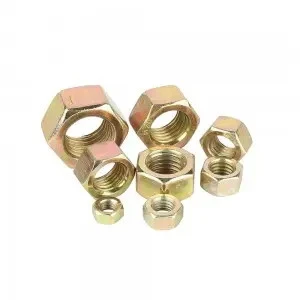
External hexagonal nut: This nut is hexagonal, which is convenient for tightening or loosening with a wrench. According to the nominal thickness, external hexagonal nuts are divided into type I, type II and thin type. Type I nuts are further divided into grade A, grade B and grade C. Grade A and grade B are suitable for machines and equipment with small surface roughness and high precision requirements, while grade C is used in occasions with rough surface and low precision requirements. Type II hexagonal nuts are often used in occasions where disassembly is often required due to their thicker thickness.
Square nut: Square nuts are named for their unique square design and are often used in occasions that require high-strength connections, such as heavy machinery, vehicle manufacturing and construction industries. Their superior stability and connection strength make them widely used in many fields.
Flange face nut: This nut has a wide edge similar to the flange edge at the bottom, with a built-in gasket structure and good anti-loosening performance. It is often used in conjunction with T-bolts in the automation industry, or when installing profile accessories such as angle fittings.
Cap nut: Cap nut has a closed cover to protect the thread and prevent it from loosening. It is often used to connect the exterior parts of automobiles, the exterior parts of mechanical equipment, and the connection parts of outdoor facilities.
Nylon nut: Made of nylon, it has excellent insulation, non-magnetic, heat-insulating, high-temperature resistance, high strength and corrosion resistance. It is often used in electroplating and communication industries, does not generate signal interference such as eddy currents, and is suitable for use in strong acid and alkali environments.
Snap nut: This nut is prevented from loosening by elastic locking design and is often used in the aerospace field and related occasions. It is usually not used as the main force-bearing fastener, but is used to prevent ordinary nuts from loosening.
Slotted nut: Slotted nuts are used in conjunction with hole bolts and cotter pins to prevent relative rotation between bolts and nuts. They are often used in occasions where precise power transmission is required, such as bogies of trains and EMUs.
Butterfly nut: Butterfly nuts are named for their unique butterfly wing appearance, which is convenient for hand-tightening operation and is often used in small furniture, electrical equipment, toy manufacturing and other fields.
T-nut: T-nuts are T-shaped and are often used in aluminum profile frame construction for automated production lines, logistics and warehousing equipment, and other occasions.
Small round nut: Small in size and stable in structure, they are often used in the field of precision machinery and inside machine tools.
These types of nuts have their own characteristics and are suitable for different application scenarios, from construction to aerospace, from heavy machinery to precision instruments, and have their specific uses.