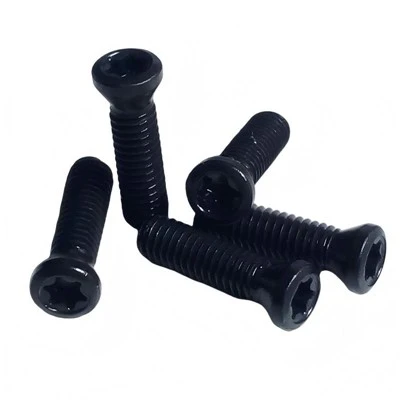
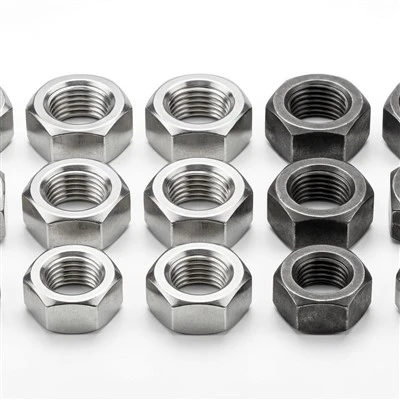
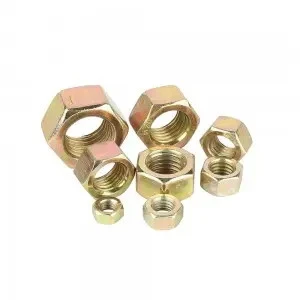
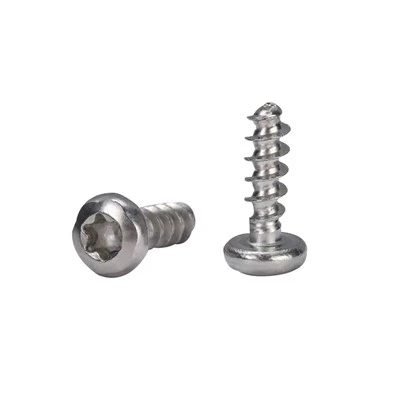
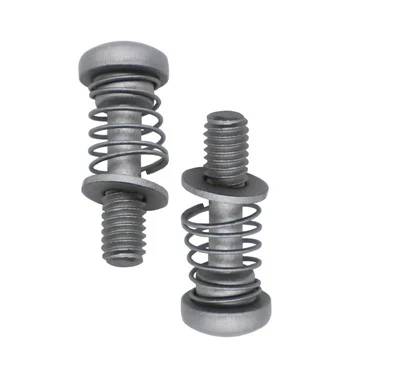
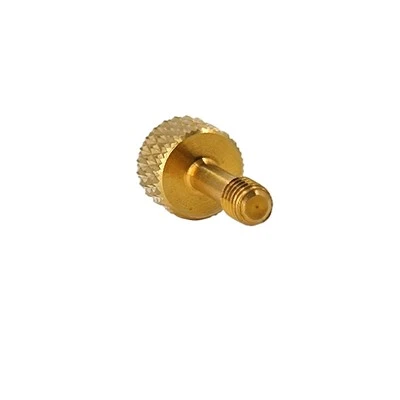
Double-thread structure design
Internal thread function: The internal thread is used to accept the same specification external thread parts to achieve precision assembly.
External thread function: External non-standard thread provides special connection requirements and adapts to non-standard apertures or special-shaped structure fixation.
Tool compatibility: The flat slot design is compatible with standard flat screwdrivers to simplify the installation process.
Anti-slip optimization: The slotting process increases the friction coefficient of the slot to prevent the tool from slipping and damaging the screw head.

Stainless steel material characteristics: 304/316 stainless steel material resists acid, alkali, and salt spray corrosion and is suitable for humid environments.
Mechanical properties: Yield strength ≥205MPa, maintaining the structural integrity of small threads when tightening.
Non-standard customized function
Size adaptation: Supports customization of parameters such as head diameter and pitch to solve assembly clearance problems in special scenarios.
Special treatment: Passivation, magnetizatio,n and other secondary processing can be provided to meet the needs of anti-magnetic or conductivity.
Micro fastening solution
Precision positioning: M2 ultra-small specifications achieve millimeter-level precision fixation of microelectronic components.
Anti-loosening design: The synergistic effect of internal and external threads forms a two-stage locking, which improves the vibration tolerance by 40% compared with the traditional single-thread structure.

Typical application scenarios:
Precision instruments: Fine adjustment of the focusing mechanism of the optical lens barrel
Medical equipment: Aseptic connection of detachable parts of the endoscope
High-end electronics: Shockproof installation of drone flight control modules
Notes:
The installation torque needs to be controlled within the range of 0.15-0.3N·m to avoid M2 fine thread slippage. Non-standard threads need to be tested with special measuring tools.