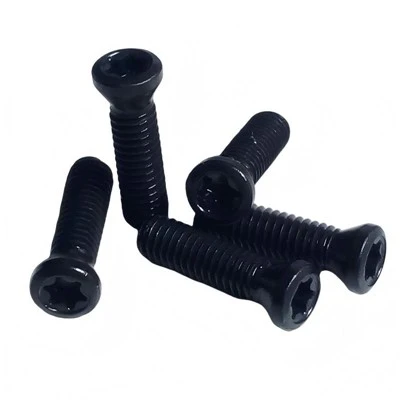
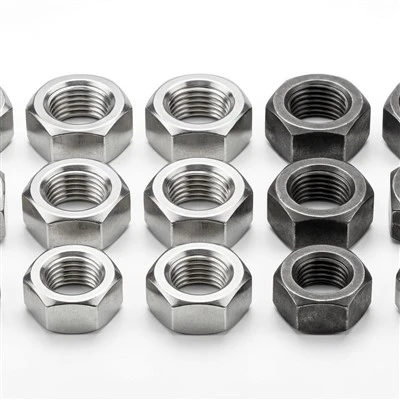
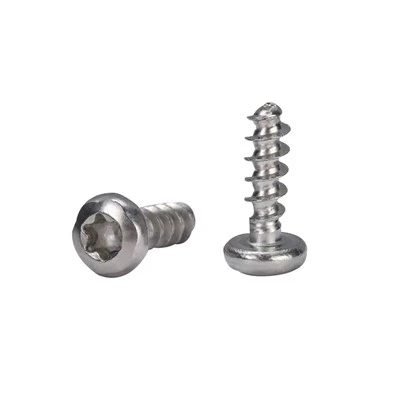
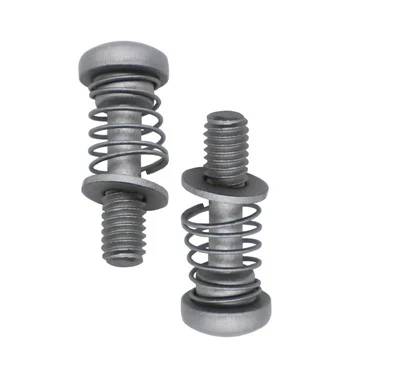
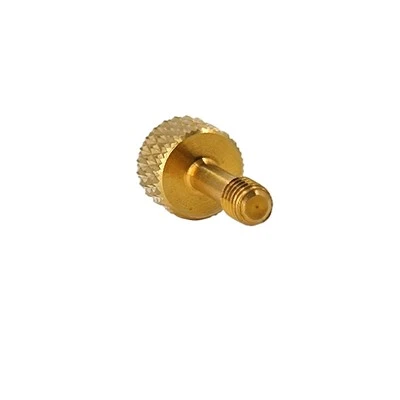
303 stainless steel American thread screws are a specific type of manual fastener. The following are its similarities and differences.
1. Similarities
Both belong to 303 stainless steel: All are based on 303 stainless steel, with good corrosion resistance, weaker than 304 but better than carbon steel, and easy cutting.
Similar mechanical properties: tensile strength, hardness (HRB 85-95), and other indicators are consistent, suitable for medium load scenarios.
Thread standard
American unified thread (UN series): All comply with ANSI/ASME B1.1 standards, such as UNC (coarse thread), UNF (fine thread), UNEF (extra fine thread), etc., with high compatibility.
Surface treatment
Commonly, no treatment (natural color) or passivation treatment, a few require nickel plating/galvanizing (anti-corrosion enhancement).
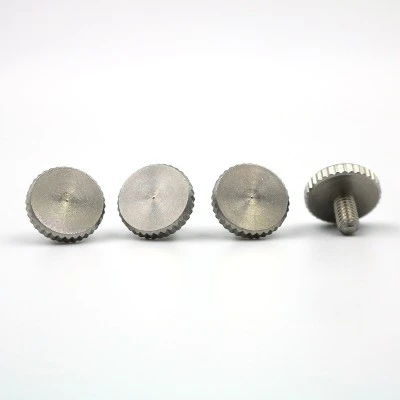
Application scenarios
Mainly used in occasions that require corrosion resistance and frequent disassembly, such as food machinery, chemical equipment, electronic components, etc.
2. Differences
Thread type subdivision
Differences in tooth type:
UNC: such as 1/4"-20, strong vibration resistance, used for general connections.
UNF): such as 1/4"-28, better sealing, suitable for thin-walled parts or precision instruments.
UNEF: such as 1/4"-32, used for high-precision adjustment mechanisms (such as optical equipment).
Dimensions and specifications
Diameter and pitch combination: Different numbers correspond to different diameter-pitch combinations, which need to be selected according to the load.
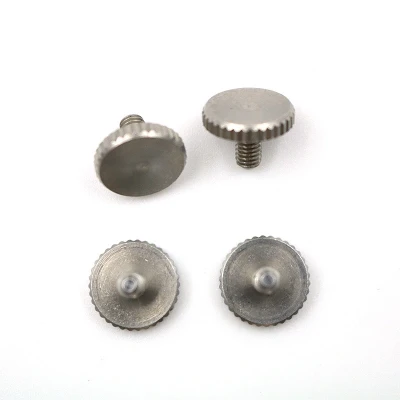
Length standard: The US system is divided into inches, and it may be necessary to pay attention to the conversion when mixed with the metric system.
Head and drive method
Head type: hexagonal head, pan head, oval head, etc., which affects the selection of installation tools.
Slot type: cross slot, slot, hexagon socket, etc., the difference lies in anti-slip and torque transmission efficiency.
Special variants
Left-hand thread: reverse tightening, used in specific anti-loosening scenarios.
Screws with holes/tenons: additional safety locking function.
Industry standard differences
SAE J429 specifies the mechanical property level (such as 303 stainless steel is usually not marked because it is not a high-strength material).
ASTM F738: Specific corrosion resistance test requirements for stainless steel screws.
3. Summary
Key points for selection
General scenarios: UNC coarse teeth are preferred to ensure strength and compatibility.
Precision requirements: UNF/UNEF fine teeth are selected to improve sealing and adjustment accuracy.
Anti-corrosion requirements: Confirm passivation treatment or plating (such as additional protection required in salt spray environment).
Core differences: Thread parameters (tooth type, pitch) and head design dominate functional differences, and materials and basic performance remain consistent.
Tips: It is recommended to provide sample trial installation when purchasing in bulk to ensure compatibility. A complete 2D drawing or 3D STEP file is required, and key dimensions must be marked separately. Special requirements require additional negotiation of tooling costs.
Through the design and process control described above, it can be seen that the screw strikes a balance between functionality, production efficiency and reliability, and is suitable for medium and high-intensity use requirements.