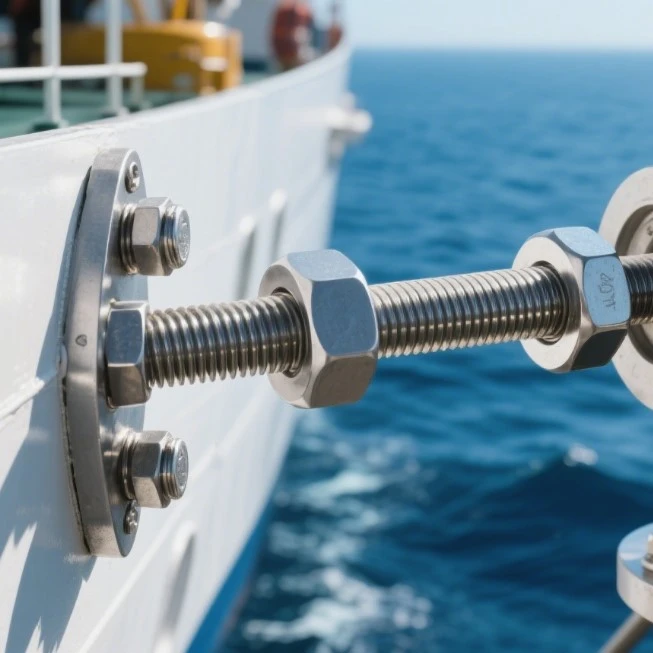
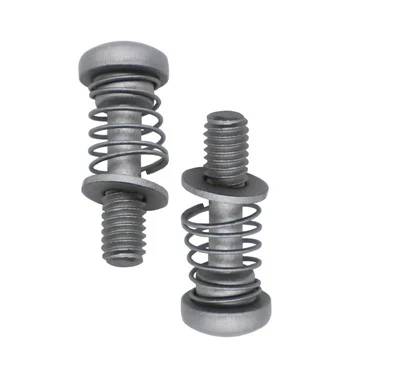
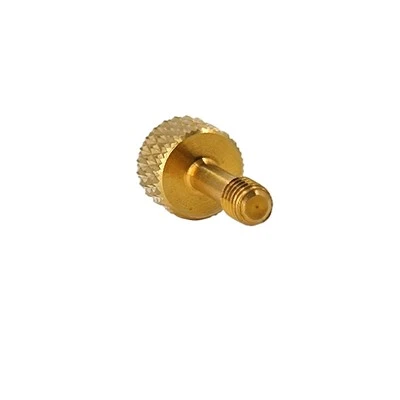
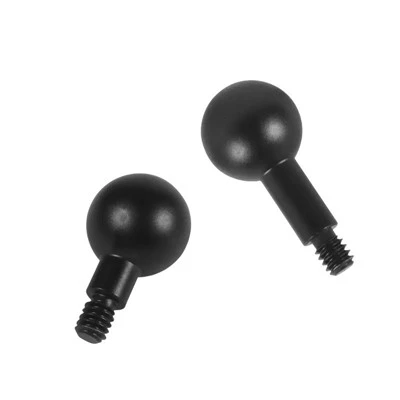
In harsh marine environments such as ships, offshore platforms, and seawater pipelines, the corrosion resistance of fasteners is directly related to the safety and service life of the structure. 316 stainless steel (AISI 316) has become the preferred material for marine fasteners due to its excellent corrosion resistance. This article will deeply analyze the chemical composition and corrosion resistance mechanism of 316 stainless steel, and compare it with other materials to illustrate its irreplaceable role in marine environments.
I. Chemical Composition and Corrosion Resistance Mechanism of 316 Stainless Steel
1. Key Alloying Elements
316 stainless steel is an austenitic stainless steel. Its corrosion resistance is primarily dependent on the following alloying elements:
Chromium (Cr, 16-18%): Forms a passive oxide film (Cr₂O₃) to prevent corrosion of the substrate.
Nickel (Ni, 10-14%): Enhances the stability of the austenitic structure and improves toughness. Molybdenum (Mo, 2-3%): A core advantage, significantly improving resistance to pitting and crevice corrosion, particularly in chloride-containing environments (such as seawater).
II. Applications of 316 Stainless Steel in Marine Environments
1. Shipbuilding
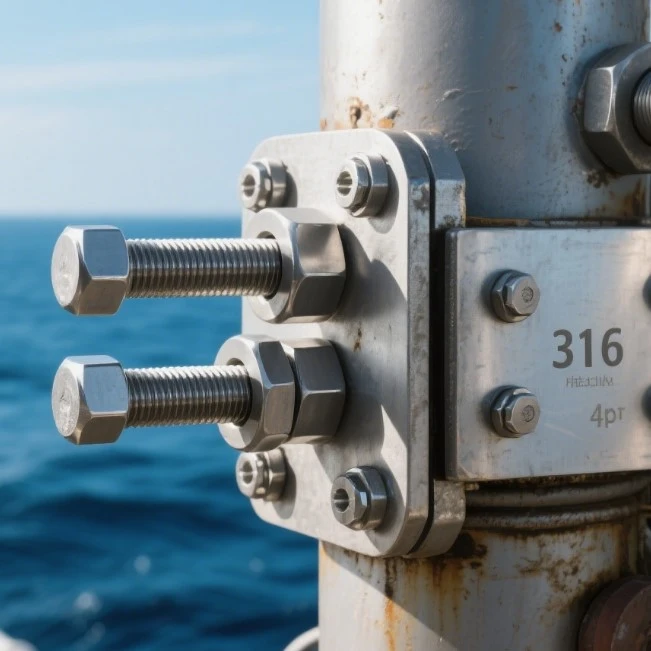
Hull connectors (bolts, nuts, washers): Experiencing long-term immersion in seawater, 316 stainless steel resists salt spray corrosion.
Deck equipment fastenings: Components such as radar brackets and guardrail bolts must withstand moisture and mechanical vibration.
2. Offshore platforms and subsea pipelines
Oil drilling platforms: 316 stainless steel offers excellent resistance to stress corrosion cracking (SCC) in environments with high salt content, high humidity, and hydrogen sulfide (H₂S).
Desalination equipment: 316L (low-carbon version) is used in pumps, valves, and flanges to prevent intergranular corrosion.
3. Coastal infrastructure
Bridge anchors: Corrosion in the splash zone is severe, and 316 stainless steel offers superior durability compared to carbon steel with a coating.
III. Why not choose other materials?
1. Limitations of 304 Stainless Steel
Because 304 stainless steel (18/8 stainless steel) does not contain molybdenum, it is susceptible to pitting corrosion in chloride ion environments and is only suitable for short-term exposure to seawater (such as ship interiors).
2. Disadvantages of Carbon Steel + Coating
Hot-dip galvanizing: Its lifespan in marine environments is limited (typically 5-10 years), requiring frequent maintenance.
Epoxy coating: Corrosion accelerates after coating damage, making it unsuitable for critical load-bearing components.
3. Cost Issues with Duplex Stainless Steel
Although duplex steel (such as 2205) offers greater corrosion resistance, it is two to three times more expensive than 316 and is only used in extreme environments (such as deep-sea oil and gas extraction).
IV. Recommendations for Selecting 316 Stainless Steel Fasteners
Grade Certification:
Ensure compliance with ASTM A193 (bolts) or ASTM A194 (nuts).
316L (low carbon, C ≤ 0.03%) is preferred to avoid intergranular corrosion in the weld zone.
Surface Treatment:
Passivation: Improves oxide film density.
Electropolishing: Reduces surface defects and enhances corrosion resistance.
Matching Washers:
Avoid direct contact with dissimilar metals (such as carbon steel) to prevent galvanic corrosion.
V. Conclusion
In marine engineering, 316 stainless steel has become the gold standard for fasteners due to its molybdenum-enhanced pitting resistance, excellent mechanical properties, and reasonable cost. Although higher-end materials (such as duplex steel) exist, 316 stainless steel offers the best balance of reliability and cost-effectiveness in most marine environments.
Material Selection Recommendations:
Conventional seawater environments → 316 stainless steel (AISI 316).
Severe corrosion (such as high-temperature, acidic seawater) → Duplex steel 2205 or super-austenitic steel (254SMO).
Short-term/low-cost needs → 304 stainless steel with scheduled maintenance (not recommended).
Through scientific material selection and standardized installation, 316 stainless steel fasteners can ensure the safe service of marine engineering structures for more than 20 years, significantly reducing maintenance costs throughout the entire life cycle.