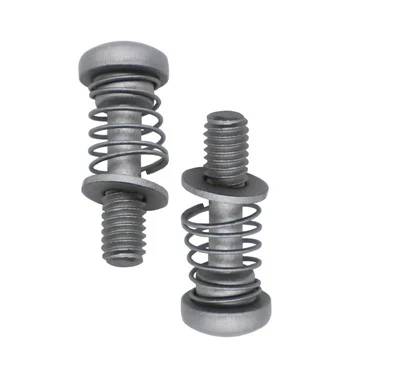
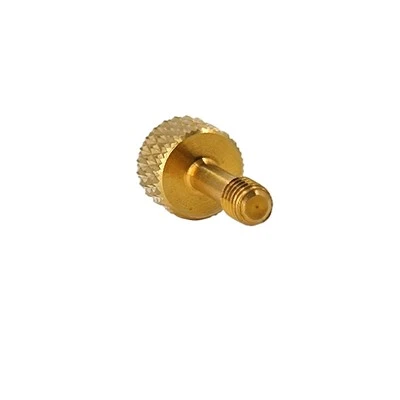
The customization of machine-thread anti-drop glue screws needs to be designed in combination with materials, specifications, surface treatment, glue dispensing process and application scenarios. The following are the core elements and process guidelines in the customization process, which can be referred to
1. Customization of core elements
Material selection: Carbon steel (such as Q235, 10B21), economical and general, strength can be selected from 4.8 to 12.9, and surface treatment is required to prevent rust.
Stainless steel (304/316): Strong corrosion resistance, suitable for medical and food equipment, and the surface is often passivated. Titanium alloy is used in high-strength scenarios such as aviation; copper and aluminum are suitable for conductive or lightweight needs, but need to match special glue types.
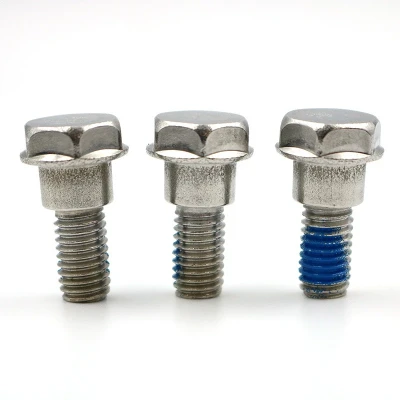
Specification parameter customization
Size range: Diameter can be customized from M0.8 to M12, and length can be designed as needed (such as M1.5×3.5 ultra-micro screws for precision instruments).
Head type and slot type:
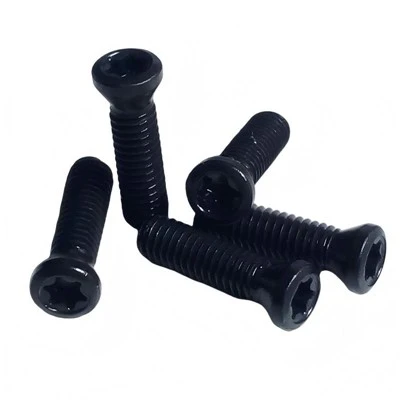
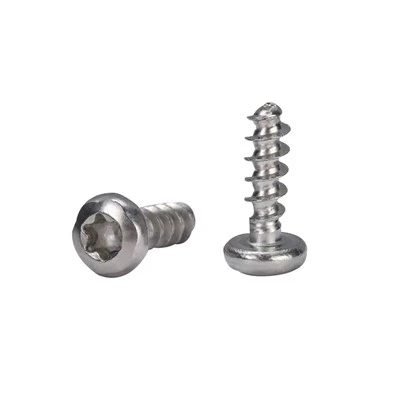
Head type can be customized with a flat head, a countersunk head, a pan head, and a thin flat head. The groove type can be customized as the cross groove, an inner plum blossom, and a special-shaped groove.
Thread tolerance: 4h level tolerance is required for precision scenes, and 6G level can be selected for general scenes.
Selection of the dispensing process
Glue type classification:
Choose nylon glue for repeated disassembly, temperature resistance -40℃~120℃, suitable for automobiles and 3C electronics
Chemical glue can be quickly cured, anti-loosening and anti-leakage in high vibration environments, such as automobile engines and aerospace fields.
The coating method is divided into: single-point glue coating can prevent local loosening; full-circle glue coating can prevent loosening in all directions, and customized according to force requirements.
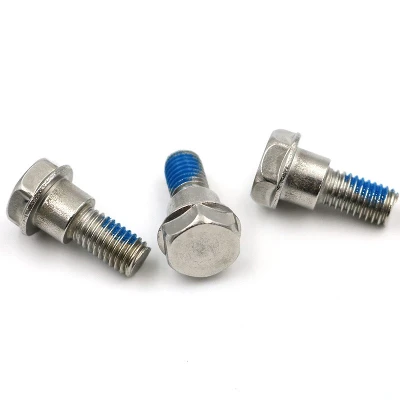
Surface treatment adaptation
Rust-proof requirements:
Nickel plating and zinc plating: low cost, salt spray 48-96 hours (common for indoor appliances).
Dacromet: salt spray ≥500 hours, high temperature resistance, suitable for automobiles and wind power.
Phosphating treatment: enhances the adhesion of the glue layer and improves the anti-loosening performance.
Environmentally friendly nickel: meets RoHS standards and is used for the export of electronic products.
2. Customization process and manufacturer collaboration
Provide drawings or samples, mark the material, size, strength grade, and anti-loosening torque requirements. Then, explain the application scenario in order to match the glue type and surface treatment.
Process verification
Proofing test: The manufacturer provides a small batch of samples to verify the anti-loosening effect (vibration test), torque consistency, and corrosion resistance.
Adhesive layer adaptation: The temperature resistance of the glue type needs to be confirmed in the high-temperature environment (nylon glue is limited to 80℃ drying, and chemical glue has higher temperature resistance).
Mass production and delivery time
Minimum order quantity: usually ≥10,000 pieces (micro screws can be reduced to 1,000 pieces).
Production cycle: 10-15 days (including surface treatment and glue curing).
Packing method: moisture-proof plastic bag + carton, precision parts need to be separated.
3. Typical application scenario customization case
Electronic products: M1.5×3.5 nickel-plated cross flat head screws, with nylon glue, used for PCB motherboard fixing (anti-loosening + anti-static).
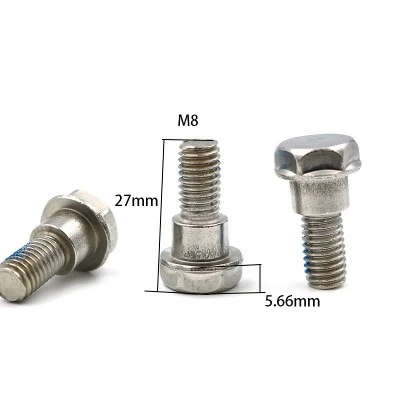
Auto parts: M8 internal plum head screws, Dacromet surface + chemical glue, meet the high vibration environment of the engine (salt spray 500 hours + anti-loosening).

Sports equipment: Titanium alloy countersunk screws, phosphating treatment + full-circle glue, taking into account lightweight and corrosion resistance (outdoor use).
IV. Customization precautions
Cleaning requirements: The surface treatment needs to be thoroughly degreased (acetone cleaning), otherwise the adhesion of the glue layer will decrease by 50%.
Reuse restrictions: The glue layer fails after disassembly, and it is strictly forbidden to reuse it in key parts (such as car suspension).
Cost control: Titanium alloy/Dacromet processing costs are relatively high, and carbon steel galvanizing is the most economical. Full-circle glue dispensing is 20%-30% more expensive than single-point coating.