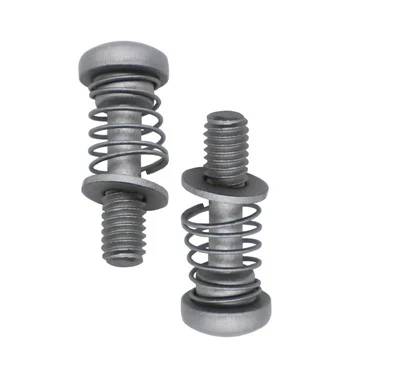
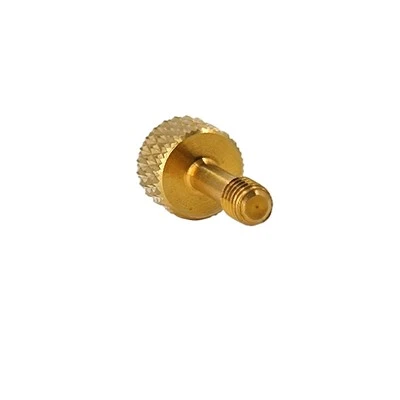
The double-headed cold-forged 304 stainless steel hexagon socket adjusting screw is an industrial fastener that combines special structures, materials and processes. The following is a detailed explanation of its product customization.
Core elements (must-provide information)
Dimensions and specifications
Thread specifications: Detailed specifications of the threads at both ends
Rod diameter: The diameter of the middle bare rod or unthreaded part.
Total length: The overall length of the screw from one end to the other.
Thread length: The exact length of the threaded part at each end.
Hexagonal head size: Width across flats (S) and head thickness/height (H).
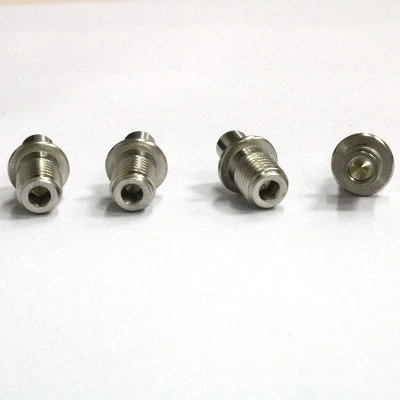
Tolerance requirements:
Tolerance grade of key dimensions, such as length tolerance ±0.1mm, hexagonal tolerance across flats h13, etc.; if not specified, follow the industry convention or supplier standard.
Material and standards
Material: Clearly AISI 304 / SUS304 / 06Cr19Ni10 stainless steel.
Material standards: ASTM A276, GB/T 1220, JIS G4303, etc. are available
Head structure:
Hexagonal size: Specification of hexagonal hole (such as: 3mm, 4mm, 5/32", 1/4").

Hexagonal depth: precise requirement or minimum value.
Surface treatment: natural color or passivation treatment to improve corrosion resistance.
Other options: electrolytic polishing, plating (such as nickel plating, but 304 itself is corrosion-resistant, plating is not necessary
End treatment: chamfering or deburring requirements at both ends.
Key advantages
High efficiency plus low cost (large batch): The Cold heading process is very suitable for large-scale production, with high material utilization, fast processing speed, and significantly lower cost than turning.
High strength and excellent surface: Cold work hardening effect improves screw strength; surface finish is good.
Excellent corrosion resistance: 304 stainless steel meets the anti-corrosion requirements in general environments.
Good formability: Cold heading can accurately form complex heads (such as hexagon sockets) and rods
Notes
Mold fee: Cold heading parts usually require special molds, with a one-time fee, and small batch orders need to consider sharing.
Minimum order quantity: Suppliers usually have a minimum order quantity requirement.
Sample confirmation: It is strongly recommended to confirm the sample before mass production, especially the size and function.