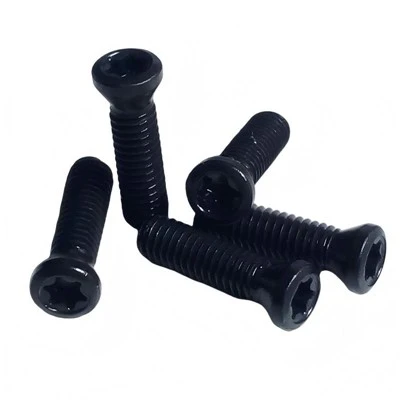
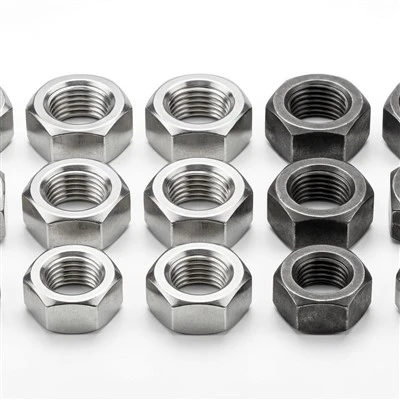
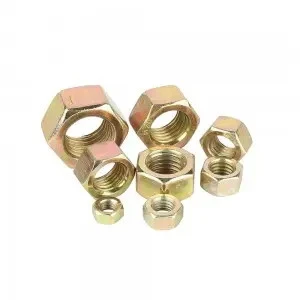
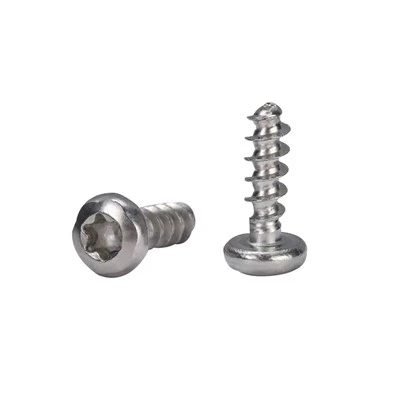
Cup-head hex socket screws with a half-thread pitch are a common mechanical fastener. The following is a comprehensive guide to custom cup-head hex socket screws, covering all important aspects, from key parameters to the production process, in a balanced manner.
Thread Specifications:
Nominal Diameter: M3, M4, M5
Thread Pitch: Standard pitch is sufficient.
M3 Standard Pitch: 0.5 mm
M4 Standard Pitch: 0.7 mm
M5 Standard Pitch: 0.8 mm
Thread Type: Metric Coarse (M)
Thread Length: Half (Partial Thread)
Shaft Diameter: Usually equal to or very close to the nominal diameter.
Overall Length
For example: M4x20 (nominal diameter 4 mm, total length 20 mm).
Total Length = Thread Length (L₁) + Shaft Length.
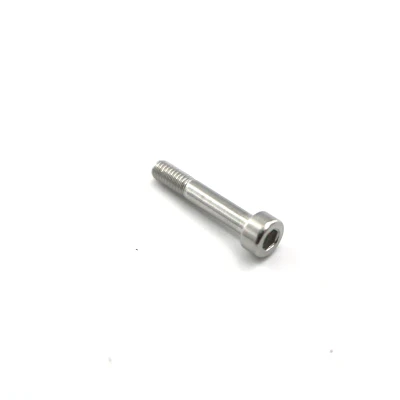
Head and Hex Socket Dimensions:
Head Diameter (Dₖ): Standard (e.g., an M4 head diameter is approximately 7 mm) is sufficient.
Head Height (K): Follow the standard.
Hexagonal Socket Depth: We recommend standard depth to ensure adequate torque transmission. A deeper depth is available upon request for special torque requirements.
Material and Mechanical Properties (Grades):
Material
Common choice: Carbon steel (Q235/10B21), low cost and widely used.
Strength requirement: Alloy steel (SCM435/35CrMo), used for high-strength grades.
Rust resistance requirement: Stainless steel, commonly A2-70 (304 stainless steel) or A4-80 (316 stainless steel).
Performance Grade:
Carbon Steel: Common grades include 4.8, 8.8, 10.9, and 12.9. The larger the number, the higher the strength. Grade 8.8 is a commonly used high-strength grade.
Stainless Steel: Grade designation such as A2-70 indicates a minimum tensile strength of 700 MPa.

Surface Treatment
Blackening/Oxidation: Dark black appearance, basic rust resistance, low cost.
Galvanizing
Blue-white zinc: Bright silver appearance, moderate rust resistance.
Colored zinc: Iridescent appearance, superior rust resistance to blue-white zinc.
Black zinc: Black appearance, excellent rust resistance.
Nickel plating: Silvery-white appearance, excellent wear resistance and rust resistance, suitable for use in certain chemical environments.
Dacromet/zinc-chrome coating: Extremely high corrosion resistance, no risk of hydrogen embrittlement, but with a matte gray-silver appearance.
The following items are optional depending on your needs.
Tolerance Requirements: Unless precision assembly is required, standard tolerances are sufficient.
Surface Defects: No burrs, cracks, or rust are required.
Lubrication: Is pre-applied thread lubricant (such as nylon coating or grease) required for easier tightening?

Magnetism: Certain applications (such as electronics) may require non-magnetic screws, necessitating the use of specific stainless steel and controlled processing.
Special Testing: Is hydrogen embrittlement testing required?
Customized Process and Business Information
Drawing Provision: The best approach is to provide a detailed PDF or DWG drawing, noting all key dimensions (overall length, thread length, head size, etc.), material, and surface finish requirements. A picture is worth a thousand words.
Quotation Request and Sample Preparation: Provide the above technical parameter list and drawings to two or three professional fastener suppliers and request quotes. Confirm tooling fees (if non-standard dimensions are available), unit price, minimum order quantity (MOQ), and delivery time. Request samples from suppliers for confirmation.
A clearly structured and appropriately detailed technical specification allows for efficient communication with suppliers, minimizes production errors and misunderstandings, and ensures you receive fasteners that are perfectly suited to your application.