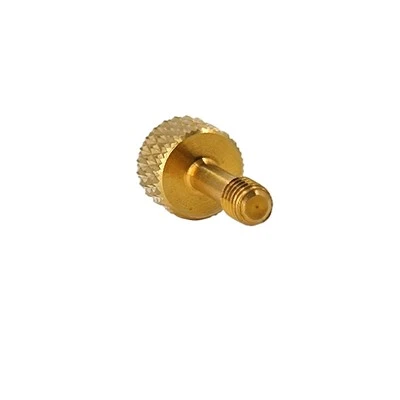
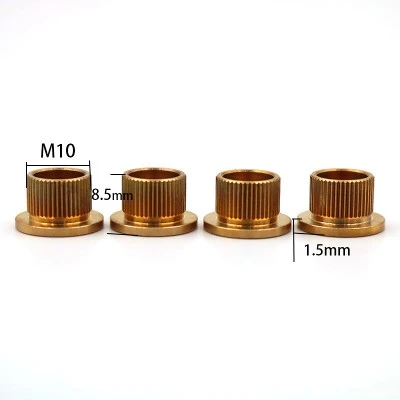
Brass knurled step flange rivets are specially designed rivets that combine multiple structural and functional features. They are primarily used in applications requiring fastening, anti-slip properties, or aesthetics. The following is a detailed description of their customization, clearly structured and focusing on key parameters and precautions.
I. Core Specifications
Material
Brass grade: H62. Material certification (ROHS/REACH certification required) is required.
Surface treatment: Natural polish/Nickel plating (thickness ≥ 5μm)/Passivation for oxidation protection.
Structural Parameters
Step Design
Head diameter: Customer-provided drawing or specification.
Shaft diameter: Typically 0.5-1mm smaller than the head.
Step height: 1-3mm (adjustable based on assembly clearance).
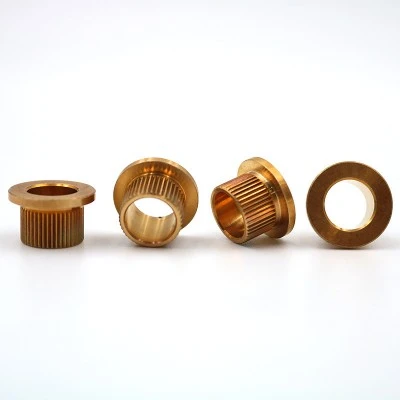
Knurl Type: Straight/cross-grain knurling (recommended pitch 0.6mm, tooth height 0.2mm for increased anti-slip properties).
Knurled area length: 1/3-1/2 of the total shank length (end position tolerance ±0.2mm required).
Performance Specifications
Tensile Strength: ≥300 MPa (typical value for H62 brass). Shear Force: ≥2000 N (to be verified based on application scenario).
II. Key Processing Techniques
Cold Heading: The head and step are integrally formed to avoid welding. Knurling must be completed after finishing turning to prevent burrs.
Tolerance Control
Diameter Tolerance: ±0.05 mm (precision assembly requirement).
Total Length (L): ±0.1 mm (for standard sizes such as 10 mm/15 mm).
Special Requirements
Flange Chamfer: 0.3 x 45° (to avoid assembly scratches). Internal Thread/Through Hole: If pre-drilling is required, specify the thread size (e.g., M4) or hole diameter (Ø2 mm ± 0.05).
III. Inspection Standards
Dimensional Inspection
Use a projector/CNC 3D scanner to fully inspect the first batch (subsequent random inspection of 5%).
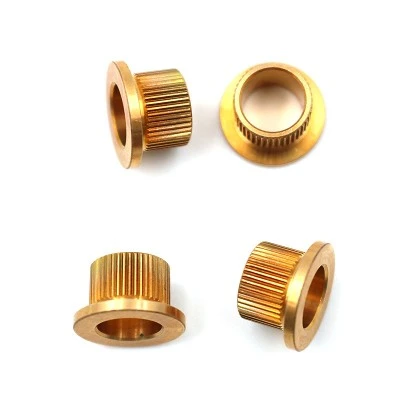
Focus on checking the integrity of the knurled tooth profile (no missing teeth or collapsed edges).
Functional Testing
Salt spray test: No rust after 48 hours (nickel plating).
Torque test: Simulates installation and tightening (if ≥3 N·m is required).
V. FAQ
Design Conflicts: The distance between the knurled area and the step must be ≥1 mm to avoid stress concentration.
Material Alternatives: If higher strength is required, aluminum bronze (C95400, 30% higher cost) is recommended.
Certification Requirements: The automotive/medical industries require ISO 9001 or IATF 16949 certification.
Providing 2D drawings or 3D models is recommended to avoid communication errors, and prioritizing critical dimensions is indicated.
This product also balances installation efficiency and environmental compatibility, making it a highly functional solution among brass fasteners.